
- Jannat Al-Afis beaten to death by her father, according to Syria authorities
- Women, girls need prevention, lasting protections, lawyer tells Arab News
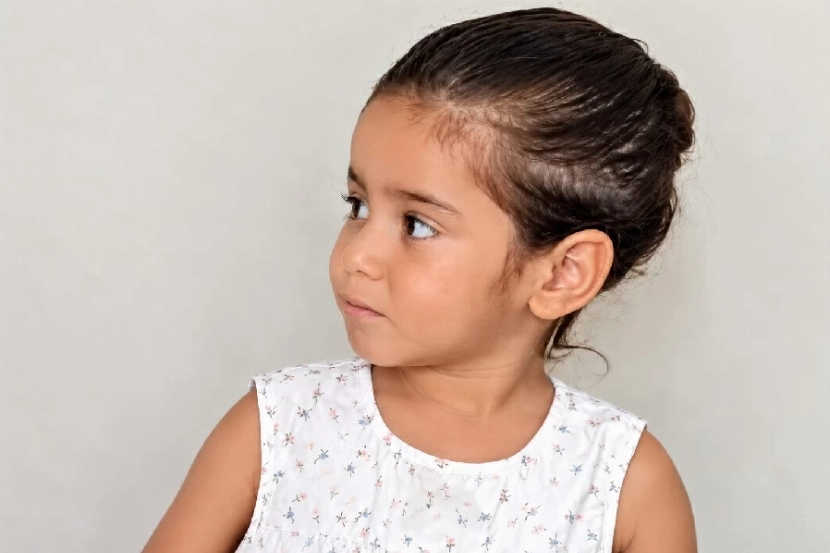
LONDON: Before 3-year-old Jannat Al-Afis was killed in the Syrian Arab Republic’s Deir Ezzor governorate, relatives say there had been warnings about the danger she faced at home.
Her father had previously been detained after a complaint that he abused her, then released, a relative told Syrian media. Other reports said he regained custody through a court order despite allegations of earlier abuse.
On Sept. 27, authorities said, he beat her to death.
A medical examination found that Jannat died from a shattered skull, Syrian state media reported. Internal security forces in Deir Ezzor said they arrested her father and that preliminary findings indicated he was under the influence of drugs.
The killing has sparked outrage across Syria and raised questions about whether authorities missed opportunities to protect her. It has also exposed a broader concern: What happens to women and children who report violence but remain in the homes where they face danger?
For Hiba Ezzideen, head of the Syrian women’s rights organization Equity & Empowerment-EE, cases such as Jannat’s expose a critical question about whether Syria’s existing system can protect women and girls before violence escalates.
“There are provisions within Syrian law that can be applied in cases of assault, threats, homicide and abuse, as well as specific protections for children,” Ezzideen told Arab News. “There are also institutions and services working on family and child protection.”
But, she said, “Syria does not yet have a comprehensive domestic violence law in force.”
“The main gap,” Ezzideen said, “is between the existence of legal provisions and having a complete, accessible protection mechanism in practice.”
That gap can become especially dangerous after abuse is reported.
“When a woman or girl reports violence, the response cannot stop at receiving the complaint,” Ezzideen said, stressing the need for an immediate assessment of the danger and a clear safety plan.
“This is particularly important when the person at risk is a child and the alleged perpetrator is a parent or caregiver.”
Faten Derki, a Damascus-based lawyer and writer, said the problem extends beyond whether victims have somewhere to seek help.
“The fundamental problem is not always the absence of a door to knock on,” she told Arab News. “Rather, the question is: what happens to a woman after she knocks on it?”
In Jannat’s case, accounts of earlier abuse have drawn scrutiny to the decisions preceding her death, although key details remain unverified.
Abboud Saleh Al-Afis, a cousin of the girl’s father, told Syria TV that the father “had previously been detained following a complaint concerning his abuse of Jannat, then released.”
Syria TV said it could not independently verify the circumstances or duration of the detention, identify the authority that ordered his release or establish the reasons for the decision.
Other media reports said Jannat had been living with her paternal uncle before her father regained custody through a court order, despite complaints and medical reports documenting earlier abuse.
The website 963+, citing local media, also reported that a court had ordered her return.
Those reports did not include a copy of the order or the medical records they cited.
Jannat’s death has also renewed scrutiny of her mother’s death, which media accounts said had been recorded as a suicide. Those accounts differ over when and how she died.
In a Sept. 28 report, Ahwal Media, citing the Sweida Documentation and Media Center, said her mother died about a year earlier following a fire. It reported doubts about the circumstances and calls from activists to reopen the investigation, but provided no official documents establishing how the death had been recorded.
A family relative, meanwhile, told Syria TV that Jannat’s mother died about four months earlier and had been abused by her husband.
The conflicting accounts and unanswered questions surrounding both deaths underscore the gap Derki described between seeking help and securing lasting protection.
Women and girls experiencing abuse can turn to authorities, protection and community centers, and humanitarian organizations offering psychological, legal and health care support, she said. Helplines and some safe shelters are also available.
But filing a complaint does not necessarily remove the danger.
“Reporting violence does not resolve the problem if she then returns to the same home and remains under the control of the person perpetrating the violence, without alternative accommodation, ongoing protection or an income that provides a basic level of stability,” Derki said.
“We therefore need to move beyond simply responding to incidents of violence after they occur towards a comprehensive protection system that begins at the first sign of danger and does not end when a complaint is filed.”
That need extends well beyond a single household.
A UN Protection Cluster report released in late September estimated that 8.6 million people in Syria, including 7.3 million women and girls, needed gender-based violence prevention and response services during the first half of 2026.
Displacement, returns, economic deterioration, insecurity and limited access to essential services continued to heighten risks, the report said.
Yet access to lifesaving services remained restricted by funding shortages, insecurity, movement restrictions, distance, a lack of confidential services and shortages of trained staff and female providers.
At least 60 gender-based violence service delivery points were reported closed in 2025 and 2026.
The existence of services, Ezzideen said, does not necessarily mean those at risk can use them.
“Access to these services is not yet equal everywhere,” she said. “A service may exist, but a woman still needs to know about it, be able to reach it safely, and have confidence that reporting will actually improve her safety.”
Those barriers can be particularly severe for women in areas with few specialized services, women with disabilities, women without independent incomes and girls whose movements and communications are controlled by relatives, she said.
Even where services are available, Derki said, fear and financial dependence can prevent victims from reaching them. “Sometimes, a woman is asked: ‘Why don’t you leave the house?’ Yet the real question is: ‘Where will you go if you leave?’”
Without an independent income or alternative housing, a woman with children may face a choice between an abusive home and an uncertain future, she said.
She may also fear losing custody of her children, retaliation, social stigma or pressure from relatives. In some cases, Derki said, “reaching a protection service without the abuser’s knowledge may be impossible.”
Fear of retaliation is a “major barrier,” Ezzideen said. “A survivor may be afraid that reporting the violence could increase the danger, particularly if the alleged perpetrator returns to the household and there is no protection plan or follow-up.”

Social pressure can reinforce those fears.
“Women and girls may be encouraged to remain silent to protect the family’s reputation, preserve the marriage, or resolve the issue privately,” Ezzideen said. “We need to move away from treating violence inside the home as a private family matter. It is a protection and rights issue.”
For women unable to begin legal proceedings, confidential advice can be a first step toward understanding their options, Derki said.
“Making information about services widely available and ensuring women trust that their information will remain private is essential.”
Children living with domestic violence also need support in their own right, Derki said.
“As for children, they should not be seen merely as witnesses to the violence inflicted on their mothers,” she said. “A child living in a violent environment also needs protection, care and specialized intervention.”
Effective protection, she said, requires safe accommodation, legal assistance, psychological support and temporary financial help, and not simply encouragement to report abuse.
“We cannot, therefore, ask a woman to be brave enough to report abuse and then leave her to face the consequences alone,” Derki said.
Ezzideen said that for girls, the obstacles can be even greater because the person accused of harming them may control nearly every aspect of their lives.
“For girls, the situation can be even more difficult because the person harming them may also control their housing, food, education, transportation, telephone and contact with the outside world,” Ezzideen said.
That reality, she said, means a protection system cannot rely solely on victims finding a way to escape or seek help themselves.
“The central principle is that protection cannot depend entirely on whether a woman or girl is able to escape or report the violence herself,” Ezzideen said. “The protection system must be capable of reaching the person at risk.”
There is an opportunity for change. Ezzideen noted that a draft law on protection from domestic violence is being developed in Syria. “This is an important opportunity to strengthen the system,” she said.
For advocates, however, the lesson from cases such as Jannat’s is that protection ultimately depends not only on laws or on a victim managing to report abuse, but on what happens next — whether authorities can recognize danger, intervene and ensure that those who ask for help are not returned to it.