
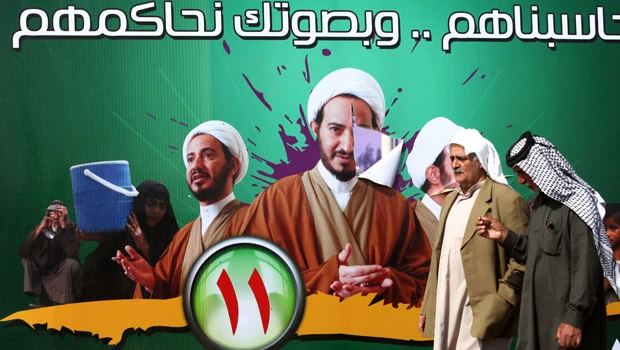
- SULAIMANIYAH, Iraq: A curfew on campaigning was imposed Friday in a province of northern Iraq that has become a fierce battleground for Kurdish votes in the run-up to the country's March 7 general election.
Campaigning in Sulaimaniyah will be banned from 9 p.m. to 6 a.m., election organizers said, a decision that came in the wake of several violent incidents including a shooting that saw three political activists wounded.
A statement said the curfew would apply throughout the province and would last until the end of campaigning on March 5 and the restrictions had been recommended by a local government security committee.
It will "protect the process of campaigning for the political entities and candidates, prevent any traffic accidents, and protect citizens in the province," the statement from election organizers said.
"Anyone who infringes the curfew will be punished," it added, without giving further details.
Sulaimaniyah, 270 km north of Baghdad, is the focus of considerable tension between rival Kurdish parties, vying for maximum leverage in the event of Kurds being possible kingmakers in Iraq's next government.
Security forces loyal to Iraqi President Jalal Talabani's Patriotic Union of Kurdistan (PUK) were accused Thursday of having shot and wounded three people from the rival Goran (change in Kurdish) bloc in a clash at a political meeting in Sulaimaniyah, a stronghold of Talabani supporters.
The incident occurred late Tuesday as activists from the Goran party, which emerged in regional elections last year as a rival to the two main Kurdish parties, the PUK and the KDP (Kurdistan Democratic Party) of regional president Massud Barzani, gathered.
Goran, which is seen as a significant threat to the PUK and KDP in the upcoming national ballot, blamed forces connected to Talabani for the incident.
In response, a spokesman for Sulaimaniyah's security committee, Zana Hama Saleh, said PUK forces had arrested 11 people at the meeting, some of whom had shot their weapons in the air, and that three people were wounded.
Iraq's Kurdish politicians, who are locked in a dispute with the central government in Baghdad over territory and oil rights, will lack unity for the first time in an Iraqi general election due to the rise of the Goran opposition.
The split last year fractured an alliance that Kurdish parties had presented in all polls since the overthrow of dictator Saddam Hussein after the US-led invasion of Iraq in 2003.
Goran came to prominence when it won a surprising 23.57 percent of the vote in northern Iraq's regional election in July, after a campaign focused on the alleged corruption and hegemony of the KDP and PUK.
Meanwhile, US President Barack Obama's administration plans to rebrand its military operation in Iraq "Operation New Dawn," beginning Sept. 1, a Pentagon memorandum shows.
The memo, signed by US Defense Secretary Robert Gates, shows the Pentagon approving a request to switch the name of the US military effort in Iraq from its current designation — "Operation Iraqi Freedom."
"Aligning the name change with the change of mission sends a strong signal that Operation Iraqi Freedom has ended and our forces are operating under a new mission," Gates wrote in the memo, first reported by ABC News.
The document, which is addressed to Gen. David Petraeus, the head of US Central Command, adds the rebranding "presents opportunities to synchronize strategic communication initiatives ... and recognize our evolving relationship with the government of Iraq."
The move quickly drew criticism from Military Families United, a national security pressure group. "You cannot end a war simply by changing its name," Brian Wise, the group's executive director, said in a statement.
"Despite the administration's efforts to spin realities on the ground, their efforts do not change the situation at hand in Iraq. Operational military decisions should not be made for purposes of public relations but should be made in the best interests of our nation, the troops on the ground and their families back home."