- DOHA/KHARTOUM: Khartoum will offer Darfur's most powerful rebel group government posts as part of a future peace deal to end conflict in Sudan's west, according to documents setting out the terms of negotiations.
The documents were the first concrete sign that Khartoum is prepared to share power with its bitter foe in the western region -- a development that could alienate existing allies there and complicate preparations for April elections.
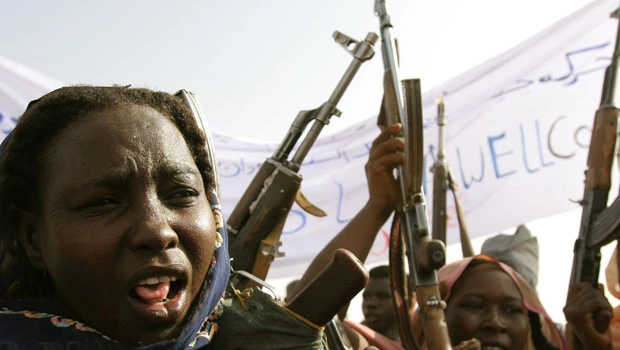
The 12-point deal offers the Justice and Equality Movement (JEM), long-seen as Darfur's most heavily armed rebel group, a power-sharing role in Sudan, where the first presidential and legislative polls in 24 years are to be held in April.
But the rebels played down chances of reaching a final peace pact by March 15, as outlined in a framework deal for peace talks.
"We are working to meet the March 15 deadline, but that itself is not a requirement," chief JEM negotiator Ahmed Tugud said.
"We are trying to move forward, at least. It has been a long time since we've had a direct dialogue (with the government). We believe it is the right time to start," he added.
Another rebel official said the deadline was unrealistic, and rebels reported fresh violence in Darfur two days after an initial version of the framework peace deal was inked in Chad.
The initial framework included a cease-fire, plans to integrate the JEM into Sudan's army and a promise to reach a final peace deal by March 15. Tuesday's event has been billed as the "official signing.”
"Peace will prevail in Darfur before the coming elections," Sudanese President Omar Hassan Bashir was quoted as saying by State news agency Suna late on Monday.
According to a French-language copy of the framework agreement, the JEM and Khartoum agreed to "the participation of the Justice and Equality Movement at all levels of government ... in a manner to be agreed subsequently between the two parties.”
The deal comes a year after Khartoum and the JEM met in Doha to agree to confidence-building measures designed to pave the way for the framework agreement and then full peace talks.
That process stalled after the JEM accused Khartoum of attacking its positions days after the cease-fire and of failing to carry out agreed measures, including freeing JEM captives.
JEM leader Khalil Ibrahim and Bashir were in Doha for the signing ceremony, along with the leaders of Qatar and Chad, who facilitated talks between the two sides.
On Saturday, representatives of the Khartoum government and the JEM inked a framework agreement in Chad proclaiming a "cease-fire" in the seven-year-old Darfur conflict.
Khartoum has long accused Chad of aiding the rebels, while Ndjamena accused Sudan of backing its own rebel groups, but the two presidents were reconciled in Khartoum this month, setting the stage for the Darfur accord.
Washington has hailed the cease-fire deal as a "significant move" toward formal negotiations. "We encourage all parties to the conflict to continue working toward a comprehensive agreement that includes the other major armed movements and civil society representatives," State Department spokesman Philip Crowley said.
Britain also praised the accord, with Africa Minister Glenys Kinnock saying "all sides in Sudan must now urgently redouble their efforts for peace."
Bashir on Saturday canceled death sentences handed out to more than 100 men accused of taking part in the JEM attack on Khartoum and promised to free 30 percent of them "immediately.”
Authorities at Khartoum's Kober prison on Monday told Reuters they were still waiting for orders to free inmates.
The JEM's Tugud said his group would push for the postponement of elections as part of the "power-sharing" negotiations. The JEM and other rebels say elections would be a farce if held amid conflict.
Khartoum has so far insisted on the April date for the poll, set up as part of a peace deal that ended Sudan's separate north-south civil war in 2005.
Other rebels, chief among them the Sudan Liberation Army (SLA) led by Abdel Wahed Mohamed El-Nur, have rejected the framework.
The United Nations estimates 300,000 people have died since the JEM and the SLA launched a revolt in 2003, accusing Khartoum of neglecting the region. Khartoum rejects that figure.