- WASHINGTON: President Barack Obama and Democratic leaders lobbied intensely for landmark US health care legislation Friday, gaining momentum and another precious “yes” 48 hours ahead of a climactic vote.
Obama has put his presidency on the line to gain passage of his top domestic priority in the face of Republicans who say the plan is a government takeover of health care that will lead to higher deficits and taxes.
The health care reform program would affect every American and remake one-sixth of the US economy. For the first time, Americans would be required to have health insurance.
The United States is the only major industrialized democracy that does not have a universal health care system.
With a showdown set for Sunday on the House floor, Democratic leaders still did not command the 216 votes they needed, so every undecided lawmaker was the focus of personal attention from the leader of the House, Speaker Nancy Pelosi, and the White House, and every “no”-to-”yes” conversion was trumpeted by party leaders.
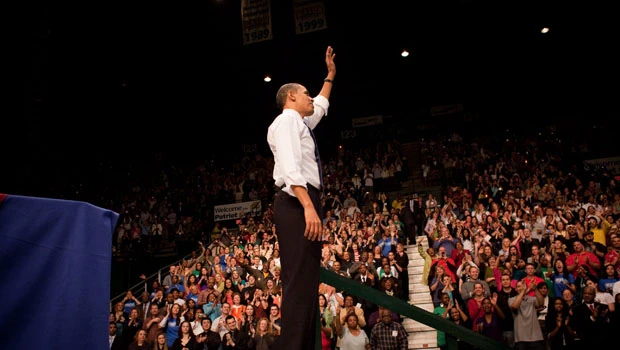
Obama, who delayed a trip to Indonesia and Australia to help ensure passage of the legislation, spoke to an enthusiastic crowd at a suburban university, lobbing attacks at the insurance industry with his coat jacket off and sleeves rolled up.
“The only question left is this: Are we going to let the special interests win once again, or are we going to make this vote a victory for the American people?” he said.
Obama described the stakes in stark terms, using words uttered so rarely out of the White House that they seem all but banned: “If this vote fails.” What then? “The insurance industry will continue to run amok,” the president said, pointing to rising rates, denials of coverage and limits on care.
Meanwhile in Congress, the vote-counting spotlight swung to Rep. John Boccieri, a Democrat, who announced that he would support the bill despite voting against an earlier version. “I'm not worried about the election,” he said.
“I'm worried about doing what's right.” Boccieri became the fourth House Democrat to switch from “no” to “yes.” Shortly after he announced his decision, Pelosi predicted: “When we bring the bill to the floor, we will have a significant victory for the American people.” The conversation was all about how Democrats would vote since Republicans have formed a virtually impenetrable phalanx of opposition for the past several months. Both liberal and conservative Democrats are not happy with some provisions in the legislation.
The momentum was not all in the right direction for Democratic leaders. Some rank-and-file Democrats who backed an earlier version of health care legislation when it passed the House in November showed signs of defecting.
Weaker restrictions on federal funding of abortion was a concern, but not the only one.
Rep. Stephen Lynch, a Democrat and former labor union activist, said even a one-on-one meeting with Obama on Thursday had not convinced him that the legislation did enough to reform the health system and rein in insurers and drug companies.
“I'm still currently opposed,” Lynch said in an interview Friday. “But the president asked me to think about it, and if there were some type of measure that might move me to a better place on the bill, then he wanted to hear about it.” As rumors flew around the House chamber of more possible opponents-turned-supporters - and also of previous “yes” voters who might withdraw their support - Pelosi worked her members, seeking out lawmakers individually or in small groups on the House floor to try to win them over.
Obama played host to individual lawmakers seeking favors or reassurance.
For the legislation to pass, the House will have to endorse a bill approved by the Senate last year. Then both chambers will quickly pass a package of fixes agreed to in negotiations with the White House.
The Senate would then use a procedure called reconciliation that requires only a simple majority of 51 in the 100-member body, avoiding Republican delaying tactics.
The bill would expand health care to 32 million uninsured, bar the insurance industry from denying coverage on the basis of pre-existing medical conditions and trim federal deficits by an estimated $138 billion over the next decade.
Beginning in 2014, most Americans would be required for the first time to purchase insurance or face penalties if they refused. Large businesses would face fines if they did not offer good-quality coverage to their workers. Millions of families with incomes up to $88,000 a year would receive government help to defray their costs.