
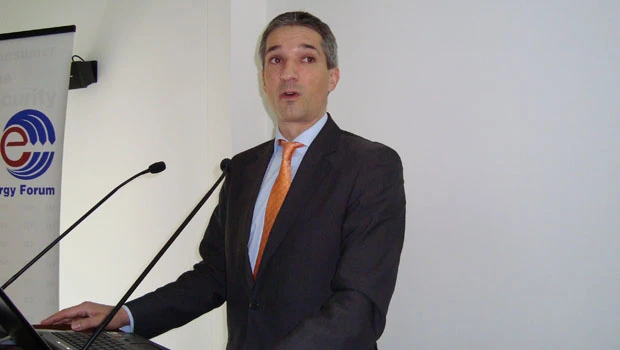
- RIYADH: An international global price coordination mechanism for carbon is the most effective climate change mitigation policy from an international trade perspective, said Dr.
- Christopher Frei, secretary-general of the World Energy Council (WEC) at a lecture held at the headquarters of the International Energy Forum (IEF) in Riyadh Tuesday.
A number of foreign diplomats and senior government officials listened to Christopher’s view on how the global energy industry is coping with the unprecedented challenges it faces.
The speaker was introduced to the audience by Noe van Hulst, secretary-general of IEF.
WEC is the most encompassing industry organization in the world, with member committees in nearly 100 countries, including most of the largest energy producing and consuming countries. Established in 1923, the organization covers all types of energy, including oil, coal, natural gas, nuclear, hydro and renewables.
“Trade in energy and energy services are critical to economic development and international security and they need to be carried out without border or other issues,” said Frei who became the fifth WEC secretary-general on April 1, 2009.
He insisted that government should affirm that any carbon related border taxes do not inhibit the transborder movement of energy goods, services, capital or people. “National carbon emission reduction measures are not to discriminate against foreign investments in energy infrastructure, including research and development,” Frei said.
WEC’s World Energy and Climate Policy Assessment promotes the coordination and monitoring of effective policies to ensure energy security and mitigate climate change, he noted.
Frei said climate change and energy security are global challenges and have no economically efficient solutions within national boundaries. This underlines the role of trade and makes the rules that govern it an essential building block of the global public good. Nationalistic solutions that lose sight of the global picture and the need for a coordinated and collaborative approach delay the necessary international policy convergence. The resulting high investment framework uncertainty makes infrastructure investments unnecessarily risky and people will pay the risk premium as part of higher energy prices, possible energy shortages and further delay in climate change mitigation.
Frei called for global cooperation between higher and lower income countries and financing vehicles that promote technology transfer. He added that public acceptance of energy was imperative on the road to success.