
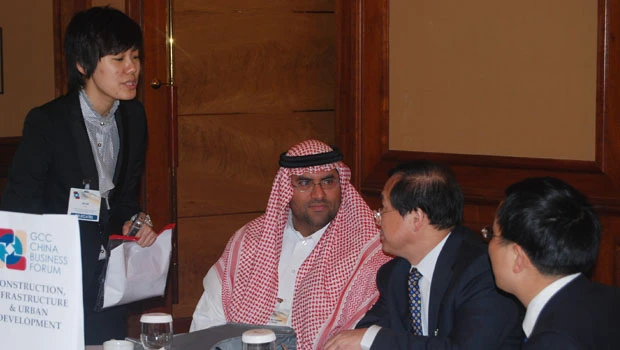
- MANAMA: With the Chinese economy expanding rapidly, Beijing is increasingly looking toward the Gulf Cooperation Council (GCC) states to meet its rising energy needs, and the first GCC-China Business Forum, which opened Tuesday in the Bahraini capital, underscores the potential for closer ties.
Saleh Mohammed Al-Shanfari, managing director of the Global Omani Investment Co., chaired one of the key sessions about capitalizing of the opportunities afforded by GCC-China energy cooperation. He noted that China became a net importer of oil in 1993 after being a net exporter during the 1970s and 1980s.
"China is the second-largest oil consumer after the United States and is one of the fastest growing economies in the world," he said. "Its energy needs are projected to increase by 150 percent by 2020, so it has to cultivate the GCC states with an eye on the future."
Al-Shanfari said this presents an ideal situation for the GCC states to build a lasting relationship with Beijing. "China is a long-term partner," he said and suggested the organization of similar conferences where businessmen from both sides can network with each other and build a better understanding of how to cooperate.
More than 350 high-ranking GCC and Chinese delegates from across the business spectrum are attending the two-day forum. The GCC includes Saudi Arabia, Qatar, the UAE, Oman, Bahrain and Kuwait.
The forum is organized by BME Global Ltd. with the support of the Federation of GCC Chambers of Commerce and Industry (FGCCI), the Bahrain Chambers of Commerce and the China Council for the Promotion of International Trade (CCPTI).
Chinese delegates pointed out how trade relations between Beijing and Arab capitals have broadened dramatically over the past decade. They quoted McKinsey & Co., which predicts that trade flows will climb to between $350 billion and $500 billion by 2020.
"The forum has provided a chance for the GCC countries and China to find common ground over a number of issues, including trade, investments, technology transfers, business incentives and copyrights -- all key issues in the financial, oil, gas and petrochemical spheres," said Abdul Rahman Al-Jeraisy, president of the Riyadh Chamber of Commerce and Industry.
Al-Jeraisy felt China's closed financial system in the past slowed development of Sino-Arab ties.
"China has only opened up in recent years," he said. "It was not a market-driven economy before. It took key decisions and transformed itself. There was this paradigm shift and the results are for all to see."
He said Saudi Arabia has forged a solid trade and political relationship with Beijing and pointed out a number of key projects that have brought the two economies closer.
Saudi Aramco and Sinopec have formed a partnership to build a $5 billion oil refinery in China's Fujian province. Saudi Basic Industries Corp (SABIC), the Kingdom's petrochemical giant, recently got the nod to construct a $3 billion petrochem complex at Tianjin in northeast China. Chinalco, China's state-run aluminum manufacturer, is funding phosphate projects in northern Saudi Arabia and plans to set up a production facility in the Jazan Economic City.
"I would request our businessmen to visit China frequently and to see for themselves what is suitable for our market and whether the products that they intend to import are meeting our standards. That is crucial," said Al-Jeraisy.
A large number of business executives from Saudi Arabia were in attendance at the forum trying to explore investment opportunities in China. Among them was G.P. Agarwal, Al-Suwaidi Group's chief business development officer.
"China holds a lot of potential for Saudi companies," he told Arab News. "It is the best place for the sourcing of new technology and products. The only grey area they have is the quality of the products they supply. However, they are increasingly taking care of it."
In his keynote address, Bahrain Chamber of Commerce and Industry President Essam Abdullah Fakhro explained why the forum was being held in Bahrain. "Bahrain is the financial capital of the Middle East and an ideal destination for industry professionals to gather. It is liberal and transparent for foreign investors and visitors," he said.
According to Fakhro, Bahrain has become a key business and travel hub in the GCC. "Most importantly, it is conveniently situated next to the Eastern Province of Saudi Arabia, which is the industrial capital of the GCC region."
Among the key Chinese speakers on the first day were Zhang Wei, vice chairman of the China Council for the Promotion of International Trade; Rui Li, deputy provincial governor of Ningxia Hui (Muslim) Chinese Autonomous Region; Xinglong Chen, commissioner of the Haidong Region, Qinghai Province; and Haiyan Sun, chairman, Trinasolar Co. Ltd.
Since 2006, Asia has been the GCC's largest trading partner, according to data compiled by Standard Chartered Bank. As of last year, Asia accounted for 55 percent of the GCC's total trade of $758 billion.