- Gulf Film Festival director Masoud Amralla Al-Ali sheds light on effects of films on culture
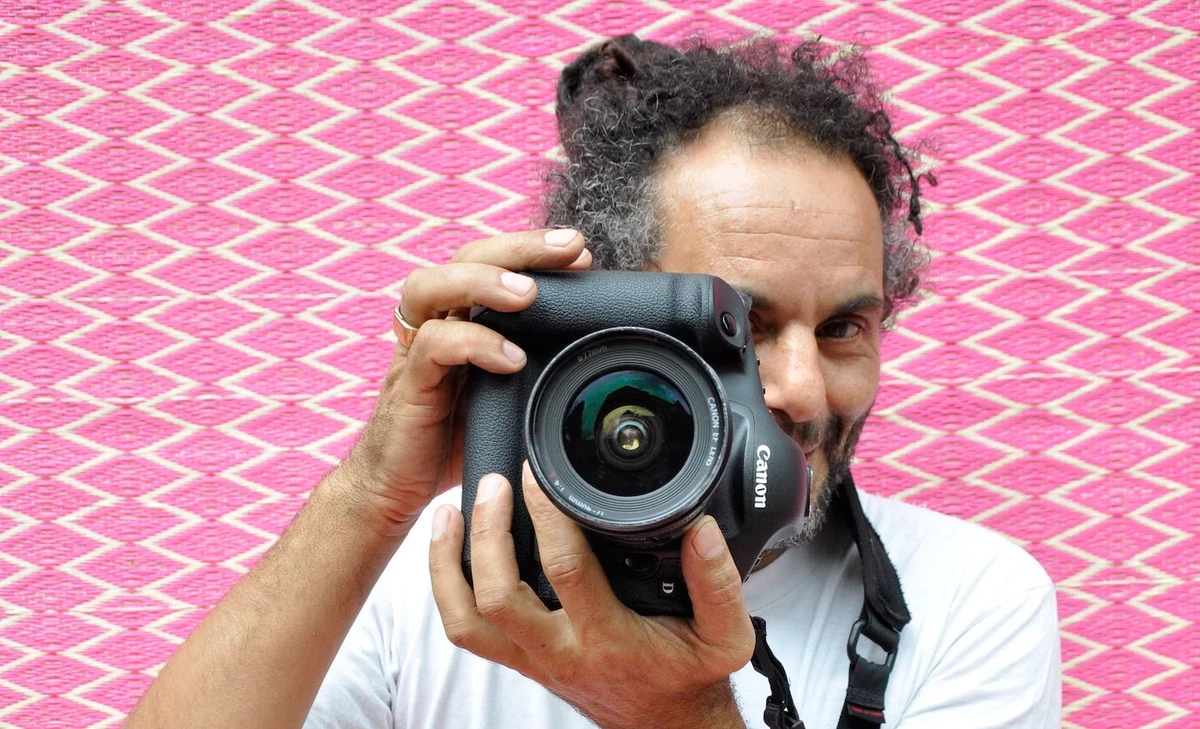
JEDDAH: Director of the Gulf Film Festival Masoud Amralla Al-Ali claims that there is plenty of filmmaking talent emerging in the Gulf.
He also says that women are proving their abilities as mature filmmakers, adding that this year there are around five Saudi women participating in the festival.
“We have so many topics that have not even remotely been explored. I believe in filmmaking that is unique and carries the essence of the Gulf,” he told Arab News.
“Cinema is a very powerful tool to spread awareness, and it can be used to bring change for the better. And I see that it is gradually becoming more integrated within Gulf culture. In 2001 many parents whose daughters had worked in films did not want their chidren’s names to appear in the credits. Now I see parents accompanying their daughters to the film festival and discussing the film with them, so you can see that there is acceptance.”
Al-Ali has been closely involved with the Dubai International Film Festival (DIFF) since its inception. In its early years he was responsible for its Arabic programming, including the popular “Arabian Nights”section and UAE-focused “Emerging Emiratis”, which has since evolved into a pan-Gulf showcase.
His dedication to the region’s talent led Al-Ali to found the Emirates Film Competition in 2001.
The UAE’s first showcase for local film talent, the annual competition is widely recognized as a turning point for Gulf cinema and a launch pad for its talent.
Today, Al-Ali serves as director of the Gulf Film Festival, which emerged as the successor for the Emirates Film Competition.
Al-Ali’s involvement with DIFF is the most recent step in a career steeped in the arts. A lifelong creative, the Emirati national first emerged into the public spotlight with his passion for poetry.
After moving into filmmaking as a visual exploration of the written word, he produced his first short films and documentaries in the late 1980s and early 1990s.
“I thought about exploring the written word as an image. Every word we read can trigger so many images. And everyone can understand an image, regardless of whether the person is educated or not. An image forms part of a universal language,” he said.
Al-Ali says his documentary-making experiences were very beautiful and cinematic.
“When you look at the people around you through the lens of a camera you will see that their lives are very cinematic. I think the difference between real-life and screen-life is that on the screen we usually see how we want our lives to be, and in real life we find things that are stranger than fiction. That’s why I feel real-life is more cinematic than screen-life.”
His wealth of film knowledge, firsthand experience in writing, directing and producing films and passion for encouraging talent from the region make Al-Ali one of the defining voices and leading mentors of contemporary Arab cinema.
“In order to be a good director you need to be a thinker. Remember you have one mind and you are making a film that is going to be screened in a theater for hundreds of minds to watch. You must give them a challenge, as your one mind is going to go up against all these minds. You must be a real thinker to be able to captivate all these different minds. To be a thinker you must read, listen, watch, use all your senses.”