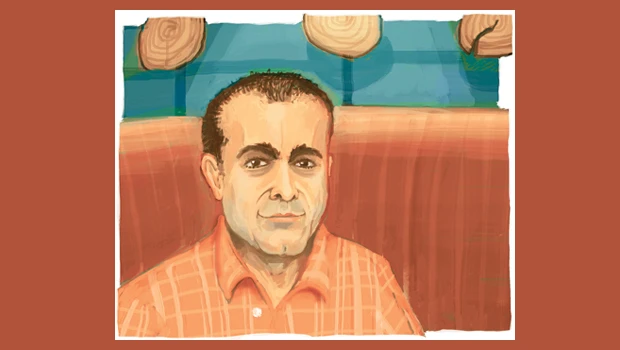
- Bahman Ghobadi sits down to lunch at Firefly, the tony restaurant at the Hotel Madera, fiddling nervously with his mobile phone.
- The filmmaker, who the night before presented his new movie “No One Knows About Persian Cats” at Filmfest D.C., is awaiting word on an airline flight.
Limitations are all too familiar to Ghobadi, who at 41 presents a trim, compact figure with close-cropped dark hair and extravagantly lashed brown eyes. Born in a small town in Iranian Kurdistan near the Iraq border, Ghobadi overcame discrimination to make a stunning debut 10 years ago with “A Time for Drunken Horses,” a grimly unsentimental portrait of the struggles of a destitute Kurdish family (and also the first feature film to be made in Kurdish, a language banned in Iran since the 1940s).
With such subsequent films as “Marooned in Iraq” and “Turtles Can Fly,” he secured his place in world cinema as one of its most gifted poetic realists, whose films — often featuring children in desperately difficult circumstances — manage to portray tragedy without an ounce of cheap melodrama.
Over a lunch, Ghobadi — speaking through an interpreter — considered the observation that his films always end in heartbreak. “Perhaps a little,” he says in English. “It comes from within me. ... The day I was born in Kurdistan, it was like I was born into my 18th year. I’ve seen two or three wars. About 10 people have died before my eyes, at least. We’ve moved from four or five towns or villages that have been destroyed. As a Kurd and a Sunni, I’ve experienced all kinds of discrimination, whether at work or in education. How can I throw a covering over all of this?
“I’m not a filmmaker,” he concludes. “I’m a windowmaker. I want to open a portal into a corner of the world, (and) I want to invite you to see the world through that portal that I open up. That’s the only function I see for cinema.”
“No One Knows About Persian Cats” simultaneously inveighs against the regime that routinely censors and disrupts what it deems “decadent” artists, and celebrates the ingenuity with which Iranians circumvent authority. The film also marks a departure from Ghobadi’s usual quiet, austere style. Shot over 18 frenetic days in Tehran’s lively underground music scene, the movie features real-life musicians pursuing their art in the city’s basements and bootleg studios, avoiding arrest or the destruction of their instruments by police. The film stars the indie-rock duo Negar Shaghaghi and Ashkan Koshanejad, whose real-life search for backup musicians and exit papers parallels the story in the movie, although Ghobadi added the fictional conceit of a Shakespearean ending.
Featuring lots of MTV-like montages of Tehran street life, the movie is both a love letter and an indictment, presenting the city as chic, cosmopolitan, repressed and impoverished, all in one contradictory jumble. “I wanted to show you the real Tehran,” Ghobadi explains. “The Tehran that’s full of tension, full of worry, about to explode.”
Ghobadi got the idea for “No One Knows About Persian Cats” a few years ago, when a project stalled because he couldn’t get the proper permits. He fell into a deep depression before a music-producer friend took him into a recording studio as a diversion.
“That’s where I saw how brave these guys are,” Ghobadi recalls. “How they work on their music without crews, without money, without technology. That made me embarrassed. Why had I lost two or three years looking for those stupid permits?” Taking cues from his subjects, Ghobadi shot his film guerrilla-style, with no permits and on the fly.
The film has another real-world twist: Ghobadi’s girlfriend, the journalist Roxana Saberi, who co-wrote and co-produced “No One Knows About Persian Cats,” was herself imprisoned several months after the film was made. She spent 100 days in Iran’s notorious Evin prison before being released just days before the film was shown at Cannes. The film, he hopes, will show another side to a country so often portrayed only as a nuclear threat or a geopolitical chess piece.
When Ghobadi was growing up, he went to the town’s sole movie theater for the food. “So it was my love of sandwiches, I think, that brought me to the love of cinema.” At 18, Ghobadi made a short animated film that won a prize at a competition in Tehran; after studying film at the Iranian Broadcasting College, he made a short documentary called “Life in Fog” in 1999 that received several awards on the international festival circuit.
Like the post-election uprisings captured on video and uploaded on YouTube last June, Ghobadi’s portrait of creative insurgents suggests a generation poised to redefine Iranian culture and politics. (According to Ghobadi, more than 90 percent of artistic production in Iran is created underground.)
These days the filmmaker apportions his time between Los Angeles (where two of his sisters live), Iraqi Kurdistan and Berlin, where he is preparing to make his next movie, “60 Seconds About Us,” a drama he’s co-writing with Guillermo Arriaga (“21 Grams,” “Babel”) and which he hopes will star Javier Bardem.
“No One Knows About Persian Cats,” the new movie from gifted filmmaker Bahman Ghobadi.
(The Washington Post)