
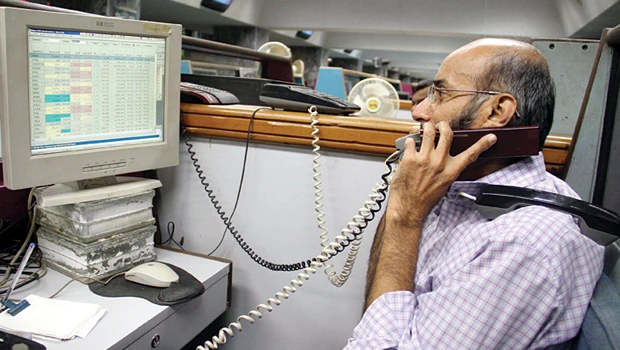
- NEW YORK: Global stocks rebounded on Wednesday on favorable April US home sales data, while the yen fell after Japanese Prime Minister Yukio Hatoyama resigned, because his likely successor has previously said he wanted a weaker yen.
Oil prices rose above $73 a barrel as the rally in US stocks eased concerns that Europe's sovereign debt crisis could restrain a fragile economic recovery, including fuel demand.
US government debt prices dipped as rising stocks offered a semblance of stability for jittery investors and curbed the appetite for safe-haven bonds.
Wall Street rallied more than 1 percent, boosted by a survey that showed pending sales of previously owned US homes topped expectations in April to hit a six-month high, and as investors snapped up shares that tumbled during Tuesday's sell-off.
The National Association of Realtors said its Pending Home Sales Index, based on sales contracts signed in April, increased 6.0 percent, to 110.9, as prospective home owners took advantage of a popular home buyer tax credit. Eligible homeowners were required to sign sales contracts by April 30, and must close on the sales by June 30, to qualify for the federal tax credits.
Analysts polled by Reuters had forecast pending home sales would rise 5.0 percent.
"This report is a confirmation that there's housing demand out there and confirmation of an improving labor market," said Phil Orlando, chief equity market strategist at Federated Investors in New York. "All of this suggests that things are improving."
European shares also eked out gains in a choppy session on the upbeat US housing data, and defensive drugmakers gained.
The pan-European FTSEurofirst 300 index closed up 0.1 percent at 1,003.58 points.
MSCI's all-country world equity index pared losses to rise almost 0.4 percent.
But persistent fears that the euro zone's debt crisis could jeopardize the region's recovery weighed on banking shares, pushing down Barclays 2.2 percent and Banco Santander 1.85 percent.
"Investors are still concerned that the euro zone debt problem is not over, and it will keep hanging over the equity market until the market gets to a more reasonable valuation," said Koen de Leus, economist at KBC Securities.
At 12:35 p.m., the Dow Jones Industrial Average was up 111.25 points, or 1.11 percent, at 10,135.27. The Standard & Poor's 500 Index was up 14.39 points, or 1.34 percent, at 1,085.10. The Nasdaq Composite Index was up 31.22 points, or 1.40 percent, at 2,253.55.
The Dow Jones US Home Construction index rose 1.3 percent.
Energy shares were among the best-performing stocks, recovering after the latest failed attempt by BP Plc to halt the oil spill in the Gulf of Mexico and the news that the US government had launched a criminal probe into the disaster.
US-listed shares of BP still managed to climb, rising 2.5 percent to $37.44 as it worked on a new plan to halt the spill. The PHLX Oil Service Sector index climbed 3.7 percent as Halliburton Co. jumped 9.8 percent to $23.21 and Schlumberger Ltd. advanced 7.6 percent to $55.71.
The US dollar was up 1.2 percent at 92.10 against the yen after Hatoyama stepped aside as prime minister, making room for his expected replacement, Finance Minister Naoto Kan.
"Kan is a noted dove who has been an aggressive proponent of a lower yen in order to help stimulate Japanese exports," said Boris Schlossberg, a director of currency research at GFT, in New York.
"With Japanese political situation in state of flux, the dollar may be the only safe-haven instrument left in the currency market for the time being," he added.
Schlossberg also cited Japan's political turmoil, saying that it "has damaged some of the yen's safe harbor reputation as Hatoyama became the fourth Japanese prime minister in four years to leave the office."
The dollar was up against a basket of major currencies, with the US Dollar Index up 0.11 percent at 86.74.
The euro was up 0.15 percent at $1.2243, paring earlier losses.
European Central Bank board member Christian Noyer was cited as saying the single currency's exchange rate against the greenback was around a 10-year average and "by no means an unusually low level."
US crude prices for July rebounded to rise 93 cents to $73.51 a barrel after the pending home sales data. ICE Brent rose $1.60 to $74.31 a barrel.
The benchmark 10-year US Treasury note was down 14/32 in price to yield at 3.31 percent.
Spot gold prices fell $1.75 to $1,222.50 an ounce.
The MSCI index of Asia Pacific stocks outside Japan fell 0.6 percent. Japan's Nikkei stock average fell nearly 1 percent, surrendering some early gains.
Across Europe, Britain's FTSE 100 shed 0.2 percent, Germany's DAX was flat and France's CAC-40 fell 0.1 percent.