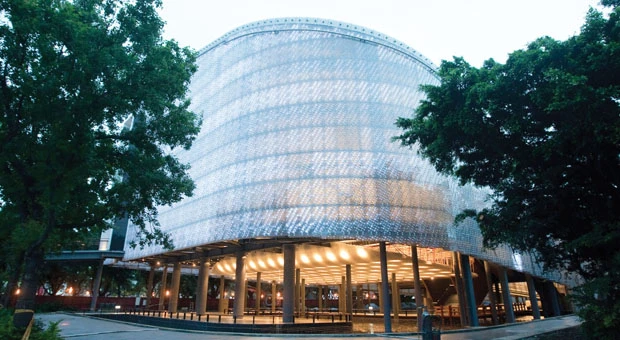
- Arthur Huang, a Taiwan-based engineer, is turning waste plastic bottles into an exhibition hall and may build military barracks with the same material.
His team processed almost 1.8 million used polyethylene terephthalate, or PET, bottles into bricks for a boat-shaped exhibition hall named EcoArk which will be used at Taipei’s flower show this year. The building, commissioned by the Far Eastern Group, costs one-third of conventional structures made of glass, metal panels and concrete, said 31-year-old Huang.
Such projects may help reduce the amount of dumped plastic bottles, which are made from materials derived from petroleum. Less than half of the PET the world consumes is recycled, in which form it is mostly used to make fabrics, said Danny Ho, a petrochemical analyst at Taipei-based Yuanta Securities. Global consumption of the plastic material will probably rise to 15.6 million metric tons this year, more than 10-fold compared with the early 1990s, said Ho.
“The Far Eastern project is an example that there’ll be more diversified applications for recycled PET,” Ho said.
Huang, who attended Harvard and Cornell, is working with the Singapore government to build a sports center with PET bottles in the city-state, he said in a recent interview at EcoArk, which is about 85 feet tall. Other potential projects include a warehouse in Taiwan and military barracks at a location Huang declined to identify.
Honeycomb-shaped PET bricks may become a preferred building material for military purposes as they can be easily put together, Huang said. It took him 4 1/2 months to assemble EcoArk, which has an area of six basketball courts, he said.
Far Eastern Group controls Far Eastern New Century Corp., Taiwan’s biggest maker of PET resins. The Taipei-based company can produce 510,000 tons of the plastics material a year, according to its website. The hall needs interior furnishing before being used for shows during the six-month Taipei International Flora Expo that starts in November. The city government aims to attract 6 million visitors to the show. Less than 10 percent of PET bottles, used for soft drinks such as Coca-Cola, in Taiwan end in landfill. The island recycles about 90,000 tons of containers made from the petroleum derivative, creating $78 million of raw material, according to the website of the Environmental Protection Administration.
“When reused, the trash has a value,” Huang said.