- JEDDAH/RIYADH: Over 20 scientists from Saudi Arabia and China said on Wednesday that they had completed mapping the genome of the Arabian camel which could lead to potential medical discoveries.
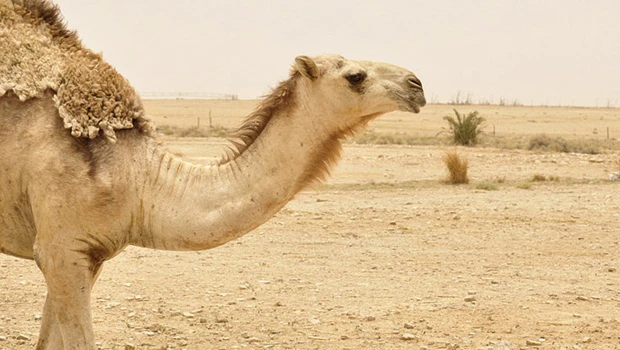
Speaking at a press conference in Riyadh, scientists from King Abdulaziz City for Science and Technology (KACST) and China’s Shenzhen-based Beijing Genomics Institute (BGI) explained how the single-humped Arabian camel (known by its scientific name as Camelus dromedarius) is part of a select few mammals that have been studied in this way.
“The Arabian camel today enters a highly exclusive club of selected few mammals which have had their full genome sequenced and analyzed,” the two institutions said in a joint statement.
Sequencing and analyzing the entire camel genome, which has “remarkable similarities” to cattle, could lead to a better understanding of the camel’s ability to survive in the harsh desert environment, they said.
Unlocking the genetics underpinning the camel’s immune system could lead to potential medical discoveries; the genome data can also help scientists understand better how the mammal produces its highly nutritious and medically valuable milk, they said.
Dr. Abdulaziz Al-Swailem, a senior scientist and policy adviser within KACST, said the project was carried out in two phases and took approximately four years.
“We already knew that there were useful characteristics in the Arabian camel, such as its heat resistance, nutritional benefits and medical properties. This is what led us to further investigate the species’ bio-health,” he said.
The findings of the research show that 57 percent of the camel’s genes are shared with humans.
“Because camel and humans have been found to share over half of the same genes, we hope to further research the camel’s immune system which will help in the development of new vaccines for not only improving the camel’s health but unlocking the aspects needed to cure diseases, such as cancer, AIDS, and Hepatitis C,” he said.
Al-Swailem said his team had already carried out tests on certain diseases as part of the joint research to get more insight into how humans could benefit, adding that further studies are still needed.
“The sequencing of the camel genome achieved by KACST and BGI will contribute greatly to the world-wide genomics and post genomics research,” said Jian Wang, BGI’s director.
“We look forward to further expanding our understanding of the camel’s physiological and biochemical characteristics and to bring it to application for the benefit of mankind,” he added.
Jun Wang, BGI’s executive director, said, “It was a first that the Saudi researchers at KACST wanted to work in studying the camel genome in cooperation with BGI, and we are proud to have partnered with such a prestigious organization on the project.” He added that the research is very beneficial in the world of genomics.
“This is the next in a group of mammals whose genes have been mapped and found to have similarities with humans providing new hope that the data can benefit mankind,” he said.. “This shows the simple connections between the animal world and human beings,” he said.
Agricultural benefits from the new genome data will be used to reconstruct metabolic pathways for milk production, and improve the quality of camel meat, and their physical strength and racing ability.