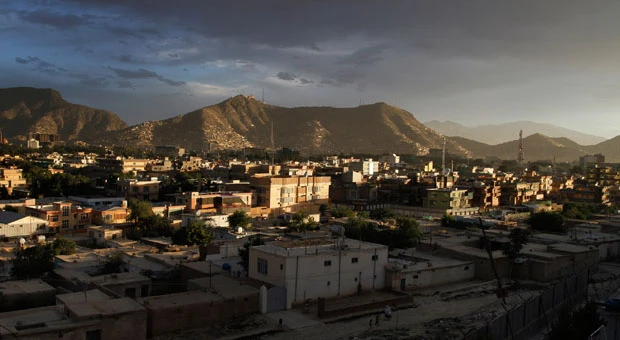
- New-found treasure could change the country's fortunes or plunge it into endless war
KABUL: New deposits found by the United States in Afghanistan could turn the impoverished country into a global mining giant.
A memo issued by the Pentagon has described a wide range of previously unknown mineral deposits, estimated to be worth $1 trillion, to have been discovered by an American geologist in Afghanistan, according The New York Times.
The minerals found include gold, copper, iron, cobalt and lithium, which is essential for producing batteries used in many everyday electronics, such as laptops and smart phones.
Despite the unstable security situation where Taleban attacks are becoming more and more daring, there is hope in Washington that this discovery will lead to an economic upswing with much-needed employment in the war-torn country.
But experts like Candace Rondeaux, senior analyst with the International Crisis Group in Kabul, have their doubts. “The question will be if Afghanistan has the know-how to get the minerals to the market,” Rondeaux told The Media Line. “And it’s safe to say that Afghanistan has a long way to go."
"It’s too early to predict the importance of the finds,” she said, pointing out that “It’s not new. Exploration has been going on for a couple of years under US auspices.”
One proven case of a country where rich natural resources have not automatically led to development and progress is Iraq. Despite having the fourth largest proven oil reserves in the world Iraq has been struggling with an insurgency as well as political division between the central government in Baghdad and the semi-autonomous Kurdish region in the north over who has the right to the revenues.
“In the short term it’s always good to finally have some good news after four years of only negative news,” Jorrit Kamminga, director of policy research for the International Council on Security and Development, told The Media Line. “In general, one should not have high hopes. There cannot be any quick fix.”
“In the long term there is a good possibility it would be a big part of the Afghan economy,” he said. “But it will not be a game-changer or the backbone of the economy.”
Asked whether the Afghan government has the capability to develop the deposits, Kamminga said: “Definitely not. It requires a lot of investment and new skills coming from the outside. The Afghan government will be dependent on foreign contractors.
“What we want to do is create jobs for Afghans and not having subcontractors making all the money.”
However, he explained that “some of the deposits are in the south and east of the country where poppy and opium production is located, so any new industry is welcome.”
Anjalika Bardalai, senior editor/economist with the Economist Intelligence Unit, agrees with Kamminga.
“Of course the mineral reserves, if they prove as vast as reported, have the potential to transform the Afghan economy,” Bardalai told The Media Line. “However, this is at best a medium-to-long-term prospect, as a lack of infrastructure and investment means that the country is many, many years away from being able to exploit such reserves on a large scale,” she said.
Untied Nation’s Office of Drugs and Crime ranks Afghanistan as the world’s largest producer of opium and heroin. The southern and eastern parts of the country, along the border with Pakistan, are also where the US-led forces have been struggling with a particularly fierce Taleban resistance since the invasion in 2001.
The drug trade, most of which goes via Iran to Europe, is a major source of financing for the Taleban and eradicating it is an essential part of the American plan to turn Afghanistan into a functioning state after decades of war and occupation. An estimated 80 percent of the Afghan population is employed in the agricultural sector.
The eradication plan initially focused on burning opium fields. But this only generated anger among the farmers who were not given any compensation, so the plan moved toward finding alternatives crops for the farmers to grow in the dry climate. Attempts to replace the opium with saffron, which thrives in this climate, have so far been slow since farmers are reluctant to switch crops, as the price for opium is three times higher.