
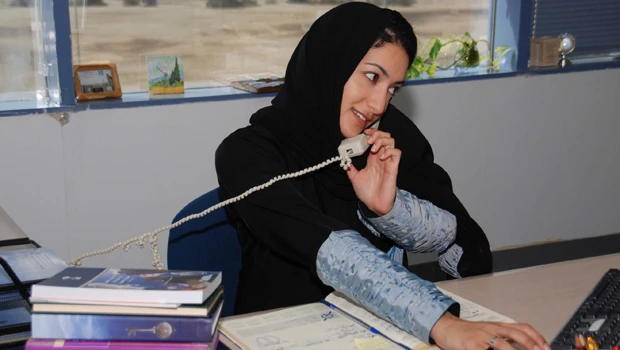
- Saudi women are often perceived as isolated from the world of business and economics.
It is difficult to say how many women own businesses in the Kingdom. Evidence suggests they account for a small but growing share of total business activity. To address the lack of reliable data and to better understand the challenges and opportunities facing Saudi businesswomen, the Khadijah Bint Khuwalid Businesswomen Center at the Jeddah Chamber of Commerce and Industry (JCCI) and Monitor Group, a global firm for developing and delivering specialized capabilities in areas such as marketing and pricing strategy, carried out a study titled “Businesswomen in Saudi Arabia: Characteristics, Challenges and Aspirations in a Regional Context” on current and aspiring women entrepreneurs.
The report also identifies practical ways to support Saudi businesswomen and to facilitate the growth of their businesses.
Noura Al-Turki, a consultant at Monitor Group, said that the idea of the report came about while she was working as manager of research and development projects at AKBK.
“We wanted to conduct a credible study on women’s entrepreneurship in Saudi Arabia that draws on the experiences of real businesswomen while moving away from anecdotal evidence. Especially in the international literature, the only reputable sources they would quote on Saudi businesswomen was Arab News articles,” she said. “I hope this report, which is available in both Arabic and English, will be a conversation starter and one that will fuel more discussion, research and action.”
One of the report’s strategic aims is to contextualize businesswomen in Saudi Arabia by comparing their profiles, businesses, and the types of challenges and opportunities they face to the experiences of other businesswomen in the region. Utilizing regional data from the International Finance Corporation (IFC), a member of the World Bank Group, the report examined and compared Saudi women entrepreneurs to their counterparts in five countries — Bahrain, Jordan, Lebanon, Tunisia, and the UAE. Furthermore, AKBK surveyed 202 registered businesswomen and 62 unregistered businesswomen with varying levels of experience in Jeddah, Riyadh, and the Eastern Province (Dammam and Alkhobar).
The results are compared across the five Arab countries through the use of a set of common questions published in 2007 in a report by the IFC and the Center of Arab Women for Training and Research (CAWTAR) entitled “Women Entrepreneurs in the Middle East and North Africa: Characteristics, Contributions and Challenges.”
As evident in the report, women entrepreneurs in Saudi Arabia are taking advantage of their education and the accelerated pace of reform to create businesses that play an increasing role in the nation’s economy. “We believe the Kingdom is making strides to support women’s active participation and we have every reason to enter this new decade with optimism, courage, and determination,” the report stated.
The study revealed women business owners in Saudi Arabia, as elsewhere in the world to be positive, are oriented toward the future, and committed to finding ways around the challenges that they face. Furthermore, these women have ambitious goals for the growth of their businesses whereas 69.3 percent were very optimistic about the future outlook of their businesses, and a majority expressed their determination to expand their businesses rather than maintain current levels, either through domestic expansion or regional and international market entry. Yet the results also indicated that there are three main challenges to businesswomen’s aspirations and to the future growth of female Saudi businesses.
Challenges of the gender-specific obstacles in the regulatory environment, limited access to and use of formal capital and financing mechanisms and the need for increased integration of sophisticated marketing and technology tools into business operations and greater availability of key support services.
Rebekah Braswell, also a consultant at Monitor Group, said that the study took three months to be completed. “We have relied heavily on the networks of businesswomen for outreach. What was astonishing is the common and ambitious aspirations of our respondents. Whether they were registered, unregistered or prospective businesswomen, they all faced the future with determination to overcome the obstacles they faced as entrepreneurs and with a goal to grow their businesses,” Braswell explained.
She also said that there is still much more to understand about these businesswomen and the challenges and opportunities in their path. “What we can say for certain is that these women have the potential to increasingly contribute to the Kingdom’s economic development and growth. Ideal implementation of some of the recommendations in this report will help them achieve this goal,” she added.
The survey was conducted face-to-face, ensuring that all questions were answered completely. The findings in this report are based on the experiences and viewpoints of 314 women and among them, 20 women were selected for a longer qualitative interview.
Women-owned businesses in Saudi Arabia, both registered and unregistered, operate in a wide variety of fields. The most common businesses owned by surveyed Saudi women are art-based including fashion, jewelry, interior design and photography. Other areas with a large presence are beauty salons, retail/wholesale and professional services such as consulting, marketing, public relations, event management and education.
Saudi Arabia’s registered women-owned businesses are among the largest in the surveyed MENA countries with 72.6 percent of registered women-owned businesses operating outside the home and 92 percent having paid employees. However, women business owners in Saudi Arabia are less likely than their GCC neighbors (Bahrain and the UAE) to be involved in international trade, with only 21.3 percent engaged in either import, export, or both activities. In conclusion to the comparison, three main findings emerge.
Firstly, Saudi businesswomen are significantly more likely to be the sole owners of their businesses than are MENA businesswomen. Secondly, they do not personally spend as much time as their regional peers in the daily hands-on management of their businesses. Finally, Saudi businesswomen are a more highly educated group than the general Saudi workforce — 58 percent of businesswomen have pursued a postsecondary degree, of which three out of ten were completed abroad. Comparatively, only 21.3 percent of the general Saudi workforce has a postsecondary degree, according to the Ministry of Economy and Planning in 2004. However, the level of postsecondary education for Saudi businesswomen is not as high as that of their counterparts in comparable MENA countries.
Regulatory challenges however, contribute directly and indirectly to constrain the business activities of Saudi businesswomen.
For example, businesswomen registering public businesses (businesses that serve both men and women) have been required to appoint a male manager. The lack of relevant business licenses for many popular business activities, such as day-care centers and beauty salons, further complicates the registration process for Saudi businesswomen. In addition, restrictions on women’s mobility due to the absence of public transportation and the ban on driving, as well as restrictions on international travel, may cause delays, extra costs and/or limited options for training abroad.
Recruiting international women specialists to provide training courses within the Kingdom also poses a challenge to business management, due to restrictions on obtaining business visas for foreign women.
The report also revealed that more than half of the businesswomen in Jeddah reported registering the businesses themselves compared to less than a third in Riyadh and one fifth in the Eastern Province.
Only 38 percent of businesswomen reported that they registered their businesses themselves. While it is common for business owners in Saudi Arabia to rely on a third party (also known as a “government relations officer” or “muaqqib”) to handle government procedures on their behalf, this does not appear to be the reason for the low involvement of businesswomen in this process.
Of those who did not register their businesses themselves, the majority relied on their male relatives in all three cities. The variation in the number of women registering their businesses themselves may reflect a variation in ease of access to government services. For example, in locations where access to government services is made easy for women, women are more likely to act independently rather than having to rely on others to act on their behalf.
The report suggested key points to improve the status of Saudi businesswomen.
Recommendations by the end of the report suggested establishing a Ministry of Women’s Affairs; appointing women Shoura members to ensure that the interests of Saudi businesswomen and women in general are represented; eliminating the requirement for women to appoint a male manager in businesses that serve both sexes; easing restrictions on mobility for women in terms of public transportation; driving and international travel; creating registration categories for the types of businesses that are in demand by businesswomen such as beauty salons and day-care centers; and identifying the process for creating new registration categories in the future.
Improving women sections as well as the main centers in government agencies and ease hiring practices for businesswomen in areas that require international female expertise or that are unable to be met by Saudi women labor was also amongst the recommendations in the report. This includes studying the possibility of granting work permits to non-Saudi women residing in Saudi Arabia on nonwork visas.
Whether this report would reach the authorities or remain in the drawers of decision makers, Saudi businesswomen are building their own path and will continue to struggle until their voices are heard.