
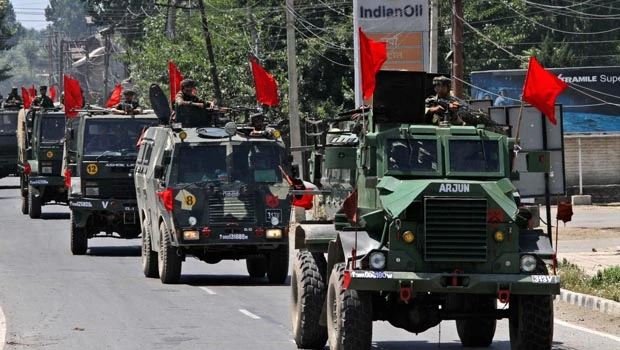
- SRINAGAR, India: Authorities extended a curfew to new parts of India-controlled Kashmir on Thursday after the army moved to take control of the region's summer capital for the first time in almost two decades to quell massive protests.
Kashmir's summer capital Srinagar was kept under curfew for a third-straight day as soldiers patrolled streets.
The protests were fueled by the death of a 17-year-old student hit by a tear gas shell fired by police during an anti-India demonstration in mid-June.
New Delhi has deployed the army as a measure to prevent the situation from spiraling out of control. The central government does not want a repeat of similar demonstrations of 2008 whose vehemence deeply embarrassed the government.
Kashmir's peace is crucial for relations between India and Pakistan. The two countries' foreign ministers are due to hold talks in Islamabad on July 15, the first major talks since the 2008 Mumbai attacks.
In Srinagar, civilians were warned not to go outdoors as soldiers quickly downed shutters of those shops, which opened early in the day to enable people to buy provisions.
"We are in a prison for the last several days. We don't have enough food at home to feed our families," Nadish Mir, a government employee, told Reuters by telephone.
In 2008, the army had not been called out. Those protests eventually died down and India successfully held local elections in Kashmir a few months later. New Delhi showcased the election as an endorsement of its rule over the region. It does not want the gains made since 2008 to be lost now.
Police said the curfew had been briefly relaxed on Thursday morning in some villages in north and south Kashmir to allow people to buy provisions. A fresh curfew was clamped in Baramula, Sopore and Ganderbal towns.
"Parents should take care that their children do not indulge in stone throwing and they should stay indoors," India's Home Minister Palaniappan Chidambaram told reporters, adding the army would stay deployed in Srinagar until the situation improved.