- RIYADH: Most people in Riyadh are reluctant to buy the newly introduced fiberglass cooking gas cylinders despite better safety features because of high costs, according to a report in Al-Watan Arabic daily.
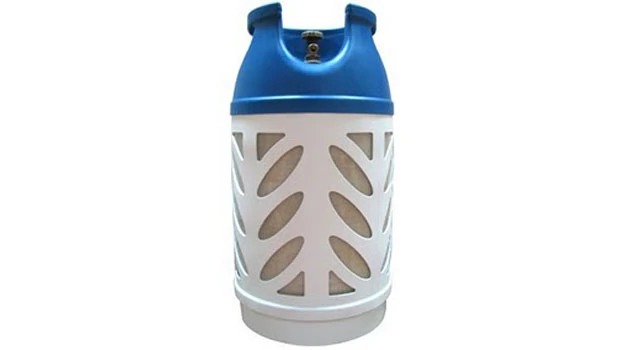
The new, lighter and safer LPG (liquefied petroleum gas) cylinder, which hit the market on Tuesday, is priced at SR350 whereas the old metal cylinder costs only SR150.
Saudi Arabia is the first country in the region to introduce what is commonly known as the “cylinder of the century.” In the first phase, the cylinders were made available in Riyadh city and surrounding areas. They will be available in other cities in coming months.
The product is manufactured by Norway’s Ragasco, and the Alkhobar-based Leyan Al-Sharq Trading Co. has sole distribution rights in Saudi Arabia.
The company officials say fiberglass cylinders are rust-proof and as strong as metal cylinders. An empty cylinder weighs about 5.3 kg and a filled one weighs 16 kg while a filled metal cylinder weighs 27.4 kg.
“Fiberglass cylinders are designed in such a way that they will not explode under any circumstance,” says Muhammad Ali, director general of Leyan Al-Sharq. “We started distributing the product in Riyadh and its neighborhoods. We will make them available in other parts of the Kingdom shortly,” he said.
Response from consumers was lukewarm in the first few days after the product hit the market. A number of Saudi citizens said they are hesitant to buy due to its high price.
Referring to complaints about costs, Muhammad Ali said the new cylinders, imported from Europe, would cost more because of added safety features and top quality standards.
“These cylinders have been in use in nearly 70 countries for 12 years, but not a single case of leakage or explosion has been reported so far,” he said.
Muhammad Ali also noted that the Civil Defense Directorate has conducted several high-flame tests and certified that they are fully safe for both domestic and outdoor use. It was revealed in tests that the cylinder does not explode when exposed to fire and extreme heat. He added that details of the tests are posted on the company’s website www.leyanalsharq.com.
The fiberglass cylinder fully conforms to specifications required by the Saudi Arabian Standards Organization (SASO).
Meanwhile, authorities disclosed that the new cylinders would not replace the current metal cylinders and that both would be available at gas outlets. “It’s up to the consumer to choose,” one official said.
Naveed Khan, a worker at a cooking gas station on King Abdullah Road in Riyadh, said distributors have instructed gas station owners to continue selling metal cylinders.