
- The Louvre museum, once home to France’s monarchs, is one of the great institutions of the world.
- It is certainly at the top of the list for any first-time visitor to Paris.
In many ways, because of its prestige, it almost seems a department of the French state; altogether, a very grand place. One might therefore expect its president and director to be a very grand person, full of haughty disdain for lesser mortals hard put to tell a painting by Titian from one by Tiepolo, identify a statue by Praxiteles or a drawing by Ingres and, at the same time, know all the current goings-on in the French art world and, just as important, the political ones too.
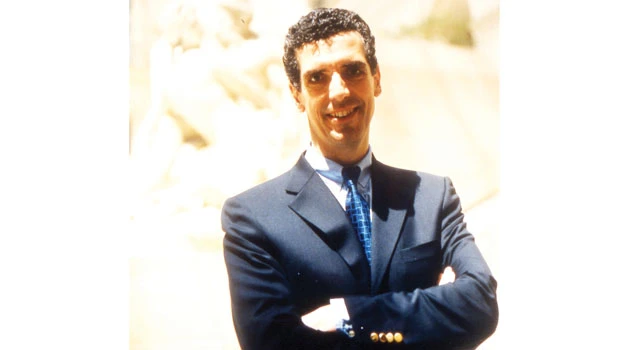
Not at all. Henri Loyrette is remarkably down-to-earth and approachable; he puts one immediately at ease as he explains the importance of an exhibition such as “Routes d’Arabie” in his comfortable yet far from grandiose office.
Six years ago, he and Prince Sultan bin Salman, head of the Saudi Commission for Tourism and Antiquities (SCTA), signed a cultural cooperation agreement which initially resulted, in 2006, in a large exhibition of Islamic art from the Louvre at the National Museum in Riyadh. It coincided with a visit by the then French president, Jacques Chirac, “Route d’Arabie” is, as Loyrette puts it, something of “a return exhibition.”
The agreement opened his eyes. He says that he was “astounded” when, during his visit to Riyadh, he came across the archaeological treasures there. The objects, many of which are now being seen in Paris from Madain Saleh were “a revelation” for him. He views Saudi Arabia’s Nabatean heritage as one of the country’s great riches. “That is what we are trying to show.” For him the exhibition is quite simply “magnificent”. He is sure that it will be a revelation to others.
He also sees it as being important beyond itself. It should help change perceptions about Saudi Arabia and the Muslim world. For him, it also shows that Saudi interest in its heritage is growing.
“The exhibition we did in Riyadh and the exhibition we are doing now here in Paris show that there has been an evolution.” These are, he says, exhibitions wanted by the Saudi authorities. He points, too, to the enthusiasm of particular individuals. “There is the support from someone like Prince Alwaleed for the (Louvre’s) Department of Islamic Arts. There is also the example of Prince Sultan bin Salman, who has had a major role in the organization of the exhibition. He is personally fascinated by the country’s architecture and the renewal of that architecture.”
Such developments demonstrate the growing Saudi Arabian appreciation of its heritage. He points, too, to the taste for collecting arts and artifacts. “That is quite new.”
The agreement signed between the SCTA and the Louvre in 2006 also bears witness to the changed Saudi approach.
Museums are not what they were or what some people still imagine them to be — dusty repositories of ancient artifacts dug up by long forgotten enthusiasts and now maintained by venerable but unworldly academics. Today museums are scientific research centers — and that can be seen in the terminology used. Museology is the study of organizing and managing museums and their collections; museography is the listing and description of a museum’s collection. These are highly regarded academic subjects — and Saudi Arabia is increasingly no less caught up in the science than elsewhere.
Loyrette points to both the agreement with SCTA and that with Abu Dhabi where an offshoot of the Louvre is being built. The museum’s links with the Middle East go back to the 19th century — with Egypt, with what are now Turkey, Syria, Iraq, Iran. But then, he says, and into much of the 20th Century, they focused on archaeological digs, the importance of sites, the publication of academic papers. That still occurs he says but “more and more there are exchanges which touch on training, museography, museology — everything that can help, everything that can contribute to the birth of a museum.”
It is in this very precise framework that the partnership signed with Saudi Arabia has to be seen, says Loyrette. The partnership is about scientific collaboration but it also covers training for all aspects of work in museums. “It could be scientific personnel, administration, people dealing with education or more technical functions.” The agreement is part of a new way of doing museums.
The project in Abu Dhabi is another example of the new museum world of partnerships. “It is part of a long term engagement,” Loyrette explains. The use of the name “Louvre” will be allowed for 30 years. Loans from French museums will go on for 10 years after its opening in 2013. French cultural institutions have been engaged in drawing up and proposing exhibitions for 15 years. But “no other project of this type is being undertaken at present.”
The Louvre Museum and the associated Museum of Decorative Arts which is also housed in the Louvre have vast collections of Islamic art running to some 18,000 items dating from the 7th to the 19th centuries, and from as wide a geographical area as possible — Spain to India and beyond. As the director explains, “It comprises a very wide spread of items in which the artists exercised their creative talents — architecture, books, ceramics, carpets, metalwork, glass ivory . . .”
“The collection of the Arts of Islam department at the Louvre started to be formed in the second half of the 19th century under the joint instigation of both enlightened amateurs and historians,” he says. The Louvre acquired some important historic works while the Museum of Decorative Arts built up a very different collection showing startling aesthetic qualities and brilliant and innovative technique by Muslim craftsmen.
The two collections are “remarkably complementary”, says Loyrette. “The Islamic Middle Ages shine at the Louvre while the art of the more recent great Muslim empires of the 16th to 18th centuries sparkle at the Museum of Decorative Arts.” The collections include in particular a number of very fine textiles and carpets as well as real masterpieces such as an exceptional ivory box made in 968 AD for one of the sons of the Caliph of Cordova. “The department continues to enrich its collections by purchase or donation — recently two generous Italians donated more than 130 works to the department. The Louvre today possesses one of the richest and most beautiful collections of Islamic art in the world,” says Loyrette.
It was from this collection that the 2006 exhibition in Riyadh was formed. But there have been drawbacks. Loyrette agrees that despite the richness of the collection it was not well known. It was not shown to its best advantage. He points out the space was too narrow to show large carpets and architectural pieces.
That is changing. A new Department of Islamic Arts is being created. Meanwhile all the museum’s objects have been inventoried in a massive program that will make for easier and more professional presentation in future. “Never has there been such a massive undertaking at the Louvre,” he says. The thousands of objects in the Department of Islamic Arts have thus been studied, documented, photographed, measured, weighed and, where necessary, benefit from conservation measures. They are being returned for public display in the new Department of Islamic Arts which will open in 2012.
Quite apart from aesthetic reasons, there have been pressing contemporary reasons for the changes. Loyrette talks of the need to show the public the bright side of Islamic civilization because, every day, people are being fed a very different picture. Islamic arts, he says, have to be at the heart of the Louvre collections; there has to be what he calls a “balanced dialogue” between them and the arts of Europe.
As part of that, he sees the exhibition as being something of a watershed. In particular with reference to Saudi Arabia. “The French public know almost nothing about the heritage of Saudi Arabia. It is a great honor to help them discover it.”