- RAMALLAH: As US peace envoy to the Middle East George Mitchell began discussions with Palestinian and Israeli officials in order to revive direct peace talks, violence erupted on ground.
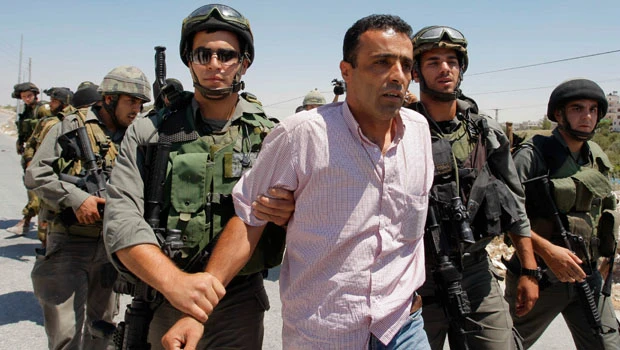
Palestinian sources said that dozens of Palestinian, Israeli and foreigner peace activists suffered from gas inhalation and several others were wounded when Israeli soldiers used force to disperse anti-separation wall protests in the West Bank villages of Bil’in, Ni’lin, Dir Nizam and Al-Mi’sarah.
The sources said that two activists — an Israeli and a Dane — were arrested in Ni’lin.
The sources added that 12-year-old Majd Bornat and 18-year-old Mohammed Hamad were injured after they were hit in their feet by tear gas canisters. They were evacuated to the Ramallah hospital for treatment.
Israeli security sources said that a female Israeli photographer was also wounded during clashes near Dir Nizam, located to the west of Ramallah.
The violence came almost a day after Mitchell arrived in the area for a new round of talks between Israel and the Palestinian Authority (PA). On Friday, Mitchell met with Israeli Prime Minister Benjamin Netanyahu in an effort to advance direct talks with the Palestinians, slated to begin in August.
Mitchell has been shuttling between Israel and the PA since Washington launched the proximity talks in May. He is scheduled to meet Palestinian President Mahmoud Abbas on Saturday, who is facing pressure from the US administration to agree to direct negotiations with Netanyahu.
Abbas refuses to engage in direct negotiations before Israel freezes settlements.
Media reports said that the US envoy is carrying “new motivation” to the Palestinians to encourage them to go into face-to-face negotiations with Israel.
However, the PA rejected moving to direct talks with Israel in exchange for Israeli good-will gestures, terming them as “an insult.”
Sa’eb Erekat, the chief Palestinian negotiator, told the Voice of Palestine radio on Friday that “Going to direct negotiations in exchange for motivation, including financial support, is insulting.”
Erekat said that stopping settlement expansion in Palestinian territories, removing checkpoints and releasing prisoners “are Israeli obligations and can’t be considered as motivation or good-will gestures.”
He added that the Palestinians want Israel to stop settlements in East Jerusalem, the city that they see as the future capital of their statehood, and agree to start the direct talks from the point they broke off at in 2008.
Officials of Fatah movement called on Abbas on Thursday to resist US and Israeli pressure to start direct negotiations.
“The lack of credibility and confidence resulting from the Israeli rejection of the indirect talks, which have achieved no progress, will become entrenched as ‘givens and facts’ if there is a transition to direct talks,” Fatah said in a press statement.
“That is something the Palestinian leadership has not and will not accept,” the statement added.
The goal of the proximity talks is to reach an agreement on the borders of the future Palestinian state and settle security issues. However, the Palestinians said the talks haven’t made any progress so far.