- Clinton says rigorous controls must for any civilian nuclear deal
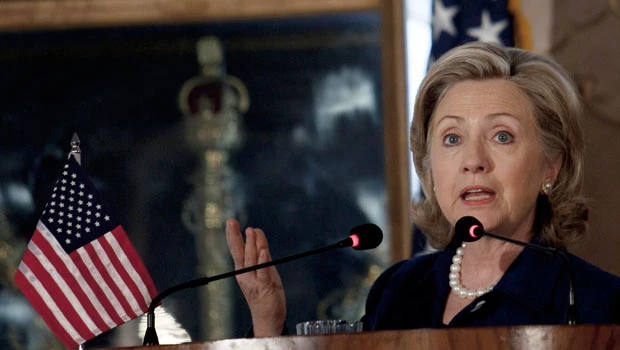
ISLAMABAD: US Secretary of State Hillary Clinton announced over $500 million in new aid projects for Pakistan on Monday and said the United States was interested in supplying nuclear technology to Pakistan but has reservations about scientist A.Q. Khan.
During a full day of engagement with politicians, journalists and officials, Clinton said that both the United States and Pakistan should work harder to go after Al-Qaeda leaders still believed hiding in Pakistan's borderlands in the northwest. "I believe (Bin Laden) is here in Pakistan and it would be very helpful if we could take them (Al-Qaeda leaders)," Clinton told a roundtable of journalists.
During a joint news conference with Pakistani Foreign Minister Shah Mehmood Qureshi, she said the United States has conveyed its "concerns" to Islamabad over China's sale of two civilian nuclear reactors to Pakistan.
Washington has sought clarification from Beijing on the deal to build two new 650MW reactors in Punjab province, saying it must be approved by the Nuclear Suppliers Group (NSG).
"We believe that the NSG, which has recently met to examine the sale that you are referring to, has posed a series of questions that should be answered because as part of any kind of transaction involving nuclear power, there are concerns by international community, Pakistan knows that," said Clinton.
"We have conveyed them (concerns), other members of the NSG conveyed them and we look forward to answers of those questions posed," she said.
Clinton said discussions had begun to explore a civil nuclear deal with Pakistan, but outlined issues to be addressed including rigorous controls over the export of nuclear information and material.
Pakistani nuclear scientist A.Q. Khan confessed in 2004 to sending nuclear secrets to Iran, Libya and North Korea, although he later retracted his remarks.
"Export controls, and the problem with Mr. A.Q. Khan raises a red flag for people around the world and not just in the USA, because we can trace the export of nuclear information and material from Pakistan through all kinds of channels to many different countries. That is an issue," Clinton said.
She announced a string of new projects for Pakistan including dams, power generation, agricultural development and hospital construction — funded under US legislation passed last year tripling civilian aid to $7.5 billion over the next five years.
The projects, the first to be launched under a new aid plan, are seen as crucial to shoring up support for the US-led struggle against militants in a country where opinion polls show fewer than one in five view the United States favorably.
"The opinion about the United States in Pakistan will change when the people of Pakistan see how, through this partnership, their lives have changed," said Qureshi.
The Obama administration sees nuclear-armed Pakistan as a pivotal player in the struggle against militant groups in both countries. But the two sides are divided by a history of mistrust and sometimes diverging goals over a war that is becoming increasingly unpopular.
Opinion polls have shown many Pakistanis doubtful about long-term US intentions, citing examples of abandonment, particularly after the Soviet Union withdrew from Afghanistan.
— With input from agencies