- HAJ OMRAN, Iraq: Despite a pledge by Iraqi Kurdistan to crack down on the flow of fuel being smuggled to Iran, the only real impediment truck drivers say they face are long lines that force them to wait for days to cross.
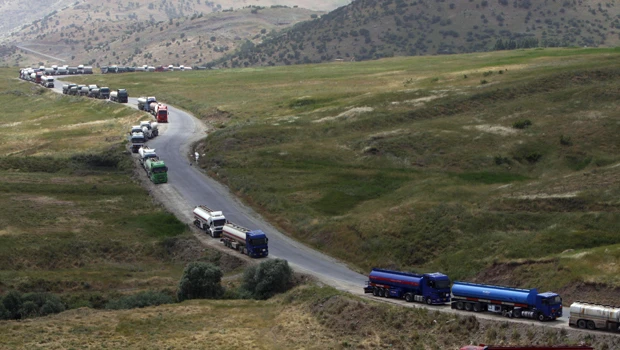
Perhaps around 100 tanker trucks corralled into groups of 10 or a dozen by Kurdish police idled on the road to the border point of Haj Omran on Tuesday, waiting for their chance to pass over to unload fuel at Iranian ports or fuel depots.
"I've been waiting for two days to be able to pass over to Iran and take my 24 tons of fuel safely to Bandar Abbas port," said Barzan Hussain, a driver who works for a Kurdish shipping company based in Irbil.
The cross-border trade in fuel is a challenge to US efforts to impose sanctions on Iran over its nuclear research program, and an embarrassment for Washington's Kurdish allies, eager to remain in the good books of the United States as US troops prepare to withdraw from Iraq by the end of 2011.
It is also another thorn in the side of often-tense relations between Iraq's Arab majority and ethnic Kurds who have enjoyed virtual autonomy in their northern enclave since the end of the first Gulf War.
The federal government in Baghdad says any trade in crude oil would be illegal, because Iraqi law only allows the State Oil Marketing Organization to export it.
It is also critical of any trade in refined products, because seven years after the US-led invasion, Iraq still does not produce as much refined fuels as it needs and has to import.
On Monday, the Cabinet of the Kurdish Regional Government approved stricter measures including stepped up border surveillance to stop any illegal trade in crude across its borders. There was little sign the next day at Haj Omran that border guards had been told to be more vigilant.
The trucks heading to Iran brave dangerous, winding roads in some of the most mountainous parts of Iraq to reach Haj Omran, which lies in the shadow of Halgurd Mountain, the highest peak in the country.
Drivers waiting at the border said companies they work for are only transporting fuel oil, like diesel and other refined products, to Iran and they make $80 per ton, plus a bonus of $100 for each driver.
The mayor of Haj Omran town said all the fuel trucks going to Iran were working legally and for the regional government. "Why would we stop them? These companies have legal contracts with the government of Kurdistan to transport fuel oil and oil waste to Iran," Mayor Karwan Aref told Reuters.
Aref said local officials had not received any instructions from the regional authorities to check the trade.
Shipping agents working with a company in Irbil said they signed contracts with the Kurdish region's Minerals and Natural Resources Ministry about a year ago to transport all kinds of fuel to Iran in trucks. They declined to say whether crude oil was included.
The head of the Haj Omran border post, Hamad Jafaar, said only refined products were allowed to cross the border.
"All refined products transported to Iran are legal and carried out with the legal approval of the Minerals and Natural Resources Ministry and this is why we let them cross," Jaafar told Reuters in his office.
Jaafar said he had not received any instructions to stop fuel shipments to Iran and had only heard of such measures on television.