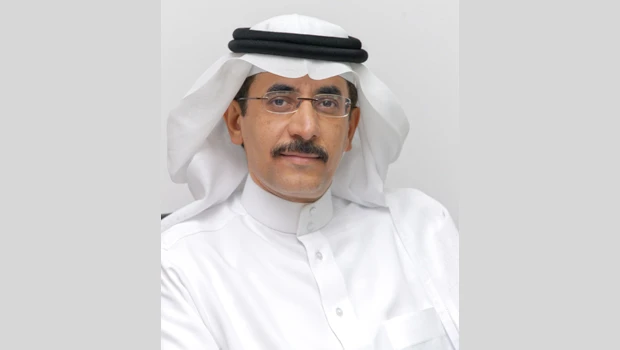
- Khaled Mohammed Al-Aboodi is a member of a new breed of Islamic development bankers.
- As CEO and general manager of the Jeddah-based Islamic Corporation for the Development of the Private Sector (ICD), the private sector funding arm of the Islamic Development Bank (IDB) Group, he has a mandate which potentially is as important as its parent, especially in linking between Islamic finance and the real economy through supporting Islamic financial institutions to extend financing to small-and-medium-sized enterprises (SMEs).
Excerpts:
What are the latest developments at the ICD?
In ICD we are changing our strategy. We are moving toward a two-pronged strategy - a channel strategy and direct finance. We will do this through Islamic financial institutions (IFIs) including Islamic commercial banks, Ijara companies, finance companies, Islamic mortgage providers and investment companies. We will become part of the institutions by taking equity and adding value to these institutions. We will provide financial support to them by extending to them lines of financing and use them to become extensions of ICD. This is the same strategy that we are using with Tamweel Africa, for instance.
What is the breakdown of your two-channel strategy?
We are thinking of 70:30 with 70 percent going through channels and 30 percent going through direct finance. We need a certain amount of direct finance, because this is how we are understood by the sector and deal directly with them. We are actively involved in business and we cannot invest purely through channels. The good thing about the channel strategy is that financing is in local currency, through the channels we are competitive. We will focus on SMEs, leasing companies, investment companies and commercial banks. Some demand is for euros or US dollars, but depending on the exchange rate we are not competitive sometimes. As you know our minimum investment is $2 million, and many of the companies are very small in some of our target companies. So the channels are an ideal way to facilitate these investments.
What are some of the issues relating to investments in the IDB target countries?
Investing in Islamic commercial banks is very complex. Most of the banks are small. They are OK but not very competitive. It is also partly to do with regulation. The IDB set up the Bosnian International Bank in Bosnia Hercegovina with other investors, but the regulations and laws were not in place to facilitate Islamic financial products. The bank had to use innovative ways of doing business. I happen to be the representative of the IDB on the board of this bank.
Can you just clarify a point regarding your role in the Tatarstan Islamic Investment Company. I understand that ICD is not allowed to take an equity stake in this company. Why is this?
It is the IDB that is the equity partner. We are not allowed under our articles of memorandum to investment in the equity of companies in non-IDB member countries. So we are managing the investment on behalf of the IDB.
But in a globalized world where you have certain non-member countries with large Muslim minority populations such as in India, Russia and China than in many Muslim countries, surely the IDB should consider changing this outdated constraint on its group entities?
We have 56 member countries to serve and we have not touched many of them. So the scope is vast. We do however recognize that there is potential for our business in other countries. In Tatarstan all the set up was done by ICD. When it came to the commitment stage, the IDB stepped in, because it has this mandate to promote Islamic finance globally and to help Muslim communities anywhere.
There is a parallel with ICIEC (Islamic Corporation for the Investment of Export Credit and Investment) which was only allowed to insure export credit of businesses in member countries. But now ICIEC has opened the insurance of both exports and imports of companies in member countries with non-member countries. Surely ICD will eventually go down the same route?
Yes. However, another way we can enter other countries is if we set up a bank in a region, then that bank may be able to finance or do business in other countries, irrespective of whether they are member countries. For example, in East Africa we only have Uganda as a member country. We are thinking of setting up a bank in Uganda which will serve the entire East African region including Tanzania and Kenya, which are not member countries. The headquarters has to be in a member country but it can do business anywhere. I was at the annual meeting of the EBRD (European Bank for Reconstruction & Development) in Zagreb recently. They have brought in a new initiative called local currency financing. Before the global financial crisis, the hard currency financing was coming in, but this was badly affected when the crisis happened. The initiative is now to do local currency financing. This is also what we are trying to do through our channel. We are also trying to encourage savings in these countries which have a very low savings culture. However, it is also a risk on us to invest in local currency especially when a devaluation could occur. We are thinking of mitigating this through the issuance of local currency sukuk in selected IDB member countries. One of the lessons of the financial crisis, is we need to enhance the local currency financing in developing countries. Yemen for instance is planning a sukuk issuance before the end of the year, structured on the Sihama Sukuk in Sudan. The Sudanese are helping Yemen in this respect. If the Yemeni government issues a sukuk then that would help the Islamic banks because part of their liquidity can be channeled into this sukuk. Some of the Islamic banks in Yemen are not competitive right now. The government issues conventional bonds in the local currency and the Islamic banks cannot park their short-term liquidity in these instruments.
For your sukuk issuance strategy, will ICD be the originator?
Not for the time being. We will invest in local currency sukuk issuances originated by corporates in these countries. We are also trying to license an Islamic investment bank to act as a market maker for sukuk in Yemen, where we are very big in terms of debt and investment financing in Yemen. Our exposure in Yemen is huge. It is our second largest market. We are also exploring the possibility of setting up an Ijara company in Yemen, but this will be subject to the appropriate regulations being in place.
Ijara companies are a focal point of your channel investment strategy. What is the progress to date?
We have set up an Ijara company in Azerbaijan. In Uzbekistan, we had a few issues concerning the registration of an Ijara company there. But these have now been resolved and we hope to start operations for this Ijara company in about three months time. We have also signed a feasibility study with the Chamber of Commerce in Albania for an Ijara company in Albania. After the study is completed and we decide to go ahead with the company, we will then have to identify appropriate partners to establish the company. We have also signed a Memorandum of Understanding with Albaraka Bank Algerie to set up an Ijara company in Algeria. We are also considering establishing Ijara companies in Libya and Egypt. We are facilitating the above ICD activities in setting up Ijara companies through a stand alone and dedicated Ijara Management & Advisory Company, which is managing ICD investments in Ijara companies through a turnkey contract. It is based in Jeddah but its operational base is out of Bahrain, where we will also set up an Ijara training center to educate participants from the various Ijara companies.
What is the progress of your joint venture bank in Maldives, Islamic Bank of Maldives? When will it start operations?
We hope in 4 months time. When you have a change in government, things are always reassessed, and decisions take longer to materialize. In this particular case, the government is a shareholder.