
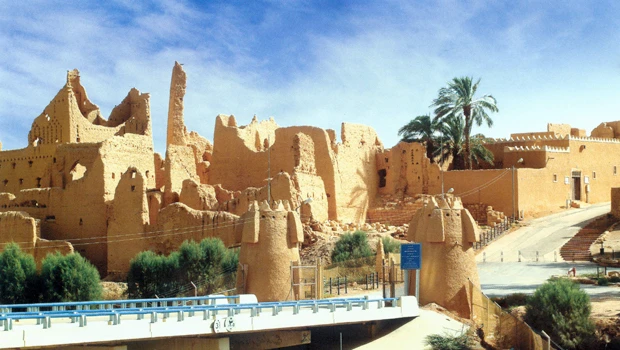
- RIYADH: Al-Diriya Palace and the Turaif Quarter of the town of Al-Diriya located on the northwestern outskirts of Riyadh and which served as the capital of the Saudi royal family from 1744 to 1818 have been included in UNESCO’s World Heritage list.
Prince Sultan bin Salman, head of the Saudi Commission for Tourism and Antiquities (SCTA), made a formal announcement about the UNESCO approval here on Sunday.
In a congratulatory message to Custodian of the Two Holy Mosques King Abdullah, Riyadh Gov. Prince Salman said, “The support given by King Abdullah and Crown Prince Sultan to the ongoing efforts for preservation and development of national heritage is bearing fruits now… The Kingdom was home to a great civilization, rich heritage and history, which is evident from the inclusion of Al-Diriya in the heritage list.”
He added that Al-Diriya was the capital of the first Saudi state and had a reputation of being an important cultural center in the Arabian Peninsula.
Prince Salman is also chairman of the High Commission for Development of Al-Diriya, where a major development plan is under way.
The decision to include Al-Diriya in the list was made by a panel, which is holding meetings in Brasilia, the Brazilian capital, to consider and finalize the requests for the inscription of new sites nominated by different countries.
“On behalf of the Arab group of UNESCO, Saudi Arabia presented Al-Diriya site for inclusion in the heritage list,” said Prince Sultan, adding that SCTA compiled all necessary information about Al-Diriya in cooperation with other government agencies.
“Turaif Quarter … is now considered the second registered Saudi site on the World Heritage List after the registration of Madain Saleh on the list in 2008,” he said, adding that the file for downtown Jeddah was submitted to UNESCO and will be considered at the World Heritage Committee’s next session.
Prince Sultan expressed his thanks and appreciation to King Abdullah and Crown Prince Sultan for their support and efforts to preserve the Kingdom’s national heritage.
Prince Sultan, who had been strongly canvassing for Al-Diriya, said the site’s glorious past and history dates back to the 15th century. According to the chroniclers of Najd, the city of Al-Diriya was founded in AD1446 by Mani Al-Mraydi, an ancestor of the Saudi royal family.
Al-Diriya is part of an ambitious Turaif District Development Plan, which aims to turn the district into a major cultural and tourist center of international repute.
Once finished, there will be a new visitors’ center, a documentation center and four new museums, said a statement released on the occasion. Many other remnants of the Saudi royal family will be restored as part of the developmental plan that will be carried out in three phases.
A total of 35 countries presented sites and properties for inscription on UNESCO’s World Heritage List.
The panel also reviewed the state of conservation of the 31 world heritage properties inscribed on the “List of World Heritage in Danger” and may decide later to add to that list new properties whose preservation requires special attention.
To date, the World Heritage List recognizes 890 properties of “outstanding universal value,” including 689 cultural, 176 natural and 25 mixed properties in 148 countries. The panel encourages international cooperation to safeguard the common heritage of humanity. T
he World Heritage Committee comprises representatives of 21 countries, elected by the member states for up to six years. Each year, the committee adds new sites to the list.

