
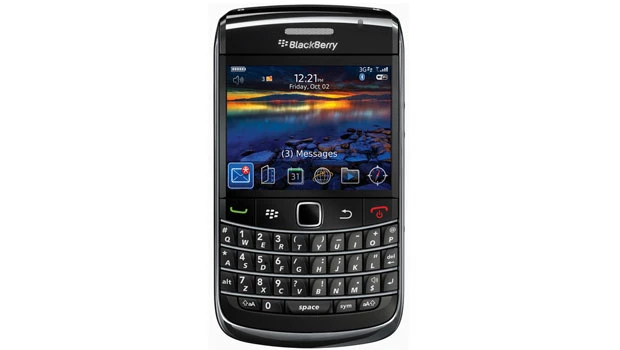
- JEDDAH: Some people in the Kingdom are slowly replacing their BlackBerry mobile phones with other brands of mobiles after media reports that some BlackBerry services might be blocked in Saudi Arabia, said staff at mobile phone stores in Jeddah.
However, the Al Arabiya satellite channel reported Monday that the Communications and Information Technology Commission (CITC) will not ban BlackBerry services after the Kingdom's three major telecommunication companies reached a solution with Research In Motion (RIM), the company behind BlackBerry phones, to provide CITC with monitoring services.
Nevertheless, shopkeepers are reporting a pickup in sales of secondhand BlackBerry phones over the last two days. "Starting from yesterday, customers started to change their BlackBerry phones for Nokia phones, especially the ones that have similar functions," said one salesman. "The price of BlackBerry phones has dropped SR200 from their original price these days," he added.
Fearing loss of custom, shopkeepers on Jeddah's Palestine Street, the city's main hub for mobile phone shops, strongly denied what they called "rumors" that BlackBerry services, including the very popular BlackBerry Messenger, may be banned in the Kingdom.
"There is no way the CITC will disconnect BlackBerry Messenger because the Kingdom is home to one of the largest number of BlackBerry users in the Gulf," said a mobile phone shopkeeper. "We heard that the UAE, Egypt and India are the only countries banning this service," he added.
It is estimated that over 750,000 people use BlackBerry Messenger in the Kingdom and that the Saudi telecommunication market could lose $2 million if the telecommunication companies do not reach an agreement with RIM to provide CITC with monitoring abilities.
Concerns that the phone service may be blocked in the Kingdom follow a recent decision by the UAE's Telecommunication Regulatory Authority (TRA) to block BlackBerry services starting Oct. 11. The UAE has cited national security concerns because the devices operate beyond the government's ability to monitor their use. BlackBerry data is encrypted and routed overseas. Information passed between people through this medium does not reach the UAE, something that the country fears could affect security.
According to shopkeeper Medhat, the ban could cause his mobile shop to lose contracts with BlackBerry valued at around SR600,000. "I'm sure this is just a rumor and I'm taking the risk of buying secondhand BlackBerry phones hoping that people will come and buy them back at a higher price," he said.
Other shopkeepers refuse to buy secondhand BlackBerry mobiles unless customers exchange them for another mobile from the same shop. "Buying BlackBerry phones would risk my sales since I cannot guarantee if they will be useful after the ban. People only buy BlackBerry phones for their unique service and if they are banned then I would be jeopardizing my business by buying them," he said.
According to mobile storekeeper Wael Amoudi, BlackBerry phones were very popular until the media began reporting about the possible ban. "Now the demand for BlackBerries is dropping. I've managed to buy 10 secondhand BlackBerry mobiles, which are in good condition, within two days. This has never happened before."
Arab News tried to sell a BlackBerry Curve, purchased a year ago for SR2,800. Mobile phone stores were only willing to purchase it for SR700.
The Kingdom's three mobile phone operators — Mobily, Zain and STC — have no further updates on the matter. No one at CITC was able to deny or confirm the ban.

