- BEIRUT: Hezbollah's leader says he has evidence Israel was behind the 2005 assassination of former Lebanese Prime Minister Rafik Hariri.
"Today I tell you we accuse the Israeli enemy of assassinating the martyr Rafik Al-Hariri on February 14, 2005," Sheik Hassan Nasrallah told supporters.
He said he will offer up documents and other material at a press conference Monday.
Indictments are expected this year by the Netherlands-based international tribunal investigating the assassination. Nasrallah says he already knows that Hezbollah members will be among those indicted, and he has denied any involvement by the group.
Many in Lebanon worry that if the tribunal accuses the Shiite group Hezbollah of being connected to the 2005 assassination of Hariri, it could lead to bloodshed between Lebanon's Shiite and Sunni communities.
Nasrallah, speaking after a border clash between Lebanese and Israeli troops, said on Tuesday his group would not stand silent if Israel attacked the Lebanese army in the future.
"I say honestly, that in any place where the Lebanese army will be assaulted and there's a presence for the resistance, and it is capable, the resistance will not stand silent, or quiet or restrained," Nasrallah said.
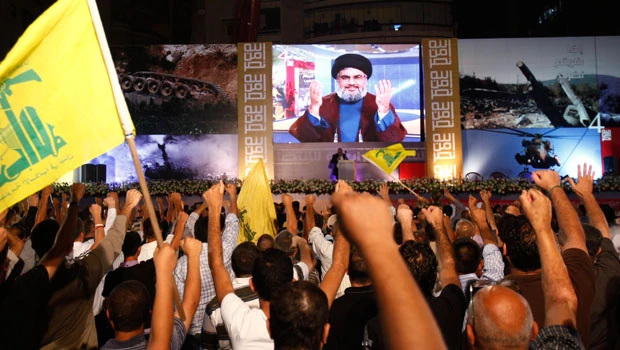
"The Israeli hand that targets the Lebanese army will be cut off," he told tens of thousands of supporters via video link.
Nasrallah was speaking at a ceremony marking the fourth anniversary of the end of the 2006 Israeli-Hezbollah war during which 1,200 people in Lebanon and 158 Israelis were killed.
Three Lebanese and an Israeli officer were killed in Tuesday's clash, the most serious violence along the border since the 2006 war which erupted after Hezbollah kidnapped two Israeli soldiers in a cross-border raid.
Nasrallah said his fighters, who maintain a stronghold in southern Lebanon, were ready to fight alongside the Lebanese army but that they put themselves at the army's disposal.
"We were ready to fight and defend ... but the wisdom, interest and loyalty meant that the resistance put itself at the disposal of the army which was dealing with the confrontation," he said.
Nasrallah said he did not think Tuesday's clash would lead to a bigger conflict on the Lebanese-Israeli border. "I don't expect a war to happen soon ... but there are reasons for worry," he said.
Nasrallah, whose group came under scrutiny after reports that a UN tribunal may indict some members for the 2005 assassination of former Lebanese Prime Minister Rafik Al-Hariri, accused Israel of killing the statesman.
He said he would reveal important information about Israel's role in the assassination at a news conference on Monday.
Saudi King Abdullah and Syrian President Bashar Al-Assad made an unprecedented joint visit to Beirut last week to meet Lebanon's rival leaders and try to stave off a crisis that had been brewing over the tribunal.
Fears are high in Lebanon that a dispute over the tribunal could escalate into a full-blown crisis, similar to the row between a Hariri-led alliance and Hezbollah that brought Lebanon to the brink of civil war in 2008.
Prime Minister Saad Al-Hariri, the former premier's son, initially accused Syria of killing his father but has toned down his rhetoric and said he would accept the findings of the tribunal.
Hariri's killing sparked an international outcry and forced Syria to end its nearly three decade long military presence in Lebanon. Nasrallah has condemned the tribunal as an "Israeli project" and has rejected any indictments of Hezbollah members.