- JERUSALEM: An Israeli photographer jailed by Libya for five months returned home Monday after an Austrian tycoon brokered a deal for his freedom that involved the delivery of 20 prefabricated homes from a Libyan charity to the Gaza Strip.
Rafael Rafram Chaddad, an Israeli-Tunisian dual national, disappeared in March in Libya, where he was photographing Jewish heritage sites on behalf of an organization that documents the history of Libya's vanished Jewish community.
His last communication was an email he sent saying he was heading to the Jewish Quarter in the Libyan capital, Tripoli, to photograph a synagogue, according to Pedazur Benattia, whose Or Shalom organization sponsored the photographer's trip. Chaddad was supposed to board a flight to Tunisia the next day but never made it, Benattia said.
Chaddad's whereabouts were kept secret until late Sunday, when Israel's military censor lifted a gag order and announced he had been freed from a Libyan jail and had landed in Vienna. The gag was imposed because of fears that publicity could endanger Chaddad and prospects for his release.
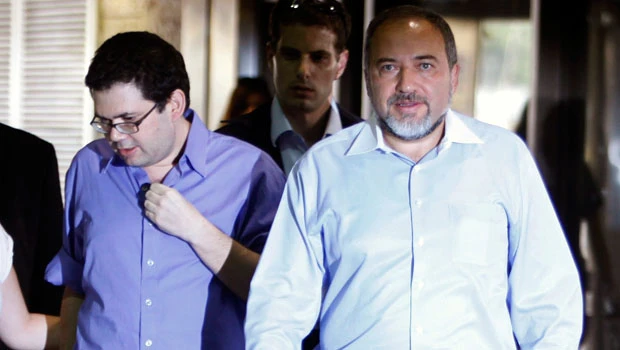
A crowd of reporters and family members were waiting for him at Israel's international airport outside Tel Aviv when he landed Monday afternoon accompanied by Israeli Foreign Minister Avigdor Lieberman, who helped engineer his release.
Israel and Libya have a history of hostility and have no diplomatic ties. Libya bans Israelis from entering the country, and Chaddad was traveling on his Tunisian passport at the time of his arrest.
Israeli officials said the efforts to free Chaddad involved Italy, which has close ties to Libya and is home to a Libyan Jewish exile community, as well as France, the US and Tunisia. The officials said the final deal was arranged by Lieberman and an Austrian-Jewish businessman, Martin Schlaff, a friend of the Israeli foreign minister.
Hadad was flown from Libya to Austria on Schlaff's private jet, the officials said, and Lieberman greeted him at the Vienna airport.
Key in the deal were the prefabricated homes for Palestinians in the Hamas-run Gaza Strip, the officials said.
The houses were aboard a ship dispatched by a Libyan charity to breach Israel's Gaza blockade in July. The Israelis wouldn't allow the vessel to reach Gaza and diverted it to an Egyptian port. Under the deal brokered by Schlaff through his contacts in the Libyan and Israeli governments, Israel agreed to allow the houses from the ship's cargo to be transferred overland into Gaza as a gesture to the Libyans, the officials said.
They spoke on condition of anonymity because the details were not officially made public. In Vienna, a spokesman for Schlaff would not comment.
"The Foreign Ministry and the foreign minister worked for a long time to have him freed, along with other international bodies, and we thank all involved for their help," ministry spokesman Andy David said Monday, in the first official Israeli comment on the affair. He provided no further details.
Libyan authorities have not commented and there has been no mention of the story in the country's media.
Schlaff, who was recently described by Austria's Wiener Zeitung newspaper as a "problem solver" who has opened doors for politicians and businessmen, is one of Austria's richest men and has long had close ties with Israeli leaders.
He is also wanted for questioning by Israeli police on suspicions he made illegal donations to Lieberman and to former prime minister Ariel Sharon. In April, Schlaff did not attend his father's funeral in Israel because police said they would question him if he entered the country.
Aviv Shir-On, Israel's ambassador to Austria, said a "very happy" Chaddad underwent a medical checkup upon his arrival in Vienna and was in good health before departing for Israel on Monday.
Chaddad was open about what he was doing in Libya and was accompanied throughout his visit by a representative of the Libyan secret police, according to Benattia of the Libyan Jewish heritage group behind the photographer's trip. It remained unclear what had triggered his arrest, he said.
The heritage group has sent photographers to Libya in the past, usually European nationals, Benattia said. In 2002, another photographer sent by the organization — a French student — was detained and held for nine days before being released, he said.
Libya, like many other Arab countries, was home to a large Jewish community until the middle of the 20th century, when Jews fled mob violence and state persecution linked to the Arab-Israeli conflict.
— Associated Press Veronika Oleksyn contributed to this report from Vienna, Austria.