
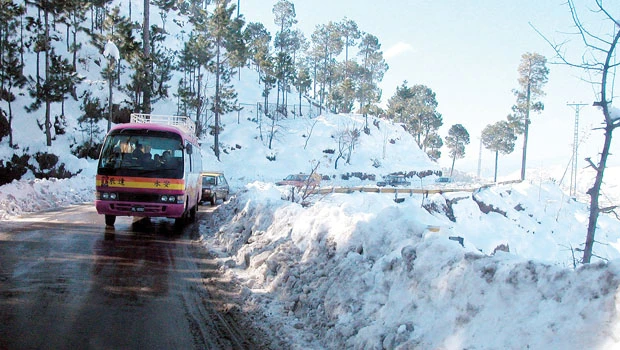
- PAKISTAN is strategically placed at the crossroads of Asia; where the road from China to the Mediterranean meets the route from India to Central Asia.
- For thousands of years, this junction has been a melting pot of diverse cultures, attracting traders and adventures and pilgrims.
Pakistan is on the main trade route and tourist path to China and Central Asia. The old silk routes have reopened. The spectacular Karakoram Highway threads its way through the Himalaya, Karakoram and Pamir mountains, and enters China over the 4,733 meters Khunjerab Pass, one of the highest metalled border crossings in the world. Pakistan is also a gateway to the new Republics of Uzbekistan, Kazakhstan and Tajikistan.
Pakistan is the land of the Indus River, which flows through the country for 2,500 km from the Himalayan and Karakoram mountain ranges to the Arabian Sea. It is a land of snow-covered peaks and burning deserts, of fertile mountain valleys and irrigated plains. It is inhabited by some 146 million people belonging to many ethnic groups speaking over 20 different languages and dialects and wearing distinctive costumes, but all united by the Islamic faith and Pakistani nationhood.
For any visitor, Pakistan has a wealth of attractions: its 5000 years history is richly illustrated by archaeological sites and imposing monuments spread all over the country. Brick cities from the Indus Civilization, which flourished from the third to the middle of the second millennium B.C. stand beside Buddhist ruins contemporaneous with the birth of Christianity. Magnificent Muslim tombs from the 12th century stand side by side with the palaces, mosques and forts of the Mogul emperors of the 16th and 17th centuries.
The country’s main cities reflect the many influences, both historical and modern, that have made Pakistan what it is today. Lahore is the cultural center of the country, with an elegant core of Mogul architecture embellished by the flowery exuberance of the British Empire. Peshawar, on the northwest frontier with Afghanistan, is a city straight out of the Arabian Nights, with tribesmen in turbans nonchalantly carrying rifles through the colorful bazaars. Islamabad, the federal capital, is a modern garden city planned by Constantinos A. Doxiadis, a Greek town planner firm in 1960. Quetta the capital of the largest province of Pakistan which can rightly be called the fruit basket of Pakistan and finally, bustling Karachi, the largest and the most populous city of Pakistan, is a huge international port, industrial and financial center.
This is a region of the world which is open to the experienced trekker and mountaineer backed up by a team of porters. The awesome Karakoram Mountains are easily reached by the Karakoram Highway, locally known as the KKH which links Pakistan with China. Even to the seasoned traveler, the first sight of the Karakorams is overwhelming. The range contains most of the highest peaks in the world. You are surrounded by snowcapped mountains over 18,000 feet, beautiful valleys containing Pakistan’s spectacular wildlife. A journey up the KKH takes the visitor under the brooding mass of Nanga Parbat, the glittering Rakaposhi which dominates the Hunza valley, and the icy desolation of Baltoro glacier. The road runs alongside the River Indus for 243 km clinging to almost sheer rock faces in places following the ancient Silk Route from China to the subcontinent.
An inspiration for Hilton’s Shangri-La, it is not difficult to see why the region is attracting those who seek a change from the stresses of the 21st century. For the all round naturalist this is a place full of surprise and changing delights.
The superb alpine pastures, for the most part free from human habitation, and within easy walking distance for the moderately fit, offer days of excitement. Above 6,000 feet, flowers, butterflies and birds abound. Sadly, gone are the days when the magnificent mountain goats and sheep could easily be seen. Now the aspiring photographer must shoulder his equipment to more remote valleys to find the Marco Polo Sheep or Ibex. However, the smaller mammals are still there. For the bird-watchers the mountain forests are a source of the familiar and of new bird species. The botanist can spend hours happily searching the forest, ravines clothed in ferns and mosses for flowers and plants normally seen only in specialist garden centers. One hour’s drive from the capital city of Islamabad, is the popular hill station the Murree Hills.
Numerous paths cross and re-cross the hillsides linking one hill resort with another small motels cater adequately for the visitor. Northern Pakistan is best visited during the summer months. In the far north most of the snow has melted from the passes and the glacier tails have retreated to allow transport to remote parts of the region. However, the noontime temperatures in the sun may climb to a sizzling 100°F in the barren valleys. But above 8,000 feet the air remains temperately cool.
The Pakistan Tourism Development Corporation, a national tourist organization has made tremendous developments in the hospitality sector with the establishment of a chain of motels in the northern areas of Pakistan. These accommodate tourists both foreigners and domestic alike. Their Motels in the north and in the south are located in the most scenic spots, affording visitors an opportunity to vacation in areas where they can experience the traditional heritage of our country while indulging in such activities as mountain climbing, trekking, trout fishing, boating, hiking or communing with nature.