
- • Improve resuscitation outcomes • Decode text lingo • They go together • Focus on racing technology
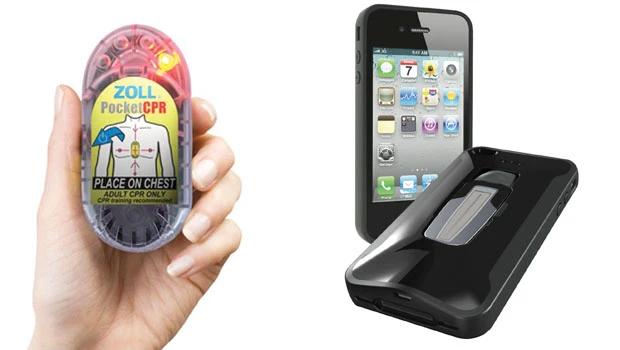
PocketCPR from ZOLL Medical Corporation is a palm-sized cardiopulmonary resuscitation (CPR) device that measures the rate and depth of chest compressions administered by rescuers. To use, the rescuer simply positions PocketCPR on the victim’s chest, the rescuer’s hands are placed directly on top of the device, and prompts are followed for CPR chest compressions. The device uses an ADI digital iMEMS accelerometer to convert the motion of PocketCPR into real-time measurement data to accurately read the rate and depth of CPR chest compressions. PocketCPR provides the user with prompts to encourage compressions to the American Heart Association (AHA) recommended depth of 1.5 to 2 inches. The device instructs the rescuer to “push harder” if the compressions are less than 1.5 inches. If good compressions are delivered, PocketCPR will respond with “good compressions.” A metronome helps the user achieve the proper rate of compression. PocketCPR also coaches a rescuer with audio and visual instructions to initiate the steps needed for reviving someone experiencing sudden cardiac arrest. These steps include checking responsiveness, calling for help and performing CPR. All steps follow the AHA Chain of Survival. PocketCPR has been approved by the US Food and Drug Administration as an over-the-counter rescue device and is priced at $149. See how the device works at .
Text and instant messages use “Internet slang” to save keystrokes and time in communication. Internet slang can also hide the meaning of messages from parents. What if you came up behind your child, who was typing on the family computer, and saw the message, “idk ysic pos gtg.” Would you know whether or not to be concerned? Turn to noslang.com to understand the Internet slang that kids use. The site has a Slang Translator, Slang Dictionary and Netspeak Guide. Polls show that the majority of parents try to keep an eye on their children’s outside communications, but to do that it’s essential to understand their language.
The MoGo Talk XD for iPhone 4, is the world’s thinnest Bluetooth headset, designed to be stored on the phone. After use, the headset folds flat, to just five millimeters thickness, and is docked in the MoGo Grip Case on the back of the iPhone 4. A fixed Micro USB connector is integrated into the MoGo Grip Case, enabling charging of the headset. Despite weighing just nine grams, the MoGo Talk XD is packed with features. SmartAudio Sound and Voice Enhancement technology enable clear conversations with noise and wind reduction, echo suppression and automatic volume compensation when moving between noisy and quiet environments. The headset is also equipped with SoundMonitor high fidelity in-ear audio, leveraging a balanced armature driver, to round out a rich audio experience. The headset’s Soundshape ear buds flex-form to each ear for superior in-ear comfort and a secure fit.
Lenovo’s Tech1Today.com website is an interactive website enabling fans to discover more about the behind-the-scenes technology supporting the Vodafone McLaren Mercedes team. Lenovo is the official supplier of personal computers to the team, putting it in a unique position to showcase technology integration from a team support and engineering point of view. With Formula 1 entering the most competitive phase of the 2010 season, the Tech1Today.com website will be a source for exclusive content, behind-the-scenes analysis and editorial insight, providing new perspectives on the sport. The Tech1Today website also features “Race to the Finish,” a ranking game where fans can compete against each other, as well as the pros and experts. The contestants who are able to most accurately and consistently predict final race results in the final months of the season, stand to win Vodafone McLaren Mercedes team merchandise and Lenovo computers.