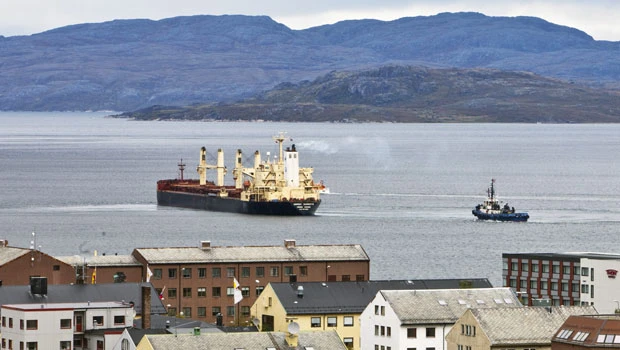
- OSLO: The MV Nordic Barents is lugging 40,000 tons of iron ore from Norway to China on an Arctic Ocean shortcut through melting ice — and making a little history in the process.
Steaming east along Russia's desolate northern coast, the ship departed on Saturday as the first non-Russian commercial vessel to attempt a non-stop crossing of a route that skirts the receding Arctic ice cap.
"We're pretty much going over the top," said John Sanderson, the Australian CEO of the Norwegian mine where the iron ore comes from.
By using the northern route from Europe to Asia, the Nordic Barents could save eight days and 5,000 nautical miles of travel thought to be worth hundreds of thousands of dollars to the owners of its cargo.
While many scientists are alarmed by the widening expanse of open water that the ship will traverse, blaming it on global warming, shippers see a new international route.
Sanderson's ASX-listed Northern Iron Ltd has sent 15 ships to China since it began mining in the northern Norwegian town of Kirkenes last October. All steamed south, then east through the Suez Canal or around the Cape of Good Hope.
To reach Chinese steel mills hungry for ore, they had to brave pirates in the Indian Ocean.
The Arctic route is no picnic either. On Saturday the polar ice sheet remained almost as big as the US mainland. But over the summer it has shrunk about as far from the Russian coast as it did during the biggest Arctic melt on record, in 2007, according to the Nansen Environmental and Remote Sensing Center.
And the Russians are waking up to the business potential of a route that was mostly reserved for domestic commercial vessels in the past.
Willy Oestreng, chairman of research group Ocean Futures, called the trip of the Nordic Barents "historic."
"The western world is starting to show an interest and a capability to use that route," he said.
Excluding icebreaking fees, a bulk ship that takes the Arctic route from Hamburg to Yokohama can save more than $200,000 in fuel and canal expenses, Oestreng said.
Belkinms said insurance companies have been the main drag to developing the route.
“The Northern Sea Route is still unfamiliar to foreign ship owners and that’s even more true for foreign insurance companies, which demand very high premiums,” he said.
He said icebreakers would meet the Nordic Barents off Novaya Zemlya and stick with it to the Bering Strait.
“Somebody’s got to blaze the trail and prove to the rest of the world that this is a commercially viable route that can be transited quite safely,” he said.