- BAGHDAD: Three car bombs killed at least 18 people and wounded scores in Iraq on Sunday as tension runs high six months after an election that no one won outright and weeks after US troops ended combat operations.
One blast targeting a national security office killed at least six people and wounded 15, bringing down the facades of nearby houses, the Baghdad security command said.
Interior Ministry sources put the death toll from the blast as high as 19, but other government agencies denied that.
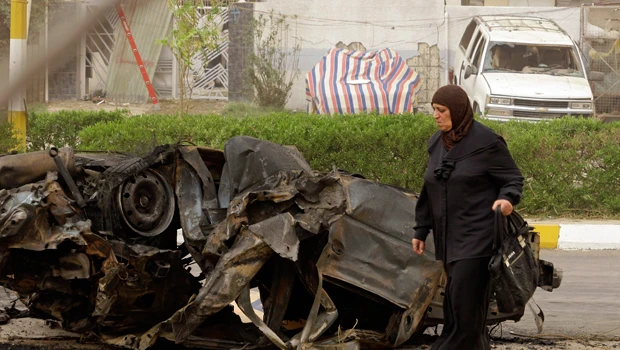
A second car bomb five minutes later near an office of mobile phone operator Asiacell, part-owned by Qatar Telecommunications Co, killed six and wounded 51, the Baghdad security command said. The civil defense force put the toll there at 10 dead.
In Falluja, 50 km (30 miles) west of Baghdad, a suicide car bomber who targeted an Iraqi army patrol killed six people and wounded 11, police and hospital sources said.
The blasts came three weeks after the US military formally ended combat operations in Iraq, 7-1/2 years after the invasion that toppled Sunni dictator Saddam Hussein.
"The Al-Qaeda organization is behind this explosion, trying to undermine security in Baghdad," Major General Ahmed Al-Saedi, commander of Iraqi military forces in western Baghdad, said at the scene of the blast outside the Asiacell office.
Overall violence has declined sharply over the past three years but a stubborn Sunni Islamist insurgency, opposed to the Shiite Muslim-led authorities who came to power after Saddam's fall, continues to stage regular, devastating attacks.
The last major assault in Baghdad was on Sept. 5 when suicide bombers attacked an army base and battled Iraqi troops and US soldiers for more than an hour.
Officials say insurgents linked to Al-Qaeda are seeking to stoke fears of deepening violence after the US military cut its numbers to 50,000 at the end of August and switched its focus to advising Iraqi forces, rather than leading the fight.
US troops still get involved in combat, despite the change in their primary focus.
EXPLOITING TENSIONS
Insurgents are also trying to exploit political tension after an inconclusive March 7 election. Shiite-led, Sunni-backed and Kurdish factions appear to have made little progress in negotiations to form a coalition government.
An official in the National Security Ministry said its office was the target in the blast at Aden square in northwest Baghdad on Sunday. The building used by the ministry was destroyed, a Reuters photographer said. At least four nearby houses were severely damaged.
Interior Ministry sources said between 17 and 19 people died, and up to 53 were wounded. But Col. Kadhim Basheer Saleh, media director of the civil defense force, said its teams had recovered three bodies and seven wounded.
A deputy health minister put the total death toll from the two incidents at 14, with 71 wounded.
Conflicting casualty figures are common after explosions in Iraq.
The second car bomb at the Asiacell office in the western district of Mansour demolished around 37 vehicles, an official at the Baghdad security command said.
In Falluja, the suicide blast killed an Iraqi army officer and two soldiers, according to a police source. A hospital source said the facility had received three dead civilians and 11 wounded, including three Iraqi soldiers.