
- Routes d’Arabie potrays a different image of Kingdom for outsiders
THE exhibition of pre-Islamic and Islamic treasures from Saudi Arabia at the Louvre Museum in Paris entitled Routes d’Arabie which opened on July 13 and ends this coming Monday has been a major eye opener. For the thousands who went to it, it has changed the way in which they view the Kingdom.
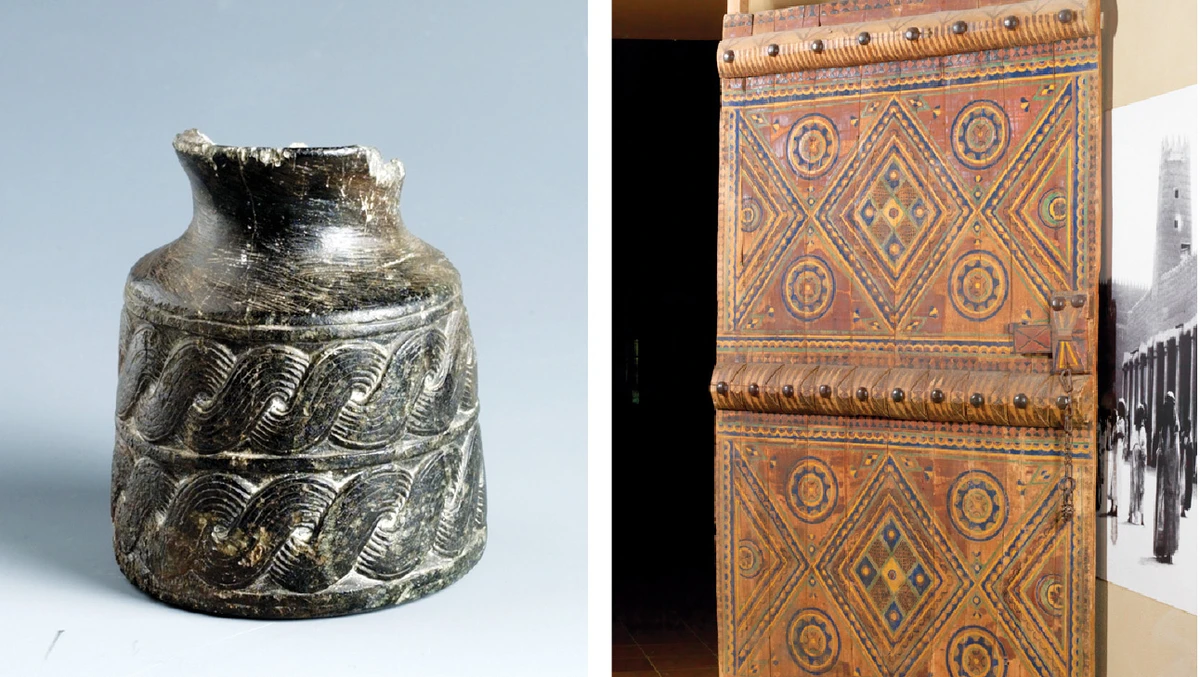
The standard view of the country’s past is that in the twelve and a half centuries between the rise of Islam and the unification of the Kingdom by King Abdul Aziz nothing much happened. As for the period before the rise of Islam, the view was that it was not worth considering. Covering a span of some 7,000 years, the more than 300 remarkable objects on display tell a very different story.
Massive Pharaonic-style statues from Al-Ula, exquisite Hellenistic objects from Qaryat Al-Faw and Thaj, and a host of other objects, many of them in a remarkable state of preservation show that the land was not an empty desert with just a few uncivilized nomads but the location of busy international trade routes moving people and goods between Egypt, the classical Mediterranean world and the cities of Anatolia and Mesopotamia — as well as India and beyond. Like other trade routes, those in Saudi Arabia were dotted with sophisticated, wealthy cities where the merchants and their families enjoyed a cosmopolitan lifestyle on par with those in cities in the Roman or Persian empires, importing the finest Hellenistic wares to grace their homes.
One such was Gerrha, the location of which was lost for centuries but which today has been identified as Thaj, some 80 km west of Jubail in Eastern Province. To the Romans and Greeks it was a fabulously wealthy city whose streets were paved with gold.
It turns out to be only a mild exaggeration. The items found, at Thaj, including the most beautiful gold objects, show that it was indeed a very wealthy city.
In a way, this story of a cosmopolitan lifestyle enjoyed in these wealthy cities two and three thousand years ago is one that has come full circle, where today the country’s great merchant families in cities such as Jeddah and Riyadh similarly enjoy the best products and services the world has to offer.
At the opening of the exhibition in July by Prince Saud Al-Faisal, the Minister of Foreign Affairs, his brother Prince Turki Al-Faisal told Arab News that it would allow people “to know the Kingdom better than they do now.” It certainly sweeps aside the old stereotype of Saudi Arabia as “the oil-rich desert kingdom”, home of camels, Cadillacs and conspicuous consumption but little in the way of culture and civilization. It shows that the country has been fully plugged into the world’s civilizations — for as long as there have been civilizations.
In Paris, the exhibition has been drawing between 1,400 to 1,500 visitors a day. Up until last Monday, some 100,000 people had been to see it. That is 100,000 people who have been exposed to a completely new vision of Saudi Arabia. And many hundreds of thousands more will have that experience too. The exhibition goes from Paris to Barcelona then to Berlin, Washington D.C. and at least one other city in the US, possibly more. By the time it is has finished its world tour and returns to the Kingdom where it is hoped that it will also tour, it will not be surprising if as many as a million people will have seen a side of Saudi Arabia that is very different to the usual one. That is bound to have social and political consequences.
For Prince Sultan bin Salman, head of the Supreme Commission for Tourism and Antiquities which is in large part responsible for the exhibition, the last thing it has been is a marketing exercise. While well known for its Islamic dimension as well as its economic and political ones, the aim was to show a different dimension to the Kingdom — that the country had “not come out of a void,” that it had long had a role in the history of neighboring civilizations and that there was a historic continuity between the country’s past and present.
It appears to be working. In Paris, the country’s history has come out of the shadows. It will be strange if that does not happen too in Barcelona and Berlin, and then in the US.