- JERUSALEM: Palestinian President Mahmoud Abbas said Sunday that Palestinians would not immediately end peace talks with Israel even as a 10-month limited settlement moratorium expired at midnight.
In another sign that a way could be found out of a crisis threatening negotiations that began less than a month ago, Israeli Defense Minister Ehud Barak said there was more than an even chance the peace process would continue.
Abbas has said repeatedly he would walk out of the talks with Israel unless the partial halt to building remained in place. Palestinians view Israel's settlements as a formidable obstacle to statehood.
Asked in an interview with the Al-Hayat newspaper whether he would declare an end to the negotiations if the freeze did not continue, Abbas said: "No, we will go back to the Palestinian institutions, to the Arab follow-up committee."
He was referring to an Arab League forum that gave him the go-ahead to pursue US-brokered direct peace talks with Israel that began in Washington on Sept. 2.
Abbas said he would meet Arab foreign ministers on Oct. 4 to decide on the future course of the negotiations. He said that in addition to the meeting with Arab ministers he would convene the governing bodies of his Fatah movement and the Palestine Liberation Organization to discuss the issue.
Israeli Prime Minister Benjamin Netanyahu on Sunday urged occupiers to show restraint, a plea that appeared aimed at persuading Palestinians not to quit peace talks.
Occupiers vowed to begin erecting next week some 2,000 homes in the West Bank, where Netanyahu in November imposed under US pressure the moratorium on housing starts.
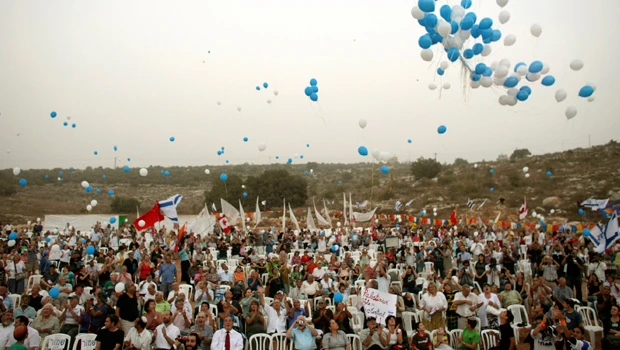
Celebrating the end of the partial freeze, occupiers and members of Netanyahu's Likud party released balloons into the sky at a rally at the settlement of Revava in the West Bank.
Netanyahu, whose governing coalition is dominated by pro-settler parties, has resisted calls from US President Barack Obama to extend the moratorium.
But the Israeli leader has held out the prospect of limiting the scope of renewed construction, a message he seemed to underscore in an official statement.
"The prime minister calls on the residents in Judea and Samaria (the West Bank) and the political parties to show restraint and responsibility today and in the future exactly as they showed restraint and responsibility throughout the months of the freeze," it said.
A Palestinian official said there was no breakthrough in US efforts to save the negotiations. David Axelrod, a close confidant of Obama, said the two sides were working with US Secretary of State Hillary Clinton and other US officials to reach a deal on the settlement issue.
"They are talking. They're trying to work this through, and we're hopeful that they will," Axelrod said on the ABC News show "This Week with Christiane Amanpour", describing the discussions as serious.
Barak said in a BBC interview in New York, where he met US officials: "I think that the chance of achieving a mutually agreed understanding about (a) moratorium is 50-50. The chances of having a peace process is much higher."
More than 430,000 Jews live in well over 100 settlements established across the West Bank and East Jerusalem on land that Israel captured from Jordan in a 1967 Middle East war. Palestinians say they will make it impossible for them to create a viable state and the issue is one of the core problems standing in the way of any peace deal.