- ISLAMABAD: In a violent reaction to NATO forces' attack on Pakistan's forward posts in the frontier regions that left three soldiers dead, suspected militants set 20 NATO oil tankers on fire near the federal capital late Sunday night.
Police reported that over 10 oil tankers were attacked. They also said that two people were killed and five injured in the violence that took place between GT Road and Defense Housing Society Phase II.
Police said, "The attack initially was carried out by automatic rifles with the perpetrators later firing rockets into the supply line leaving over 10 oil tankers completely burned."
Omar Hayat, senior superintendent police of Islamabad, said about 12 unknown militants attacked the NATO caravan. He said two people were killed.
Hayat said as NATO has its own security contractors, and these contractors are responsible for the security of NATO containers and oil tankers.
This was the third such strike inside Pakistan in as many days, police said.
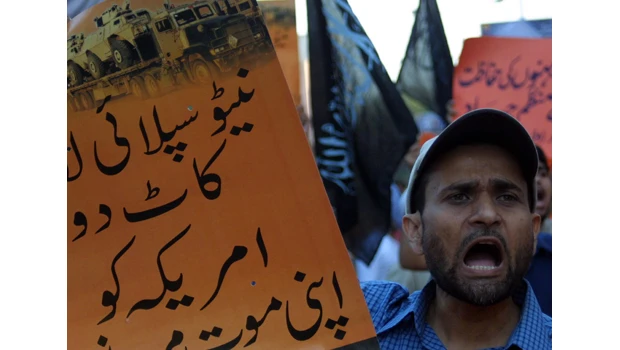
The attack took place on a supply line that has been closed by Pakistani authorities in protest at a NATO helicopter attack that killed three Pakistan troops on the border last week.
It will raise the stakes in the closure, which has exacerbated tensions between Washington and Islamabad but has been welcomed by Islamist groups opposed to Pakistan's support off the US-led war in Afghanistan.
Hayat said the attackers opened fire on trucks that were parked at a poorly guarded terminal before setting them afire.
The trucks were en route or waiting to travel to the Torkham border crossing along the fabled Khyber Pass, which is used to bring fuel, military vehicles, spare parts, clothing and other nonlethal supplies for foreign troops in Afghanistan. Pakistan's other main route into landlocked Afghanistan, in Chaman in the southwest, has remained open.
While NATO and the United States have alternative supply routes into Afghanistan, the Pakistani ones are the cheapest and most convenient. Most of the coalition's nonlethal supplies are transported over Pakistani soil after being unloaded at docks in Karachi, a port city in the south.
On Friday, a day after the closure of the Khyber Pass route to NATO and US traffic, there were two attacks on oil tankers headed to the country. The convoys take several days to reach the border after setting off from Karachi and make frequent stops.
Over the past two years militants, mostly in the northwestern border region where they are strongest, have often attacked them. Criminals, who can sell the clothing, vehicles and other equipment they carry, also have targeted them.
-- With input from agencies