
- KOCHI, India: Explosive growth of the Islamic finance industry (IFI) globally over a relatively short period of time has resulted in a wide demand-supply gap for skilled and experienced professionals, according to a Dubai-based expert.
"Although avenues for training and development of professionals have increased over the past few years, the growth of business and attendant growth in demand has resulted in the persistence of demand-supply gap," said Prasanna Seshachellam of Dubai Financial Services Authority.
Presenting a paper titled "An Effective Framework for Sustainable Growth of Islamic Finance in India" at the ongoing international seminar on Islamic finance here Tuesday, he said it would be one of the crucial issues India needed to address when the country adopts the Shariah-compliant banking.
"India has no history of Islamic finance activities leaving the band of trained staff too thin to handle the expected growth in business," he said adding that it would not be possible for the secular court to ensure Shariah-compliance.
To mitigate this risk, he said, it is essential for the contracts to be written very carefully to minimize potential disputes and state the governing law and jurisdiction clearly. It is also important to aim to achieve a high degree of standardization for contracts underlying different Islamic finance products and transactions.
IFI faces unique challenges in implementing an effective risk management system, as all risk management initiatives and transactions also have to be compliant with Shariah acceptable to most of the schools of thought.
Like other secular countries such as the UK that have embraced Islamic finance as an acceptable philosophy in financial services, the IFI in India too will be treated on a par with conventional financial institutions in respect of other issues like market conduct and treating customers fairly. Consequently, the nascent Islamic financial services industry in India faces the need to establish and implement a sound operating environment with an effective control framework.
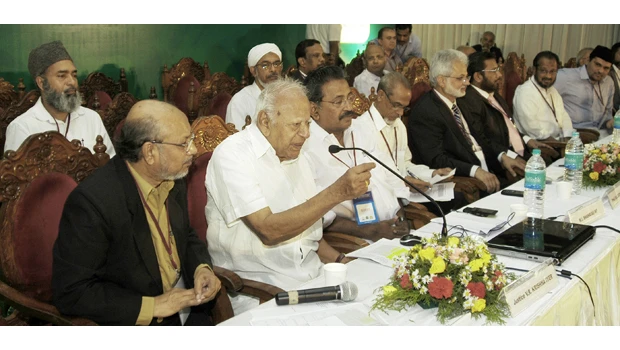
Some 200 delegates, including 40 foreigners, are attending the seminar conducted by Kerala-based Al-Jamiah Al-Islamiya in association with the Jeddah-headquartered Islamic Development Bank (IDB) through Islamic Research & Training Institute (IRTI).
Experts presented 14 papers on the second day on varied subjects such as untapped potential and development of Islamic banking in India, legal issues, and evaluation of mandatory and voluntary requirements for Islamic banking in the Middle East, Muslim minorities and non-banking financial institutions, applications of Maqasid Al-Shariah and Maslahah and lessons from Malaysian experience. The seminar concludes on Wednesday.