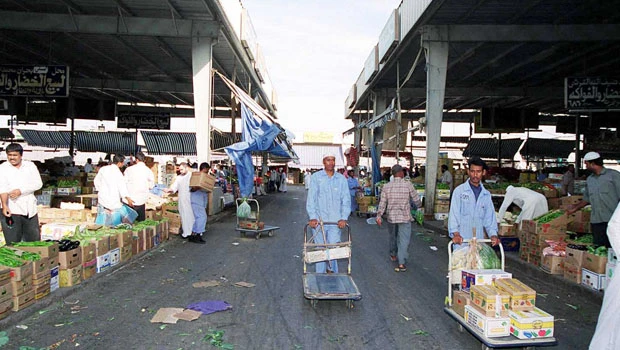
- JEDDAH: Over the past few weeks, prices of tomatoes and other vegetables have been steadily rising.
Since July, the price of tomatoes has tripled, with the cost of a kilo increasing from SR5 to around SR14.
In addition, local traders say that they don’t expect a return to more stable prices for at least another two months.
Traders add that the price rises are due to the end of the harvest season in vegetable producing countries like Syria, Turkey, Jordan and Lebanon, which are the main exporters of produce to the Kingdom.
In addition, a drop in available imports by as much as 50 percent has also impacted local prices.
“We usually have four times the current amount of tomatoes and other vegetables that are currently imported into the Kingdom daily,” said Fahd Al-Asiri, a vegetable store owner in Jeddah.
“However, recently we have been told that imports have decreased because of seasonal crop losses, primarily due to problems with weather conditions over the majority of the growing season,” he said, adding that even though the Kingdom does grow some of its own produce in places such as Hail and Taif, it is nowhere near enough to meet growing demand.
He also said that the only way prices will stabilize is when imports increase and ease demand in the market.
Confronting the issue of rising vegetable prices at a recent press conference earlier this week, the Ministry of Agriculture’s Undersecretary for Research and Development, Abdullah Al-Obaid, said ongoing investigations by the ministry have uncovered a number of irregularities in the market and a sharp rise in prices, Al-Madinah newspaper reported on Monday.
He also confirmed that controlling prices is among the ministry’s top priorities. “A trend of rising prices has been noticed in the Kingdom and neighboring countries,” he said.
“There are many reasons for this and some of them remain unclear, but one of the primary reasons is a heat wave that occurred three months ago, causing substantial crop losses, thereby reducing output and impacting the agricultural market,” Al-Obaid said.
He added that the best solution for the problem is to find alternative countries to import from, while vowing that the ministry would continue to monitor the problem and learn the other reasons for the price hikes.
Al-Obaid also addressed the issue of rising prices of barley and said the hikes were artificial.
“It is clear that there is a global price rise of barley; however, prices should not be high here because most of the produce on the market was imported at low prices several months ago,” he said.
The undersecretary admitted that the ministry has found that there are a large number of suppliers in the Kingdom that have raised prices artificially. He said they were being monitored by the ministry’s finance committee and Preparatory Commission agents.
Al-Obaid warned that suppliers and distributors guilty of unjustifiably fixing prices on vegetables and staple food items would be heavily penalized.