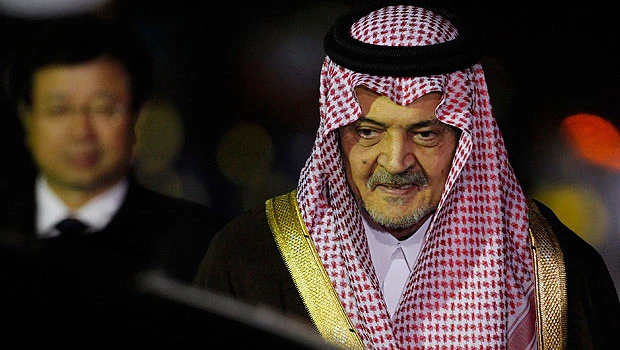
- RIYADH: Foreign Minister Prince Saud Al-Faisal arrived in Seoul on Wednesday heading the Saudi delegation to the G20 summit, which starts in the South Korean capital on Thursday.
"Prince Saud is accompanied by Ibrahim Al-Assaf, minister of finance, besides several deputy ministers and high-ranking officials," said Osama Nugali, a Foreign Ministry spokesman. "The Kingdom participates in the G20 summit within the context of contributing and strengthening the multilateral system to ensure fair and effective responses to the challenges confronting the global financial crisis."
Custodian of the Two Holy Mosques King Abdullah will remain in the Kingdom due to his responsibilities pertaining to the annual Haj, which begins on Nov. 14.
A statement released by the Ministry of Finance said the G20 summit would focus on the global economic crisis that began in 2008, a crisis whose repercussions Saudi Arabia has largely avoided.
The Saudi economy is the largest in the Middle East and the International Monetary Fund recently praised the strength of the Saudi economy in a public information notice released in August that highlighted the Kingdom’s “leadership role in stabilizing world oil markets.”
South Korean Ambassador Kim Jong-yong said Saudi Arabia assumed a leadership position in the Arab and Muslim world, representing a very diverse political constituency.
Like other G20 countries, Riyadh has been increasingly exposed to the challenges of globalization, Kim added. Saudi Arabia is the only OPEC member in the G20.
The G20 meeting aims to resolve differences over economic policies that are destabilizing the world economy and find common ground on reforms of the financial industry, international regulatory institutions and the setup of a global financial safety net, said the diplomat, adding that Korea is the first Asian country to host the G20 summit.
The G20 emerged as the world’s premier forum for economic cooperation as leaders have successfully coordinated policies since the outbreak of the global financial crisis in 2008. The G20 comprises of the G7 industrialized economies and a dozen emerging economies, including Saudi Arabia, South Korea, Turkey, Brazil, China, India and South Africa.