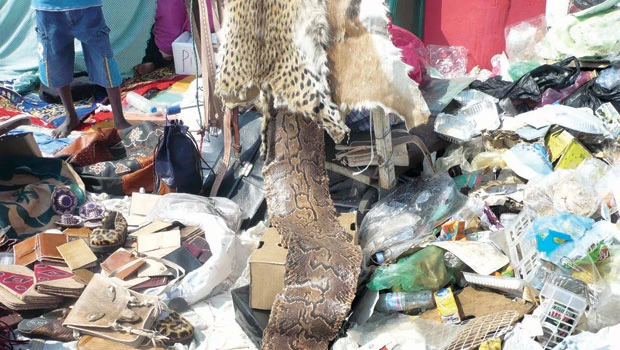
- MINA: The business of trading in animal skins — including skins of endangered creatures — was booming in the tent city of Mina.
Pilgrims were seen gathering at roadside shops to buy exotic animal skins and products made from them, including wallets, ladies' purses, handbags, belts, sandals, shoes and walking sticks.
Many of the species of animals whose parts have made their way into the after-Haj shopping frenzy are not only illegal to sell in Saudi Arabia but can also lead to stiff penalties and confiscations if discovered in luggage of people entering Europe, North America or other countries with a strict regime against the import of these products.
Still, the skins of these endangered or protected species are flaunted openly by merchants cashing in on the shopping bonanza that occurs as the Haj season winds down.
Among the products being sold are the skins of pythons and other reptiles, tigers and even the critically endangered Arabian leopard whose habitat has been reduced to mere pockets of remote terrain in Yemen. This leopard is listed as a so-called Appendix I critically endangered species, according to the Convention on International Trade in Endangered Species of Wild Fauna and Flora, or CITES.
Saudi Arabia and Yemen are among the hundreds of CITES signatory countries, meaning they have pledged to crack down on the sale of endangered animal parts. The Kingdom signed the CITES treaty in 1996; Yemen signed a year later.
“The spotted leopard is virtually extinct and I have to wander for weeks in the jungle and mountains in the south of Yemen to find them. Then hunting them is very difficult and risky, as they are very intelligent, fast and dangerous,” said Abdul Samad Habshi, who says his nickname back home is The Skin Man.
“What we have brought here is just to cover our Haj expenses. Our main business is bigger. Processed python skin sells for about $4 a square meter, while a crocodile pelt can bring in between $40 and $170 depending on its size — a leopard for $300,” said Mahad Al-Habshi, Abdul's 35-year-old son who said his father and he also tan the skins of crocodiles and pythons brought over from Africa.
The son said the meat is sold locally and the skins are exported to India, Saudi Arabia, Egypt, Turkey and China.
The father admitted that the number of skins he has been able to acquire has declined over the years, but, “this is a business we can't stop because it is very lucrative.”
This trade in Arabian leopard hides is restricted to a few tribes and nomadic groups in Yemen and at the border of Saudi Arabia. Some estimates put the wild population of the Arabian leopard at only 200.
Abdul Rab Al-Shammari, a security official manning the camps in Mina, said in all the years he has worked Haj he has “seen it all” when it comes to the illegal sale of endangered animal parts that are smuggled into the Kingdom, often with little effort in disguising or hiding the items.
“We are not supposed to confiscate these items though we know they should not be here,” said Al-Shammari. “But this is not our job.”
Al-Shammari said some people smuggle the skins of exotic animals knowing that the items are illegal. Others do it unintentionally.
“But this lack of awareness is not just a Saudi issue,” he said.
Business was booming at Mina, but some pilgrims recognized that the sale of these products contributes to the demise of the species from which they derive.
“We should not buy such products,” said Wahaj Firdausi, an American pilgrim. “This will further give incentive to smugglers and hunters to kill these animals and push them to extinction.”
But other pilgrims had a different take on the sale of animal skin.
“Why should I bother when they are up for sale. I am not killing them,” said Turkish pilgrim Omaima Hameed. “If I won’t buy somebody else will.”