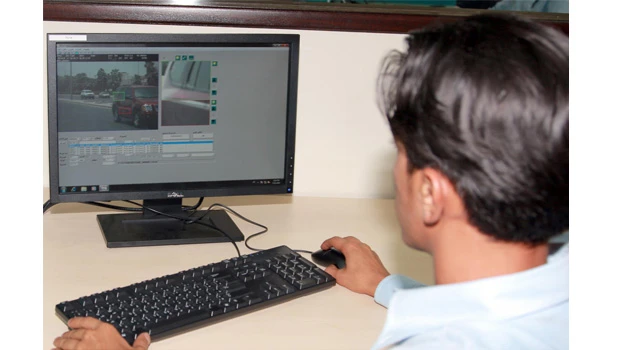
- JEDDAH: The introduction of the Saher traffic-monitoring system last year has further damaged the already troublesome ties between household drivers and their sponsors.
With many drivers raking in huge fines, the question of who is responsible for paying is a contentious one. Some families resort to extreme measures and deduct fines from their drivers’ meager salaries. Others warn their drivers not to speed and pay the fines themselves.
As a result, many sponsors are in a dilemma — every time they hear an SMS notification beep, they worry it might be another Saher message informing them of a violation. Some sponsors feel sorry for their drivers who sometimes collate fines of up to SR1,000 a month. Others blame their drivers for not keeping to speed limits and looking out for speed cameras.
One sponsor said he pays his driver’s fine, knowing that if he deducted the amount, then the driver would run away and find work elsewhere illegally.
Muhammad Al-Amoudi, a Saudi sponsor, said he became extremely angry with his driver after he accumulated four fines in a week. “I was very angry with the driver because he committed the same violation on the same road. When I told him that he needed to pay the SR1,200 fine, he ran away, leaving me with the fines and no driver,” said Al-Amoudi.
“I now have to pay more than SR5,000 to acquire a visa and bring another driver. In the meantime, I’m paying SR1,800 for a temporary illegal driver,” he added.
Abdullah Al-Harbi, another Saudi sponsor, said the Saher system has made already-fraught driver-sponsor relations even worse.
“Part of the blame in my opinion is with the family. They are responsible because they instruct drivers to do things fast. Drivers are often ordered to quickly take a person here or there, or quickly bring a person from the airport, or quickly buy some food,” said Al-Harbi. “If they’re late, then they’re told off. If they get a speeding ticket, then they’re penalized again. In my case, I’ve paid over SR2,500 in fines and will never allow my driver to pay the fines because he has a family to feed back home,” said Al-Harbi.
Ahmad Al-Shebani said his driver has only received one Saher violation. He deducted half of the amount from his salary and paid the other half.
“In my case, I think it was the driver’s negligence because I never pressure him to do things fast. As a lesson, I made him pay half of the amount just so he would learn a lesson in respecting road signs,” said Al-Shebani.
He further criticized families who pay their drivers’ fines and free them from the responsibility. “In the same way we should feel sorry for their condition, they should also understand that most of us struggle to pay for our own violations,” he added.
Ghulam Alam, an Asian driver, blamed families for rushing drivers to do things quickly. “They sometimes order me to run through a traffic light because the sponsor’s wife is late for shopping or an appointment. Then we are to blame when there is a traffic violation. I refuse to deduct the amount from my already very low salary if there is a traffic violation because of my sponsor’s wife,” he said.