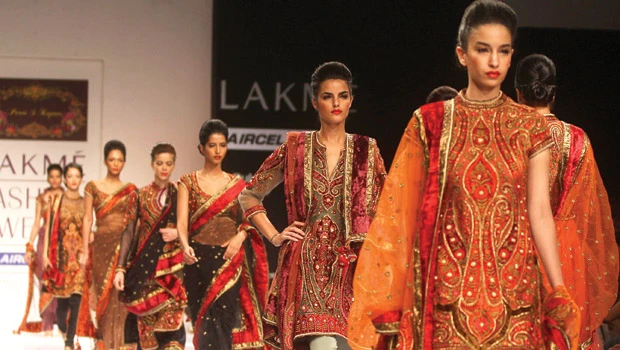
- Creativity rolls down on the red carpet this season with tradition, beauty, picturesque fashion, grandiose fabrics and contemporary couture.
- Lakme collaborates all the big names, celebrities and entrepreneurs from India and all across the world for their Fashion Week.
Lakme Fashion Week (LFW) has been conceived and created with a vision to “Redefine the future of fashion and Integrate India into the global fashion world.”
LFW is organized twice every year. The LFW Summer/Resort 2011 was held on March 11 –15 at Mumbai's Grand Hyatt Hotel.
Sabyasachi and many other names that are popularly liked in the Middle East, as Manish Malhotra, Ekta Singh and many more Indian designers have embraced Dubai Fashion Week as their second portal. Not only do they dress Arab fashion divas, they make sure their designs are worn in Bollywood by A-list movie stars and celebrities.
Here is walk down the ramp with the who’s who of B-town's fashion week:
Manish Malhotra is hailed as India's fashion Emperor. His style speaks to many across the Indian border. He serves India proud, and never fails to mesmerize. His collection always embeds tradition of various parts of India with contemporary strokes. His marvelous creations were displayed at day two at Lakme Fashion Week for Summer/Resort 2011.
An array of 40 gorgeous evening wear creations for men and women dazzled with the Chikankari — traditionally Lucknowi (northeast India) work as well as Karshmiri embroidery crafted in Srinagar and Jammu. Rajasthani gota borders were added to the swirling dupattas and flowing pieces. Manish used cool shades of aqua, green, powder blue and ivory. Men’s attire was beige, grey and navy in lush textures from brocade, tussore and even strong cut high collared jackets sported with cool slim pants and Jodhpuri (Rajasthani) trousers. A backdrop of cultural ornamentation and elaborate lamps hanging from the ceiling, the show opened with Male models draped in Kashmiri shawls and white chikan kurtas. This collection consisted of 20 creations that picked up an extraordinay assortment of sherwanis, kurtas and jackets with ethnic embroidery. Women’s wear was lavish as 20 pieces displayed magnificent voluminous lehengas (A-line skirts and symmetrical) with net as base for kalidar kurtas levied with silver zari designs. Long and well fitted kurtas, used with careful layering with flared lehengas were a vision. 3D rose embroidery, low backs high collars shimmering badla, traditional Indian work and sari embellishments on net with chikan work seemed perfect. The show stopper was a lavish tiered multiple fabric layered lehenga with a petite top also known as “choli” in Hindi was crafted carefully with a beautiful silver embellished draping dupatta. A memorable show as always. Manish Malhotra is a name that is unforgettable in Indian Fashion.
Sabyasachi Mukherjee’s dramatic collection was inspired by Aircel’s CSR project “Save the Tiger.” Using crafts of rural Bengal, Rajasthan Sundarbans as the foundation of his imagination, Sabyasachi put on an eye-catching affair on the catwalk. Giant tree cutouts on the stage and an all black ramp with a Sundarbans inspired ornamentation set the mood for his collection. He used a contemporary approach as his clothing line used the best of Indian textiles and prints to fit in with the existing line of fashion today. The show started with yellow, black and ivory tones inspired by Indian Tiger. Sabyasachi presented decades of fashion. He incorporated fun and freedom of the 20s, 30s and 40s successfully. Mixing khadi with hand-loomed fabrics in brilliant Rajasthani prints and vibrant colors for skirts and tops, his profile was lean and long for shifts in shirts and kurtas. Bikini tops, playsuits with flared hems, palazzos, flowing maxis, cut-work black fluid pants, long lush skirts were displayed in the summer sun theme. The earthy tones were beautifully matched with the brights which gradually emerged for the ensembles.The final trio of boldly printed sack gowns with subterranean cut armholes ended the show with a radiant feel. Known as the Master of Kitsch he gave the genre an haute couture petition and excelled in fine structure and style.
One of the most ethereal collections, but with a distinct neuter touch; Anamika Khanna’s creations gave women’s wear an ethnic Indian look but with masculine touches ranging from regal Indian royal clothing to comfortable daily men’s wear with dhoti (loosely draped cloth for men). Anamika then unleashed a line of black, white, purple, red and gray ensembles, which were all perfect summer, wear. She used chickan designs with fluid pants and glimmering embroider on the hem. Embellishments were placed on sleeves, as panels or edged hemlines. Mul, cotton and silk was the favored choice as basis of foundation. One of the most coveted pieces were silver cutwork waist coat, embroidered cutwork asymmetric blouse, jackets and coats, the exciting black and white waistcoat with peplum edge, and swirling red lehenga with large embroidered hemline like sheer voluminous skirt over churidars. The trousers were skin tight leggings/Jodhpuri pants. Collars made an impact and gorgeous shawls with silver embroidered borders were beautiful. Indian craft and embroidery was used cleverly as matching silk mojris (footwear) created by Anamika. The print story at the end of the show was in subdued abstracts.
Anupama’s “Short Stories” epitomized six fashion genres — chic, rock, bohemian, classic, retro and ethnic. She presented her collection with exuberance, colors and passion. . Batik, tie dye, prints of floral, birds and geometric motifs highlighted the absolute and sheer composition of raw material. The young, contemporary, multi faceted collection determined her fashion line. Light textured maxis, gorgeous silk and well constructed kaftans, layered midis, fluid trousers, slit skirts and lots of beach covers gave her resort wear line the perfect holiday and celebration feel. Chiffon, Chanderi, georgette, crepe and twill silk were the basis of fabric and intricacies of her livid collection.
Arpan Vohra took the audience on a fashionable journey through his collection “Sail Away.” His vision of fun loving sailor girl, had marine touches like anchors, zippers, ropes, chords, studs and knots in maritime colors of white, red, sea green and silver. Swimwear was deemed as sporty chic.The showstopper, Riya Sen surprised the crowd in a white chiffon ruffle mini on her petite figure adding to the pretty sailor girl appeal.
Preeti S. Kapoor used antediluvian Jamawar embroidery presenting an illustrious formal line of elegant wear with ethnic touches. She added on rich fabrics like silk, net, velvet, satin and Chanderi with gallant large paisleys for embroidery. To match the regal colors were rich with ink blue, grey, purple, brown and added heavy tones of mustard, red and maroon. Saris with intricate cholis while the lehengas and shararas, and Anarkali kurtas floated with extravagance down the ramp.
Lakme is the contemporary expert in the splendor of beauty as it drives to innovate and offer a wide range of high performance color cosmetics, skincare products, and beauty salons. In addition to leveraging Unilever’s worldwide expertise, Lakmé also partners with the leading cosmetic house; Milan-based Intercos Italia, Schwann Stabilo Germany and Paris-based Fiabila.