- AMMAN: Arab stocks rallied strongly last week deriving momentum from the massive spending package unveiled last week by the Custodian of the Two Holy Mosques, King Abdullah, financial analysts said on Friday.
They believed that the $130-billion Saudi plan would continue to have a positive impact on regional markets, particularly in the Gulf region.
”I believe investors do now take into consideration these huge investments that will last for several years as a result of the marathon Saudi public spending,” Riyadh-based Saudi analyst Mohammad Anqari said.
”This will positively affect regional markets and convince people with money invested abroad to return home,” he added.
Anqari expected the sectors of contracting, construction, real estate and banking to be the key beneficiaries from the huge Saudi spending package.
Saudi shares responded positively to the Saudi plan, led by the cement and retail sectors.
The Tadawul All Share Index (TASI) of the Arab world’s largest bourse climbed 4.8 percent on weekly basis, to close at a four-week high of 6,362.40 points.
On a week-to-week basis, the sector activity was all positive.
The gaining sectors ranged from 3.53 percent by the telecommunication and information technology sector to 7.41 percent by the building and construction sector, the Financial Transaction House (FTH) — licensed by the Capital Market Authority — said in its weekly market commentary.
The stock market turnover for the week dropped to SR17.98 billion as compared to SR29.43 billion in the previous week.
The top gainers for the week were the Al-Ahlia Insurance, which closed 20.44 percent higher at SR27.10 and the Saudi Cable Company surged by 17.69 percent to SR13.30.
The top losers for the week, on the other hand, were the Anaam International Holding Group and the Etihad Atheeb Telecom losing 6.39 percent and 2.23 percent respectively, the FTH report said.
Anqari added: “I believe the Saudi market has now departed from the violent fluctuations it witnesses in the past weeks to become more stable and calm.”
He expected the stability of the stock exchange to continue until the release of the first quarter results, ”when everything will change and the market will decide its new direction”.
UAE stocks also rebounded, buoyed by Dubai World’s declaration that it had signed a final agreement with creditors for the repayment of $14.7 billion of its debt.
The benchmarks of the Dubai and Abu Dhabi stock exchanges went up by 5.5 percent and 1.8 percent last week, to close respectively at 1,552 points and 2,632 points.
Kuwait’s KSE all-share index gained 0.3 percent on weekly basis, closing at 6,285 points.
Kuwaiti stocks came under pressure from the delay in revelation of the 2010 balance sheets by about half of the listed firms, analysts said.
Jordanian stocks lost fresh ground last week due to liquidity crunch and growing economic difficulties facing the country, traders said.
The all-share index of the Amman Stock Exchange shed 1.03 percent last week, closing at 2,182 points.
Qatar’s all-share index gained 1.49 percent on weekly basis, closing at 8,308 points.
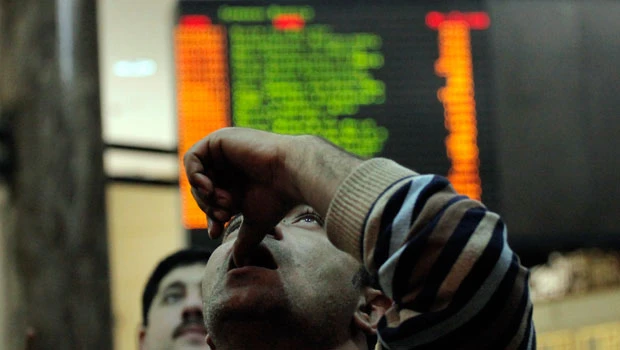
Egypt’s AGX 30 index, which measures the performance of the market’s 30 most active stocks, plummeted about 13.5 percent in two days of trading last week due to sell-off by foreign investors, analysts said.
The Egyptian bourse re-opened on Wednesday after it remained closed since January 27 due to the uprising that toppled former President Hosny Mubarak.