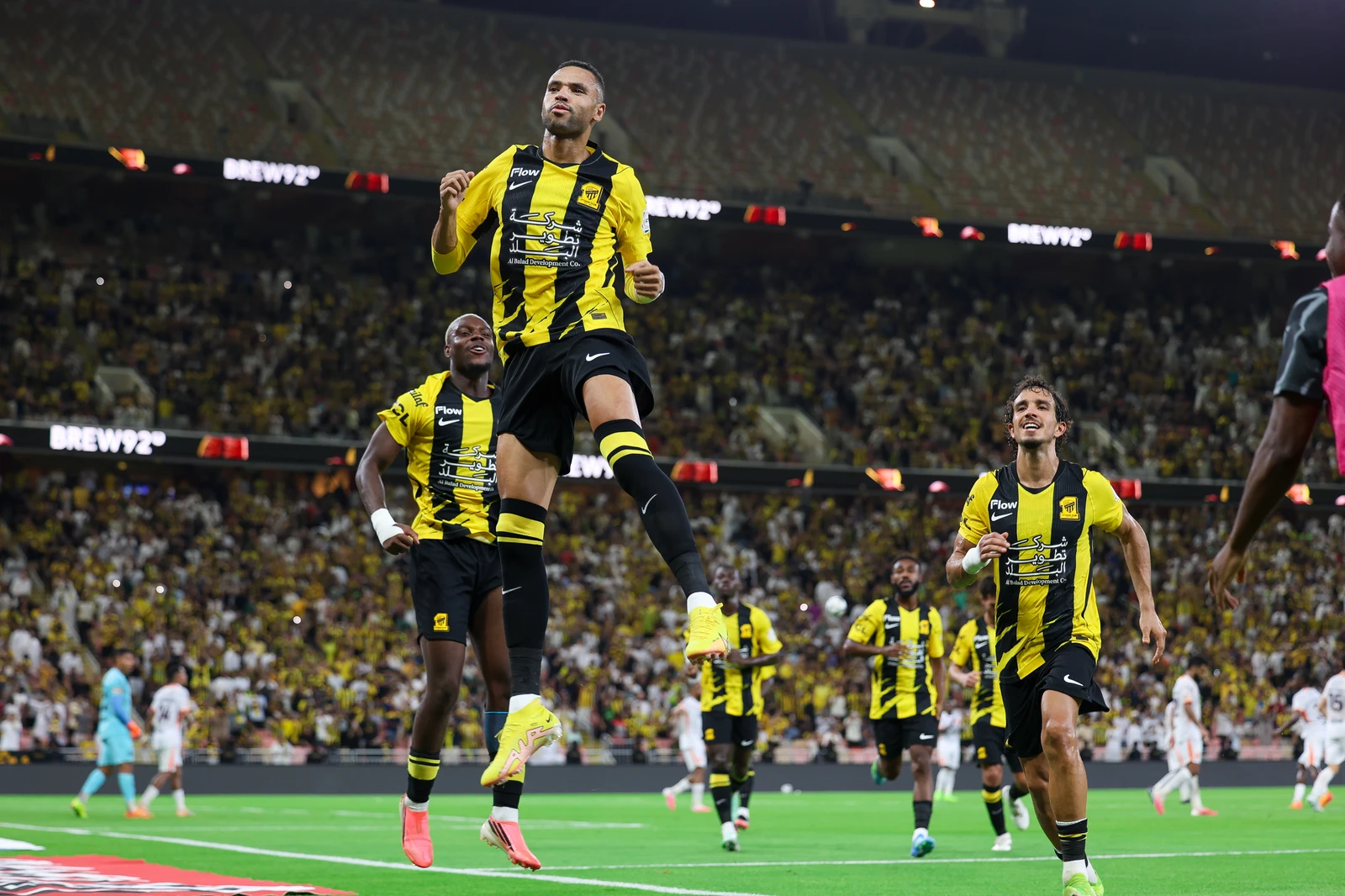
Bain and Company, in collaboration with leading sports intelligence agency Twenty First Group, has released the second edition of its analysis of the Roshn Saudi League, tracking the 2025-26 season across four dimensions: on-field performance, squad value and spending, talent development, and fan engagement. The findings show a league with a more compelling and competitive story on the pitch, alongside clear priorities to turn recent momentum into lasting value.
The 2025-26 season delivered one of the RSL’s tightest title races. Al-Nassr claimed the title with 86 points, two ahead of Al-Hilal, while the gap between first and fourth narrowed to just nine points, compared with an average of around 21 across Europe’s top leagues. Player values also continued to rise, with average player value increasing from $1.05 million in 2024–25 to $1.13 million in 2025–26. However, quality and value remain concentrated at the top: the top-five finishers now account for 76 percent of total league squad value.
“Competition at the top is getting tighter, and the quality of the leading clubs continues to rise. The next two challenges are: first, turning that momentum into sustainable progress across the league by spending more efficiently, developing more talent through academies, and building stronger fan experiences, and second, leveling the playing field between the top clubs and the rest of the league,” said Jürg Kronenberg, partner and head of Bain’s EMEA Sports Practice.
Growth also remains heavily acquisition-led. Around 89 percent of squad value growth came from player acquisitions rather than organic development, while RSL clubs shifted from underspending by 6 percent in 2024–25 to paying a 35 percent premium to estimated transfer value in 2025–26. Youth playing time edged up from 14 percent to 15 percent and youth quality improved, but Saudi nationals’ share of playing time fell from 42 percent to 40 percent, while Saudi U23 playing time declined from 9 percent to 7 percent.
The analysis highlights standout performances across the league. Al-Hilal led the RSL in starting squad quality and depth, while Al-Hazem was the league’s clearest overachiever, converting the lowest-rated starting squad into a mid-table finish. Al-Qadsiah recorded the strongest growth in average player value, doubling it year on year, while Al-Hazem was the only club to generate positive organic squad value growth, at 108 percent. NEOM S.C. led the league in U23 playing time at 36 percent, and Al-Hazem recorded the highest share of minutes for Saudi nationals at 55 percent. In fan engagement, Al-Nassr led with around 57 million social media followers and 83 percent stadium utilization, while Al-Ahli recorded the league’s highest average attendance at roughly 23,400 spectators per match.
Fan engagement presents a more mixed picture. Online following grew by 3 percent across the league, but average match attendance declined by 7 percent and stadium utilization remained at 34 percent, well below the 87 percent average across Europe’s top leagues. The analysis identifies five priorities for the next phase of growth: further professionalize smaller clubs; improve transfer and wage-spend efficiency; reduce reliance on acquisitions through stronger organic player development; build clearer academy and first-team pathways for Saudi talent; and strengthen the matchday and digital fan experience.
The work provides Bain’s outside-in perspective on the Saudi football landscape, combining its global strategy and performance-benchmarking expertise with objective market data and analytical models from Twenty First Group, as well as qualitative insights from public sources and market participant interviews. The analysis is intended to inform stakeholders and decision-makers as they navigate the league’s next phase of growth.