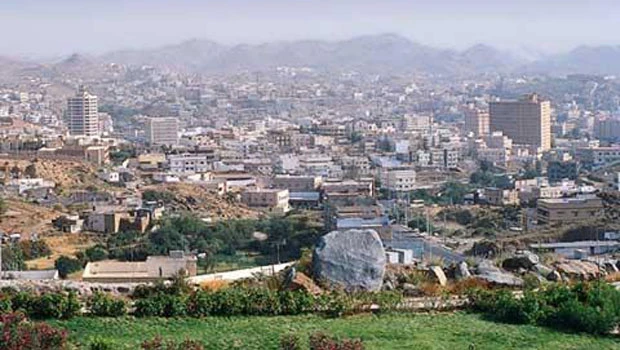
- ABHA: Asir province in the south of the Kingdom is currently facing a public-transportation crisis, especially before and after school and during the peak summer tourism season.
Finding a driver is hard here, especially when students are commuting to and from their classes. The situation has prompted high demand for private drivers on monthly contracts to transport school children. With that demand has come a rise in transportation costs.
Jamil Asiri, a resident of Abha, said he finds it difficult to get a taxi to take his children to school.
“My children are studying in different schools," he said. "In the early morning, well ahead of school hours, I start driving them to their schools and by the time it's time to go to my office I am exhausted. I wish we had some companies for school transportation, or young men ready to work as taxi drivers,” Asiri said.
Saeed Al-Bishri, another resident, said private drivers have hiked their monthly charges for driving children to school to SR3,000 and in some cases SR5,000.
“The field is left for expatriate drivers since Saudis do not want to work as cab drivers because they look down at taxi driving as a lowly job,” he added.
The shortage of commercial transportation in Asir is linked to a social contempt for families who use taxis as their mode of conveyance. People believe it is not befitting for a respectable family to travel in a taxi.
This stigma has made the experiment by some businessmen to invest in the taxi sector a colossal failure. On the other hand, at least two transporting companies have found a way to sidestep the social taboo by offering livery service in vehicles that are not marked. Their cars look like private cars with expat drivers. Most families like the idea and feel at ease to travel in such vehicles.
The Abha Chamber of Commerce and Industry is currently studying the feasibility of a joint stock company project to find lasting solution to the transport problem in Asir.
The owner of a livery service said his company was a big success.
“Families prefer to engage us on monthly contracts to take their children to school. There have been a few cases of young people misusing our cars, but we found them and stopped serving those whom we suspected of misuse.”
He said his company has employed six drivers, all of whom are expatriates. Even though he wants many more drivers to meet the rising demand he blamed the red tape for the difficulty in recruiting more drivers. He also complained that the local labor office and the Ministry of Transport have not helped in the growth of the local commercial transportation industry.
He added that he does not employ any Saudi drivers because Saudi families and guardians preferred the service of expatriate drivers.