- This May, Washington celebrated “International Cultural Awareness Month,” an annual event during which many embassies opened their doors to curious visitors.
The Embassy of Saudi Arabia was one of participants in this iconic event, and this year hosted over 1,000 members of the public to meet “real” Saudis and discover a bit about Middle Eastern culture. Their diplomatic open house — part of the “Around the World Embassy Tour” — was just one event in a month-long celebration of international culture. The previous weekend, a similar day of embassy open houses focused on diplomatic missions from the European Union.
Embassies from six continents chose to open their doors during “Around the World,” offering the public samples of native food, insights into local culture, and rare glimpses of some of this city’s most stately buildings.
“During May, more than 60 embassies opened their doors and showcased their music, dance, traditional dress, food and much more,” said Linda Donavan Harper, Executive Director of Cultural Tourism DC.
“Passport DC offers an ‘only in DC’ experience,” Harper added. She said that many people “drive down Massachusetts Avenue [known as ‘Embassy Row’ where most of the embassies are located] and see the flags outside the stately mansions and wonder, ‘What embassy is that?’”
“This year, we offered many aspects of the country,” said Nail Al-Jubeir, head of the Information Office at the Saudi Embassy. “It included a Saudi fashion show, traditional Arab dances, henna decorations, plus gifts for children. We also offered Arabic coffee and dates and erected two Bedouin tents inside the embassy where visitors could get their photos taken. At the other end of the building, we ran a movie about the history of Saudi Arabia.
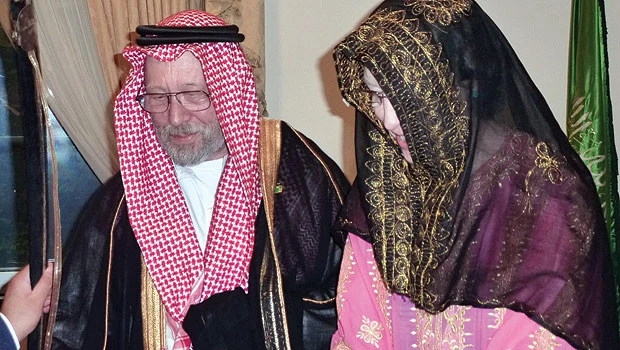
Al-Jubair said he and the embassy staff were pleased that the most popular area of the Embassy was a room where guests could dress up in Saudi clothing and have their photos taken in an abaya or thobe. “Nearby, we even have someone playing the Oud,” he added.
The Saudi Embassy also offered the public information and educational material about the Kingdom. “In the main hall of the embassy, where scale models of the three main Holy Mosques are on view, we had Saudi volunteers available to explain the significance of each site,” said Dr. ModyAlkhalif, director of cultural and social affairs at the Saudi Cultural Mission.
Hadear Abdou, Cultural Advisor at the Saudi Cultural mission, was responsible for organizing Saudi students who volunteered to assist the embassy during the daylong open house. She said that most of the Saudi students come from local universities and colleges in the Washington area, including American University, George Mason and George Washington. However, a few students traveled to the event from colleges as far away as West Virginia. “This year, we had 23 volunteers,” said Abdou, noting that some of the embassy staff also helped out.
The volunteers were largely required to chat with visitors. Abdou said many guests to the embassy were curious about Arab clothing. “They wanted to learn the Arabic names for the outfits they tried on and when they would be worn in Saudi Arabia. Most of the clothes we have here today are worn on special occasions. We had many families visit us. For average Americans who know nothing about Arab culture, it was an amazingly educational experience,” said Abdou.
Shams Al-Nifay, from Riyadh, is a student at Shenandoah University in Winchester, Virginia. A recent recipient of an MBA, she and a fellow Shenandoah graduate student, Razana Maimani, decided it would be fun to volunteer for the event.
“A lot of people asked us about the mosque stations in the main hall,” said Al-Nifay. “They also had lots of questions about Saudi culture when they visited an area where they had their names written in Arabic and where they can have their hands decorated with henna.”
She said that many people asked her about the significance of the different colors and fabrics used in the abaya on display. “So, we explained about the various areas in Saudi Arabia country represented by the abaya. They also asked us why some Saudi women cover their hair and some don’t. They asked lots of basic questions that we were happy to answer,” she said.
Maimani believes that the open house at the Saudi embassy helped to change public misperceptions. “This was a great opportunity to break the stereotypes about the place that is our home,” she said. “Some people think that we’re still living in the desert with camels. They don’t know how comfortable our lives really are.”
Al-Nifay agreed. “‘DC Passport’ is an opportunity for a lot of people to come to our embassy and meet Saudis. For many, it was the first time in their lives. They do a really good job here informing people about Saudi Arabia, which is why I like to participate in this event. It’s a great opportunity for us all.”
Indeed, that was the message that many visitors took away from their brief stopover at the Saudi Embassy.
“This is the second embassy I’ve been to today,” said one American visitor as he tried on a thobe. “First, I saw the Indonesian Embassy. It’s very interesting to see the embassy and be able to have contact with Saudi individuals. They are nothing like what the media tells us… I really enjoyed learning what one volunteer told me about the Kabbah.”
Jane Gasda, visiting the Saudi Embassy from neighboring northern Virginia, agreed. “My husband and I really wanted to participate in ‘Passport DC.’ This is the first time we’ve been to the Saudi Embassy, and we’re very impressed.”
Gasda and her husband worked overseas for 15 years, so she said that she is already familiar with many foreign cultures. “We just toured the Embassy of Iraq, and we were very surprised that both the ambassador and his wife personally welcomed us. They stood at the door and greeted everyone,” she said.
Gasda said she and her husband had seen several embassies that day during the open houses. “We’ve seen the Indonesian, Serbian, Croatian, Iraqi, Nepalese and Saudi Embassies… These embassy tours give people a better understanding of how people really are. They learn first-hand how people are, rather than just hearing about them,” said Gasda.