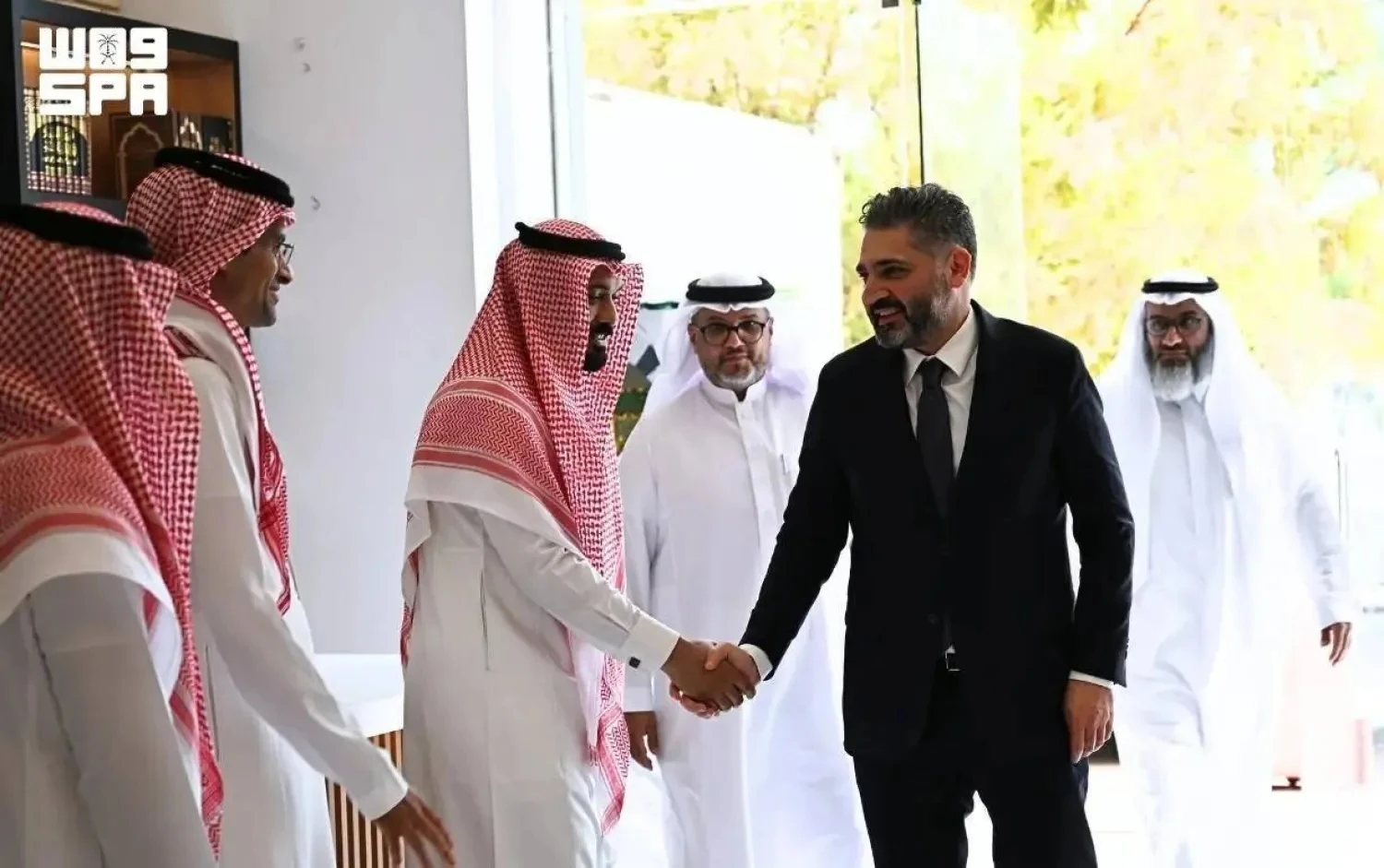
- The MENASART FAIR 2011, an exclusive art fair that gathers leading galleries and artists from the Middle East, North Africa and South Asia — the so-called MENASA region — will be inaugurated today in Beirut by Princess Lulwah Al-Faisal.
A number of events and exhibitions will take place from July 13 to 16. There is some first-rate contemporary material from the Middle East in Beirut. Besides “NABATT: A sense of being,” a major exhibition of Saudi contemporary art curated by Reem Al-Faisal and Lulwah Al-Homoud (reviewed in Life & Style on June 29), there is a superb exhibition of photographs called “Rawiya.” This exhibition is curated by Hester Keijser, editor and publisher of Mrs. Deane, a popular and influential blog on photography.
A photography collective founded by five female photographers from across the Middle East, “Rawiya” presents an insider’s view of a region in flux balancing its contradictions while reflecting on social and political issues and stereotypes. “Rawiya” literally means “she who tells the story,” and this exhibition brings together the experiences and photographic styles of Tamara Abdul Hadi, Laura Boushnak, Tanya Habjouqa, Dalia Khamissy and Newsha Tavakolian.
Born in Jordan and educated in the US and the UK, where she received her master’s in Global Media & Middle East Politics from the University of London, Tanya Habjouqa is known for gaining unique access to sensitive gender, social and human rights stories in the Middle East.
“My identity as a minority in the Middle East (Circassian) combined with anthropology studies have long pushed me toward identity politics. As a storyteller, I am drawn to the contradictions prevalent within the diversity of Middle Eastern cultures. It is a complicated environment where individuals are often struggling to escape the constraints of their born identities,” said Tanya.
In “Women of Gaza,” Tanya shows us a different side of Gaza where, despite the devastation, a community spirit and conviviality prevails. Life continues, and so do the traditions and self-respect, a resistance to letting suffering be the standard definition. Women are continuing to care for their families, strive for education, and pursue careers against all odds. “This is a work in progress, a look at the everyday lives of women in Gaza,” added Tanya.
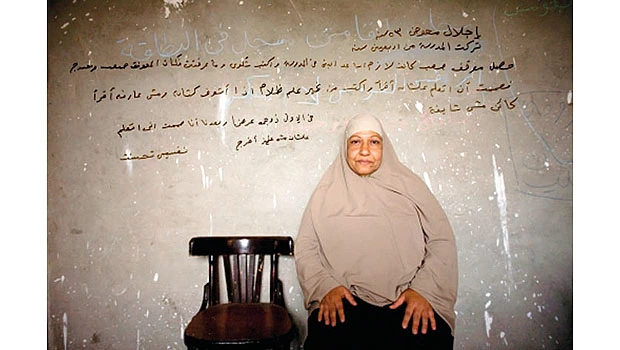
Laura Boushnak, a Palestinian photographer born in Kuwait, is currently focusing on Arab women and education across the Middle East. She is bringing to the MENASART Fair her latest work, “I Read I Write,” a series of portraits depicting women attending literacy classes in Cairo. These women were invited to participate in the project by writing their own works on prints of the photographs to tell their own stories. Their words explore the barriers that have blocked their aspirations, such as poverty, gender-related disadvantages, early marriage, and cultural constraints.
Many women in the Arab world are still denied education and thus deprived of the opportunity to grow and reach their full potential, which impedes the region’s progress. Arab women’s chances of getting a basic education vary enormously according to which country they happen to have been born in. This is the case in Egypt, where nearly half of the women over the age of 15 cannot read or write and are therefore unable to participate fully in their society.
Tamara Abdulhadi, born to Iraqi parents in the UAE, was raised in Canada. She is presenting a bold series of portraits capturing Arab men of diverse backgrounds.
"The conceptual aim of the portrait series is twofold: Trying to uncover and break the stereotypes placed upon the Arab male, and providing an alternative visual representation of that identity. Secondly, it is a celebration of their beauty, an unexplored aspect of the identity of the contemporary Arab man, on the cusp of change in a society that serves an outdated form of hyper-masculinity,” said Abdulhadi.
In “17,000 Missing: A Nation in Denial,” Lebanese photographer Dalia Khamissy explores how those left behind approach the task of grieving and remembrance when there are no bodies to mourn, nor even verification of a death to which they could appeal for closure. The Lebanese civil war lasted from 1975 to 1990. It is estimated that 130,000 to 250,000 civilians went missing during that time. The war resulted in the exodus of almost one million people, and 350,000 people remain displaced. For many, however, the war has never ended.
Khamissy’s work is presented as an 18-piece installation of archival inkjet prints mounted on aluminum, combining photos of the objects that belonged to the disappeared with images of the city and the sea, places that are often cited as locations for presumed mass graves.
And finally, one of the most evocative works of “Rawiya” is “Listen,” a project inspired by Iranian photographer Newsha Tavakolian’s childhood dream to become a singer. She made six studio portraits of professional women singers who are not allowed to sing solo, perform, or produce CDs in Iran. Inspired by her feelings about her society, she made six extra images, which are also imaginary album covers with titles for the singers. As a statement, the CD cases are left empty. The photographs are accompanied by a video installation with silent clips of the women singers performing.
“Rawiya” is an exciting and energizing show with marvelous displays. Amazing pictures are brought to life by good curating. MENASART Fair 2011 is a whirlpool of influences and captivating juxtapositions, a showcase for unknown and challenging works of art combined with more familiar and easier material.