- London’s three-week long Shubbak festival of contemporary Arab culture opened on Monday on a strong note from Tamer Abou Ghazaleh, Zeid Hamdan and Maryam Saleh, performing together for the first time in Europe.
- The first week of Shubbak sped by with music, history, film and literature from across the Arab world.
The trio performed again later in the week at the charity event Sing for Syria. The show, not officially part of Shubbak, was possible thanks to the musicians being in town for the festival’s grand opening event.
Taking the opportunity to bring people together for this cause, a concert and auction were organized. The auction sold items ranging from Arabic records to recordings by The Beatles and zoomorphic Mahmoud Darwish poetry calligraphy prints. In that single evening, over £2,000 was raised. This money will be going with the 20 trucks set to drive from Germany and Belgium to the Syrian refugee camps on the border of Turkey. Carrying much needed food and medicine as well as toys and entertainment for the kids, the convoy is set to arrive just in time for Ramadan, which this year coincides with the month of August.
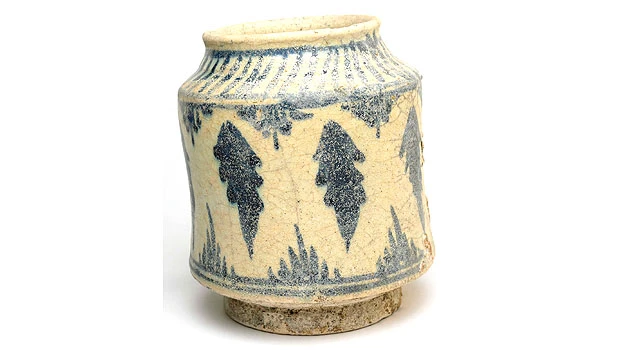
History was also showcased with the director of the Museum of London, Jack Lohman, giving a talk about London’s historical connections to the Arab world. The talk mainly focused on historical objects from the museum’s collection that tell stories of Arab traders and immigrants. These range from Syrian medieval medicine pots to 18th-century oil paintings featuring Arabs in the old Convent Garden market. Lohman also referred to local archive material documenting the growth of Arab communities, such as the paperwork for the first halal butcher, something that has become quite common on the streets of the Square Mile.
The talk also delved into the history of London’s Muslim presence. The audience learned about the city’s first mosque, located in London’s East End. In 1899 Lord Rothschild and the then Aga Khan, concerned with the lack of Muslim representation in the Empire’s capital, transformed three houses on Commercial Road into a prayer and community center. It wasn’t until 1985 that the first adhan sounded out the mosque on Whitechapel Road. (Arab News will publish a fuller report on Lohman’s talk in the upcoming editions of Life & Style.)
Arab cinema was the flavor of Friday night. The London-based Zenith Foundation organized a screening of six short art-house films from Palestine and Syria. A thoughtful series entitled "Vanishing Spaces", it presented films that reflected on shifting land access and the people who have been affected by it.
Two films by the late Syrian documentary maker Omar Amiralay were screened: his first film, titled “Film Essay on the Euphrates Dam” and his most recent work, “A Plate of Sardines.” The first film was, as the title suggests, a visual essay made up of black and white images juxtaposing Bedouins in dried out deserts against rushing water produced by the newly constructed damn. The film, a vote of confidence for the industrialization of the Euphrates, was the first of two films by Amiralay that tackled the subject. Years later, he revisited the site making another film rebutting his earlier opinion by portraying the negative effects he encountered after the dam’s completion.
“A Plate of Sardines” visits Quneytra, a small town in Syria that endured a different kind of destruction, that which was caused by war. Quneytra is located in the Israeli-occupied Golan Heights and remains much as it was when it was ravaged in 1974. In this film, Amiralay, along with his friend Mohamed Malas, also a documentary filmmaker, discuss the destruction of Quneytra and their own memories while presenting dramatic snippets of a film by Malas about the topic.
Two other films from Syria, “They Were Here” and “Before Vanishing”, were strictly observational films about industrial devastation of life and nature. “They Were Here” stands is a photographic documentation of a steam-engine plant that was functioning for 40 years. Now neglected, the plant still stands grand, but as a skeleton of its promising beginnings. The film is yet another visual essay of what has been left behind. Similarly portraying neglect is “Before Vanishing”. Going along the Barada River, the director of this film records images and sounds of different areas of this polluted body of water — some still see it as a natural resource while others hardly realize it exists at all.
The two films from Palestine started and ended the series respectively. While both feature the directors’ families, they remain quite different from each other. “Na’im and Wade’a”, by Najwa Najjar, uses rare archive footage from pre-1948 Jaffa as well as sound bites from historic speeches of that ominous year. Illustrating the political history alongside her family’s personal story, the film recounts her family’s forced resettlement in Jordan. Larissa Sansour’s “Soup Over Bethlehem” lends a playful subtlety in its humor and imagery. It picks up on a current day family’s casual conversation over a meal of mulukhiyah (a thick soup made from jute leaves). They discuss their experiences as Palestinians dealing with passport control when entering their own country and debate about the beautification of the Israeli apartheid wall. The film is, again, in black and white, however, the mulukhiyah stands out visually as the only object in color, signifying it as among the only pieces of cultural identity not appropriated by the Israelis as their own.
The series was thought provoking in its illustration of people’s ideas and reactions to the ever-changing politics of place that the Middle East has been enduring for the past 60 years. The artistic conceptualization of these issues adds a new dimension to contemporary Arab thought and artistic production.
Meanwhile in the world of books, the London Literature Festival shared an event with Shubbak by hosting a reading by this year’s two International Prize for Arabic Fiction (IPAF) winners. Moroccan Mohammed Achaari and Saudi Arabian Raja Alem, both read excerpts from their award-winning novels. Lead by the British author Paul Blezard, the talk introduced the novel as a relatively new concept in Arabic literature. Achaari, who has a background in poetry, said that he made a conscious decision to delve into the growing world of novels, attempting to portray strong issues and realities that Arab society deals with. Raja Alem, an experimental writer of a range of mediums, holds a spiritual connection to her works and topics, leading her to flow naturally into the novel format. More than allowing a space for the imagination, Alem see the novel as a space for knowledge about other people and cultures.
The audience was very fortunate to hear a reading of the only few pages from either book that has been translated into English as of yet. However, part of the IPAF prize is the guarantee of an English translation. These will be released in one and two years respectively.
The first week of Shubbak was busy and diverse, but the next two weeks are looking to be all the busier with more film and music, as well as architecture, theater and more.