
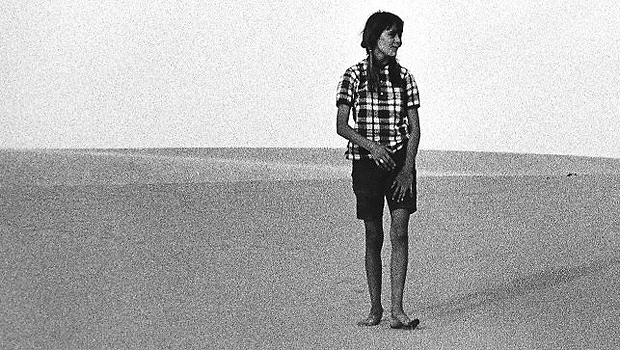
- Saudi Aramco (formerly Arabian American Oil Company) has been home to foreign workers and their families for over three quarters of a century.
- During this time, babies have been born, families raised, and a culture within a culture has developed inside the walled compounds.
Living in an enclosed setting precluded these families from integrating into Arabian society. At the same time, they were far removed from their homeland. Life went on and times changed back home, as they created a culture and lifestyle of their own.
The children who have grown up in and have now moved on from these compounds seem to share a special bond which stems from their unique childhood experiences.
Perhaps that’s why they have kept in touch over the years, forming the “Aramco Brats” group of over 400 closely knit members.
Their common thread comes from growing up isolated, yet exposed to a culture extremely different from that of their parents’. In today’s modern era, they keep in touch via online forums and arrange “Brat Reunions” to gather and reminisce.
Eight such “Brats” have graciously opened a window to their world and it is an honor and a privilege to take a glimpse at how their time in Arabia has shaped their lives.
Their experiences span five decades, from the 1950s to 1990s. Some were born in Saudi Arabia and others were transplanted at some point during their childhood.
During their time in Saudi Arabia, they were keenly aware that they were foreigners, but most didn't feel like they were; Arabia was “home.” One fortunate “Brat,” Andie McAlister, had her grandparents, aunts, uncles, and cousins all living on the same compound. For others, the close friendships that grew inside their mini society served the various roles of extended family. They felt a sense of security and belonging that comes from growing up in a true small-town community atmosphere.
But it was the weekend outings to the nearby towns, visiting with the locals, and the Gulf and desert explorations that were the most thrilling part of the adventures of living here.
There are recollections of the generosity of the local people abound in their stories.
Claudia Bates-Physioc recalled, “The hospitality of the Saudi culture astonished me, even as a small child. I have a memory of admiring a trinket in the home of a family we were visiting, and the hosts insisted that I take it. On the way home, I was scolded by my parents and was told not to admire belongings in a Saudi home again; not because it was rude, but because I would be taking advantage of the extreme generous hospitality of the Saudi culture.” said Bates-Physioc
“I sat in Bedu tents in the deep desert of the Rub Al-Khali where a camel was slaughtered in our honor,”
Diana Lynn said, “Visits with my father to his Arab friends' home are my fondest memories. How patient and understanding were these friends of my father's to allow a little left handed bint sit in the majlis and eat with them. God bless them and my father.”
“My father received offers for me, a homely little girl. It was an honor to him, and he took it that way. I had a very favorable impression of Arabs at that time, and I still do.”
Wendy Nine fondly recalled, “Once I met a Bedouin girl in the desert. She gave me a silver ring which I still have.”
Hali Equality Cespedes-Chorin remembered, “Ramadan came in the summer when I was there…when dusk fell and people broke their fast, the camaraderie was amazing. Total strangers would invite you to sit with them and share their dates and water, even if you weren't Muslim.”
The Aramco Brats also considered the differences in cultures.
Nine recalled, “I thought the Saudi culture was fascinating and ancient for the most part. The simplicity of living was so different from the way we lived.”
Jacobs said, “The Bedu always seemed very exotic and special to me.”
Although they were mindful of local customs and religion, they didn’t find it a barrier.
“It was very natural adopting the ‘When in Rome, act like a Roman’ attitude as there was an easy acceptance both ways on the differences between our cultures,” said Barbara Deines Martin.
“To me the Saudi people were part of my ‘town folk,’ always interested in me and my family when we were out of camp and very hospitable. I never felt any US and THEM; it was always a WE. We had a lot to learn from each other,” said Martin
As they went off to school, their parents retired, or they simply grew up, there is a common sense of loss and displacement at “returning” to a homeland that wasn’t really “home.”
Lynn described the overall feeling of displacement. “In our ‘Brat Chat’ discussions, we ‘Brats’ have frequently discussed feeling displaced in the world, much like the Palestinians.”
Bates-Physioc talks about her transition when she returned home.
“I was embarrassed to tell people where I ‘came from.’ I was an outsider in a culture I didn’t fully understand and it was uncomfortable for me. I think I even lied sometimes and told people I was from Indiana. I wanted to be normal, and I wanted to have rode the yellow school bus like every one else had…I don’t really belong to any culture…I want to be able to say, ‘I am from the world’ because truly, that would be the most accurate answer.”
Nine described how she felt going back to her home country, “It was alien and complex and I did not understand the rules or the ways of living. For a long time, I felt alone and a stranger in my own country.”
Martin discussed her everlasting belonging to Saudi Arabia, “I was truly a foreigner in my own country. It took me many years to really feel comfortable here in the USA. I do identify more with Arabia, even now, and am proud to be an Aramco Brat.”
Dawn Kolb described her shock at American culture, “We were in a grocery store and a woman (who was not covered as she was used to)…walked past…I turned to my dad and asked how she wasn’t ashamed to be…showing that much skin!”
McAlister recalled some of the practical difficulties to American living, “There were some things that would snag me up like money, television and just how big and busy everything was.”
Cespedes-Chorin and Jacobs both found it difficult to relate to their homeland peers, whose lack of knowledge about the world left them seemingly intolerant of differences.
Cespedes-Chorin said, “I realized how Americans have been deprived of information about what is going on in the rest of the world. This is particularly true of the Israel/Palestine situation.”
Jacobs echoed, “So many Americans have no clue about the outside world, and had a very different perspective.”
Their time in Saudi Arabia etched a lasting fondness on their hearts for the land they’d come to love, close family times, and neighbors who were more like family than friends.
McAlister shared the sense of security she felt growing up. “My fondest memory is …walking around Dhahran on warm nights with friends with the billions of stars shining down, hearing the sound of the AC plants in the background and feeling utterly safe.”
Kolb also spoke of the security she felt, “The camp was very safe. We didn’t have to worry about any major crimes.”
Martin reminisced about special family times. “My family and I were great campers and we did a lot of exploring…Invitations to sit in Bedouin tents and drink gahwa, while we were in the desert, is a high point…also trips on Dhows out into the Arabian Gulf to go scuba diving and camping on the islands off the coast of Jubail were positively thrilling.”
Nine spoke of her timeless love for Saudi Arabia. “There are many precious memories and times that I had there and I was very fortunate to have been given the opportunity. I now love this country much more for its secret culture and its fascinating history.”
Bates-Physioc painted the image she holds in her heart. “My most spectacular memories, however, were the endless hours lying on my back on silky sand dunes and gazing at the magical Saudi sky. The sky was blacker than the ace of spades and the stars were a trillion brilliant diamonds that would shoot across the sky! Those nights sleeping with the Saudi sky were the closest I’ve ever come to heaven and will forever be burned in my memory.”
What’s more, their final exits brought sadness and longing for a special place and life once lived.
Kolb shared the sense of lament she felt growing up. “Knowing that someday, we would have to say good-bye to our friends.”
Bates-Physioc talked about not raising her own family in Arabia, “I envy the families I know who made the decision to return to Saudi Arabia because I know the fullness of that experience.”
Lynn regreted not going back, “Truly, I felt very sorry I had not applied for a job with Aramco when I was a newly graduated registered nurse.”
Perhaps Jacobs came the closest to continuing her Arabian childhood. “When I went to university, I studied Contemporary Arab Studies, International Politics and Arabic, because I wanted to have a more academic understanding of Saudi Arabia and the Arab World. Then, I lived in Egypt for a while to study and to work (I would have gone to Saudi Arabia, but visas were not possible for a young woman visitor on her own then). While I was there, I met my husband, who is Egyptian, and a Muslim.”
It’s very clear they all feel they had a very special opportunity to experience growing up in Saudi Arabia and they have become much more open-minded and appreciative of diversity because of it.
Nine said, “I am very open to all cultures, very curious to know more. I do not think the American way is the only way.”
Martin explained, “Living in Arabia has given me the opportunity to really see another culture from the inside and made me less judgmental about people who are clearly different than me. I feel more open to ways of thinking that are different than mine.”
Kolb agreed. “I feel like I have a better understanding of people of different cultures and religions. I am understanding and tolerant of people of different backgrounds.”
Truly unique in the world and bonded by experience, the “Aramco Brats” are forever intertwined by the childhood memories and special culture they share.
Martin concluded, “Aramco Brats are a very unique group of Americans. Although we are clearly Americans, we have an incredible fondness in our hearts for the Kingdom and its people. We all call Saudi Arabia ‘Home.’”
Hali Equality Cespedes-Chorin concurred. “I feel a bond with people who grew up as ‘Aramco Brats.’…I think we share an appreciation of Arabic culture and concern for Saudi Arabia because of our experiences. We had our own culture in Aramco, being half in one world and half in the other.”