
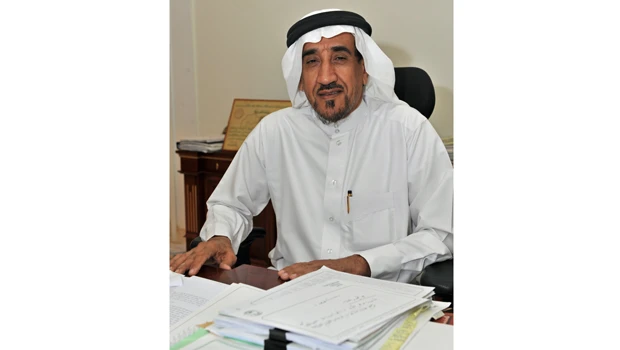
- ‘International Dates Council to be based in Kingdom’
The framework for the International Dates Council to be based in the Kingdom is under construction. Undersecretary for research and agricultural development at the Ministry of Agriculture Abdullah Al-Obaid confirmed on July 26 that the organization is on the books and expects it to be in operation officially some time in 2012.
“It will be established in Riyadh and we are now taking the steps needed and with the coordination of the Food and Agriculture Organization of the United Nations. We have now received the acceptance of most of the producing countries.” These include the Middle East belt of producers, Mexico and Southern California.
A central body to offer standards, regulate and coordinate the country’s fragmented date industry, which produces about one million tons of dates per year, has long been a wish of the larger date producers. Currently, almost the entire Saudi output of dates is consumed locally with only about five percent, barring charitable donations by the Kingdom, going for export. Al-Obaid thought that there were many opportunities for expanding the market from the downstream byproducts from dates ranging from medicinal products through sweeteners.
Al-Obaid said that overall the Ministry of Agriculture presided over the farming including dates industry in the Kingdom. “There are various organizations, chambers of commerce and agricultural cooperatives and the like dealing with dates.” He observed that the Kingdom was geographically large and the date production areas scattered and added that the government had given increased attention in the last few years to organizing the sector.
“We are a major producer of dates of high quality and have varieties of dates that are unknown outside; this is because we have a very strong local demand and unfortunately very weak international marketing. We lack the support to go abroad. ” He added that he would look both to the government and the producers for that support. “Unfortunately we lack the strong organizations to handle that matter but there are growing efforts.”
Al-Obaid thought that as the production of dates increased, that the Kingdom should address the international markets. “The ministry supports those who are interested in marketing, participating in international exhibitions to show our products,” he said. The support, for example in the US and Germany, took the form of both financial and logistical assistance. “More effort should be made in those matters.”
The annual production of one million tons comes from the country’s (estimated) 25 million palm trees putting production at 40 kilos per tree. This ties in fairly well with the average yield agreed by farmers of some 50 kilos. Specialist industrial farmers, for example Bateel Dates, put the yield from their selected varieties and closely monitored production at nearly double that. It would seem that there is potential for development in the industry with respect to yield.
The Kingdom produces over 400 different varieties of date the vast bulk for commercial processing or animal feed with a score or so used for human consumption.
With such a large variety of dates and byproducts coupled with the scattered producers, quality control is not easy. Al-Obaid said that it was generally controlled by market forces but there were general standards issued by the Saudi Arabian Standards Authority.
“They cover areas such as color, weight and nutritional value,” he said.
Equally decentralized are the research facilities concerning general agricultural research that included date production and development. They are spread throughout the country in various institutions, said Al-Obaid, for example in the Kingdom’s three agricultural colleges and KACST. It seemed however that there was no research facility dedicated specifically to date research.
Al-Obaid said that there was an agricultural research center centered in Al-Ahsa that was mainly for dates. It handled research into varieties as well as production, treatment and marketing.
Although the date palm is a tough tree and can withstand arduous conditions it attracts a variety of pests, most notably the red weevil. This infests the crowns of date palms, often using holes already made by the rhinoceros beetle and between them, they are deadly to palms. Al-Ghat to the north of Riyadh is currently clear of them and strict restrictions on the movement of seedling palms are in force in an attempt to maintain that.
Though the beetle infestations are controllable by pesticides, recent events in Al-Ahsa in the Kingdom’s Eastern Province highlights the dangers associated with their unregulated or uneducated use. Arab News on July 7 reported: “About 16,000 date palm farms in Ahsa, Eastern Province, used highly toxic pesticides from 1995 to 2008, according to a recent study. This covers nearly 70 percent of date palms in the region famous for its oases.”
Al-Obaid confirmed that his ministry was active in efforts both to control the use of pesticides and to prevent its entry into the food chain.
“We have a specialized department in the ministry taking care of that not on dates only but on all agricultural products. Educational efforts to teach people how to use pesticides are very important. All pesticides are registered by the ministry and there is a lot of research into them. To establish their effects and side effects, how to write the instructions on the containers.”
He observed that there were however in any society violators.
He identified as part of the problem expatriate agricultural workers with very low levels of education whom the ministry is making efforts to reach and educate in the use of pesticide.
Al-Obaid noted: “The nature of the insect is very strange; you cannot discover it unless it destroys the palm because the larvae are inside the tree.”
Dates outside the Middle East are seen more as an exotic food rather than a staple food. Al-Obaid agreed that there was an opportunity to change that perception and that was very important that efforts should be made to convince the market that dates were a very high value food.
Looking at the future of dates and their potential Al-Obaid said that he would like to see a Saudi Arabian date marketing board or similar. Their nutritional value is high and stored under the right conditions can stay fresh for up to two years depending on type of date and stage of ripeness.
The date is an undervalued food source in the West and has enormous potential to develop as a staple food rather than a seasonal luxury. Gourmet dates and date products in the high-end food sector are slowly penetrating the Western market. Potentially, these are the advance guards with the main commercial date forces as yet marshalling for the campaign just out of sight.
Given the gathering organization and drive by the Kingdom’s government behind this remarkable foodstuff, the perception of dates in the West is in for a restructuring and Saudi dates will be in the vanguard of that change.