- CAIRO: The USAID director in Egypt has abruptly flown back to Washington after less than a year on the job, the first major casualty of a row between the two longtime allies over American funding for pro-democracy groups.
Jim Bever left his post Thursday, a day after the Obama administration chastised Egypt's leaders for stoking anti-American sentiment during the country's rocky transition to democracy. In the rare public rebuke, the US said it had noticed mounting attacks and criticism of US aid and motives.
US Embassy spokeswoman Elizabeth Colton said Bever was returning to Washington to take a "unique opportunity" as an instructor at the War College. "We are proud of Jim's service in Egypt and grateful for his steady leadership during the time of transition."
Bever has been at the center of a dispute over funding since March, when USAID — the American government organization that distributes international development aid — placed advertisements inviting nongovernmental groups in Egypt to apply for US funding. The ads attracted hundreds of applicants, who lined up outside USAID offices in a quiet suburb south of Cairo. Over the next few months, the American aid organization allocated millions of dollars to the groups.
This left the government seething. It insisted that the funding must go through official channels, and not directly to the groups. Those restrictions applied during the rule of ousted President Hosni Mubarak, whose government tightly controlled the process.
Last month, Maj. Gen. Mohammed Al-Assar, a member of the Supreme Council of the Armed Forces, gave a speech in Washington and criticized the United States for funding pro-democracy groups without submitting to Egyptian government supervision. He said it violated Egyptian laws for funding nongovernmental organizations. "It is a matter of sovereignty," he said.
Colton, The US Embassy spokeswoman, told The Associated Press on Thursday that the US is not interfering in Egypt's politics. "Egyptian groups that apply for and receive grants from the United States are engaged in activities that are politically neutral. No funds are provided to political parties," she said.
Egyptian authorities this week opened a formal investigation into the funding issue, according to a judicial official involved in the process. "A list of the likely beneficiaries of American funding has been compiled and we will investigate them one by one," said the official, who spoke on condition of anonymity.
Other generals on the ruling council have accused two key reform groups of following a "foreign agenda" and of receiving funding and training from abroad, claims that suggest plotting against the country with foreign help.
The activist groups April 6 and Kifaya fought back by lodging official complaints with the prosecutor's office against Maj. Gen. Hassan El-Roweini, the ruling council member who made the accusations. April 6 is also demanding an apology.
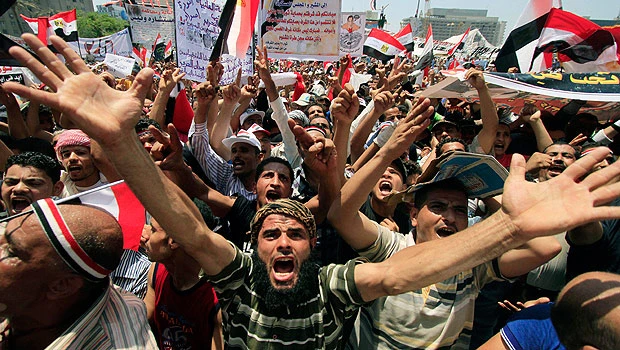
Kifaya and April 6, which both called for Mubarak's ouster years before the uprising, are credited with key roles in organizing the protests that toppled the president. "This is all part of a military council plan to portray everyone protesting on the streets as paid by a foreign party," said activist Mona Seif. "The council is trying to build a reputation for itself as the sole protector of the revolution and the ultimate source of patriotism."