
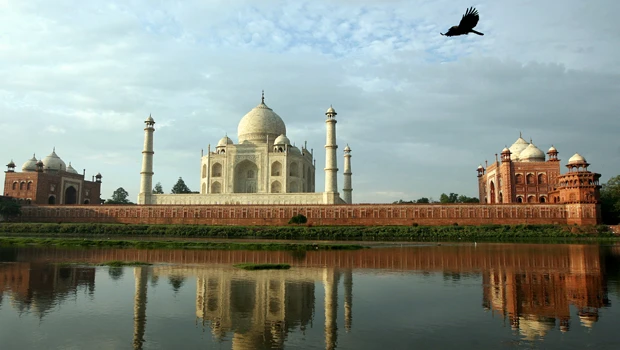
- Tourism has played a pivotal role in social progress.
- It is also an important vehicle in widening socio-economic and cultural contacts.
Tourist expenditure generates multiple effects with extensive outreach along its value chain. Adding to the demand for a variety of goods and services, tourism offers potential to exploit synergies across a large number of sectors such as agriculture, horticulture, poultry, handicrafts, transport, construction etc., where growth of income has a favorable impact on poverty alleviation.
Tourism facilitates business contacts, widens markets and helps diffusion of growth impulses across territories to promote broad-based employment and income generation. Investment in tourist infrastructure adds to economic growth, catalyzes generation of income and employment, which in turn, leads to further growth in demand for tourism and stimulates subsequent rounds of investment in a virtuous circle.
Travel and Tourism Competitiveness Report of 2009 from the World Economic Forum, has ranked India as 11th in the Asia Pacific region and 62nd overall, moving up three places on the list of the world's most attractive destinations.
It is ranked 14th best tourist destination for its natural resources and 24th for its cultural resources owing to many World Heritage sites, rich flora and fauna and strong creative industry.
In the 18th session of the General Assembly of UN WTO in 2009, India was re-elected to the Executive Council of the United Nations World Tourism Organization for another four years term. India is a member of the Executive Council of UN WTO continuously for the last 19 years.
Foreign Tourist Arrivals during the period January-February 2010 were 10.92 lakh with a growth rate of 12.7 percent, as compared to the FTAs of 9.68 lakh and a negative growth rate of 13.8 percent during January-February 2009 over the corresponding period of 2008.
Foreign Exchange Earnings in dollar terms during the month of February 2010 were $1,434 million as compared to FEE of $923 million during the month of February 2009 and $1,305 million in February 2008. The growth rate in FEE in dollar terms in February 2010 over February 2009 was 55.4 percent as compared to the growth of (-)29.3 percent in February 2009 over February 2008.
Hotel industry; Service apartments; Adventure Tourism; Health Tourism; Convention centers; Wildlife Tourism; Highway Tourism and Amusement Parks.
Infrastructure Development holds the key to India’s sustained growth in the tourism sector. Therefore, the Ministry of Tourism has been making efforts to develop quality tourism infrastructure at tourist destinations and circuits. The ministry has sanctioned 94 projects for an amount of Rs.394.85 crores for infrastructure augmentation including rural tourism projects in the year 2009-10 (up to November 09).
The ministry has launched a scheme for development of nationally and internationally important destinations and circuits through mega projects. To date 29 mega projects have already been identified and of these 21 projects have been sanctioned. In the current year, the ministry has sanctioned mega projects in Madhya Pradesh at Chitrakooot, as spiritual and wellness destination for an amount of Rs.2401.98 lakhs. The mega projects are a judicious mix of culture, heritage, spiritual and ecotourism in order to give tourists a holistic perspective.
The ministry is also taking initiatives with other Central government ministries, such as Railways, Civil Aviation, Road Transport & Highways, Food Processing and Urban Development and also the concerned state governments to achieve convergence and synergy with their programs so that the impact of investment on these destinations is maximized.
Other initiatives
In the year 2009, the ministry organized a workshop on World Class Tourism Infrastructure and decided that the ministry will meet the expenditure on the architect’s fee upto 2 percent of the project cost which could be included in the cost estimates.
The ministry has issued the guidelines for facilitating construction of heliport as a component of destination development project in hilly/remote areas.
The ministry has decided to consider proposals for grant of financial assistance upto Rs.5 crores for construction of one convention center at any well-connected and accessible tourist destination in each state/UT for promotion of meetings, incentives, conventions and exhibitions (MICE) tourism.
The caravan tourism policy announced by the ministry is aimed to promote and facilitate and incentivize development of:
• Caravan Parks in the public sector, private sector and PPP mode
• Caravans in the public sector, private sector and PPP mode
Caravan Tourism can effectively meet the growing demand of accommodation while ensuring adherence to quality, standards and safety norms.
Medical Tourism
India is a perfect destination for medical tourism that combines health treatment with visits to some of the most alluring and awe-inspiring places of the world. A growing number of tourists are flocking in large numbers because of the superlative medical care, equipments and facilities that India offers.
India excels in providing quality and cheap health care services to overseas tourists. The field has such lucrative potential that it can become a $2.3 billion business by 2012, states a study by Confederation of Indian Industry (CII). In 2004, some 150,000 foreigners visited India for treatment, and the numbers have been rising by 15 percent each year.
India is in the process of becoming the "Global Health Destination" owing to the following advantages:
The cost of medical services in India is almost 30 percent lower to that in Western countries and the cheapest in South-East Asia.
Language is a major comfort factor that invites so many foreign tourists to visit India for medical and health tourism. India has a large populace of good English speaking doctors, guides and medical staff. This makes it easier for foreigners to relate well to Indian doctors.
Indian hospitals excel in cardiology and cardiothoracic surgery, joint replacements, transplants, cosmetic treatments, dental care, orthopaedic surgery and more.
The medical services in India include full body pathology, comprehensive physical and gynecological examinations, audiometry, spirometry, chest X-ray, 12 lead ECG, 2D echo Color Doppler, gold standard DXA bone densitometry, body fat analysis, coronary risk markers, cancer risk markers, high strength MRI etc.
All medical treatments and investigations are done using the latest, technologically advanced diagnostic equipments.
Indian doctors have got an expertise in performing successful cardiac surgeries, bone marrow transplants, liver transplants, orthopaedic surgeries and other medical treatments.
The cost of infertility treatments in India is almost 1/4th of that in developed nations. The availability of modern assisted reproductive techniques, such as IVF, and a full range of Assisted Reproductive Technology (ART) services have made India the first choice for infertility treatments.
Medical Tourism — Saudi Arabia’s growing interest: In the calendar year 2010, more than 600 Saudi nationals went on a medical visa to India. This was a near 200 percent increase over the figure for 2008.