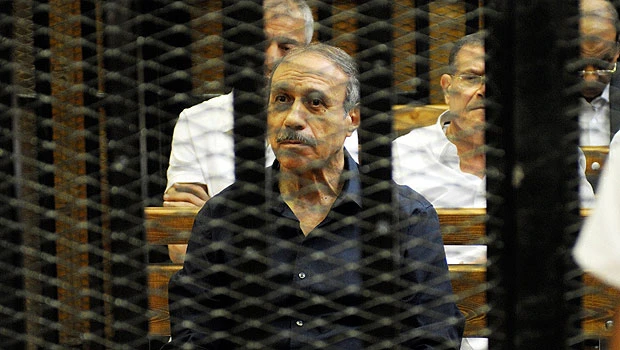
- CAIRO: The trial of Egypt's former interior minister over the death of protesters in an 18-day uprising resumed Sunday, with lawyers for the relatives of the dead demanding the government reveal letters and logs of phone calls to find out who gave the order to open fire.
Habib El-Adly was in charge of a massive security apparatus blamed for systematic rights abuses and the smothering of all opposition to former President Hosni Mubarak's 29-year rule.
The trials of El-Adly, Mubarak and his sons, who appeared in the courtroom's steel cage on Aug. 3 to plead not guilty of the killings, have gripped audiences across a region dominated by long-serving autocrats.
El-Adly and six of his top officials watched from the cage as lawyers crowded toward the judge's bench to list their demands for more evidence.
All seven defendants face the death penalty if convicted over the deaths of more than 850 protesters during the uprising in January and February.
Police used live ammunition, rubber bullets and tear gas to try to quell the protests.
Amir Hamdy Salem, one of the many lawyers for the plaintiffs, asked to see all communication between Mubarak and El-Adly stored in the presidential palace and Mubarak's residence.
"Regarding the request to continue to view evidence, the court will consider it," said Judge Ahmed Refaat.
Salem also demanded written correspondence and records of calls between Mubarak and his ex-intelligence chief Omar Suleiman kept in Egyptian intelligence headquarters. He requested log books showing orders given by Adly and Hasan Abdel Rahman, the head of state security, to officers trained as snipers as well as logs of the ammunition used.
In his role as security chief, Adly was the target of animosity from much of the population. But many Egyptians were unsure whether the ruling military council would subject former army officer Mubarak to the humiliation of a public trial.
That only heightened the drama of his appearance this month in the courtroom, lying in a hospital bed and flanked by his sons Alaa and Gamal, who many Egyptians believed had been groomed to succeed his father as head of state.
Mubarak's trial resumes Monday.