- SANAA: President Ali Abdullah Saleh vowed Tuesday to return to Yemen soon from Riyadh, where he has been recuperating from wounds he suffered in an attack on his palace compound.
Yemen is reeling from six months of mass street protests calling for Saleh’s ouster, and there are fears that his return to the country could spark a civil war. The political crisis already has triggered an armed conflict between Saleh’s forces and heavily armed tribesmen who have turned against him. There are also are concerns that Yemen’s Al-Qaeda offshoot will take advantage of the turmoil and have a freer hand in plotting attacks on the West.
Speaking Tuesday in a televised address from Riyadh, Saleh vowed to return home, telling his supporters: “See you soon in Sanaa.” He also lashed out at his opponents, calling them, “exploiters, war merchants, and street looters.”
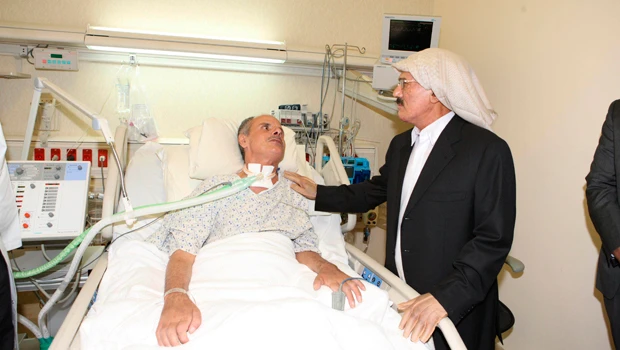
Saleh, who only last week left the hospital in Riyadh were he’d be recovering since early June, appeared to be in better shape compared to his first appearance after the attack, when he looked stiff and frail.
Other than the medical white gloves covering his burnt hands, Saleh seemed to have recovered from the attack. His face appeared to have healed from the burns, and he moved comfortably and confidently in front of the camera.
Saleh didn’t refer to a power-transfer deal, which offers him immunity from prosecution if he steps down. Saleh has three times agreed to the deal, put forward by Gulf states, only to back out on each occasion at the last minute.
The proposal would see Saleh transfer power to his deputy, who would then call presidential elections.
On Tuesday, Saleh said he is willing hand over power to his vice president if the armed tribal fighters who support the protesters are pulled from the streets and the opposition ends its demonstrations.
The opposition has rebuffed past overtures from Saleh, calling them insincere, and it was not immediately clear whether it would take the president’s offer seriously this time.