- GENEVA: Syria’s crackdown on anti-government protesters may constitute crimes against humanity, a UN investigative team said on Thursday, adding it had evidence implicating 50 people at various levels of government who could be prosecuted.
Syrian forces fired on peaceful protesters throughout the country, often at short range and without warning, killing at least 1,900 civilians, including children, investigators said in a report. Their wounds were “consistent with an apparent shoot-to-kill policy,” it said.
Some were reportedly finished off with knives.
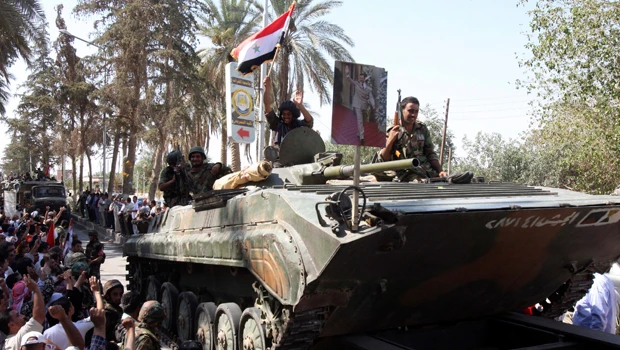
Tanks, grenades, snipers, heavy machine guns and helicopters have been used in the assault aimed at quashing opposition to the rule of President Bashar Al-Assad, they said in a report to the UN Human Rights Council. The 47-member Geneva forum is to hold a special session on Syria on Monday.
“The mission found a pattern of human rights violations that constitutes widespread or systematic attacks against the civilian population, which may amount to crimes against humanity,” it said, specifically citing the Rome Statutes of the International Criminal Court (ICC).
The team, whose report covers mid-March to mid-July, was not allowed into Syria but interviewed victims and witnesses in the region.
It compiled a list of 50 people at various levels of government and said it may present the confidential information “in the context of future investigations and possible indictments by a competent prosecutor.”
Syrian authorities, in a letter to the UN investigators, said that the death toll of 1,900 people was correct, but said it included police and security officers, according to the 22-page report, the publication of which coincides with a Security Council session being held later on Thursday in New York.
“Reports from witnesses indicate that there was a widespread modus operandi to kill civilians by using a) forces on the ground, b) snipers on rooftops and c) air power. Consistent with an apparent shoot-to-kill policy, most of the victims’ bullet wounds were located in the head, chest and general upper body area,” it said.
“Children have not only been targeted by security forces, but they have been repeatedly subject to the same human rights and criminal violations as adults, including torture,” it said.
Torture, including severe beatings and electric shocks, has been widespread, while the fate of hundreds of others swept up in mass arrests is unknown, the investigators said.
The team had corroborative eyewitness statements regarding “numerous summary executions, including 353 named victims,” that took place outside of the context of the demonstrations.
On the protests, it said: “The majority of killings reported were due to live ammunition, coming from security forces, the military and Shabbiha elements, using Kalashnikovs and other guns.” Shabbiha is an Alawite civilian militia close to the government that is accused of participating in widespread abuses.
Former soldiers testified that they had received clear orders to use live ammunition against protesters. “Those who did not shoot civilians were shot from behind by other security officers and Shabbiha units.”
“There was a clear pattern of snipers shooting at demonstrators, including reports that officers were specially trained to be used against civilian demonstrations,” it said.
UN investigators interviewed more than 180 people in four countries, some of whom were still in Syria. Witnesses included Syrian soldiers who had defected “some of whom had refused to follow orders to shoot civilians,” according to the report.
Referring to demonstrations in Homs in April, it said: “One eyewitness stated that the security forces gave no warning before targeting the protesters, and that he saw a teenager being shot next to him.”
In Hama on June 3, where security officers told protesters not to approach a security parameter, it said: “A few protesters managed to get through and handed flowers to some of the security officers.
“As they turned back, security forces fired on the protesters, causing them to either disperse or lie flat on the ground ... Tens of demonstrators were reportedly killed, while others who were wounded were said to have died due to absence of adequate or timely medical treatment.”
In the village of Al-Mastuam, south of Idlib, it said:
“Witnesses described a peaceful march with demonstrators carrying olive branches but that they were fired upon with live ammunition without warning ... An estimated 200 people were injured and 30 others killed, some of them reportedly being ‘finished off’ with knives as they lay on the ground.”
In Jisr Al-Shughour in June, witnesses said that security forces used tear gas and helicopters to fire at the crowds, but 17 soldiers who refused the orders were killed by a senior security official whose own fate was not clear, the report said.
The team also examined 50 videos and numerous images as well as information from human rights groups and media.
Under Syrian law, the security and intelligence agencies, “responsible for reported atrocities committed over time and particularly since March 2011, continue to enjoy immunity from prosecution under (Syrian) laws,” it said.
Assad has told UN Secretary-General Ban Ki-moon that military and police operations against pro-democracy protesters have stopped, but activists reported more bloodshed overnight.